

- Dell Pro Max 18 Plus leads current local AI rankings, yet Nvidia’s launch could unsettle results
- RTX Spark offers 128 GB shared memory for larger locally run models
- Spark’s 300 GB/s bandwidth trails Dell’s graphics memory at 896 GB/s
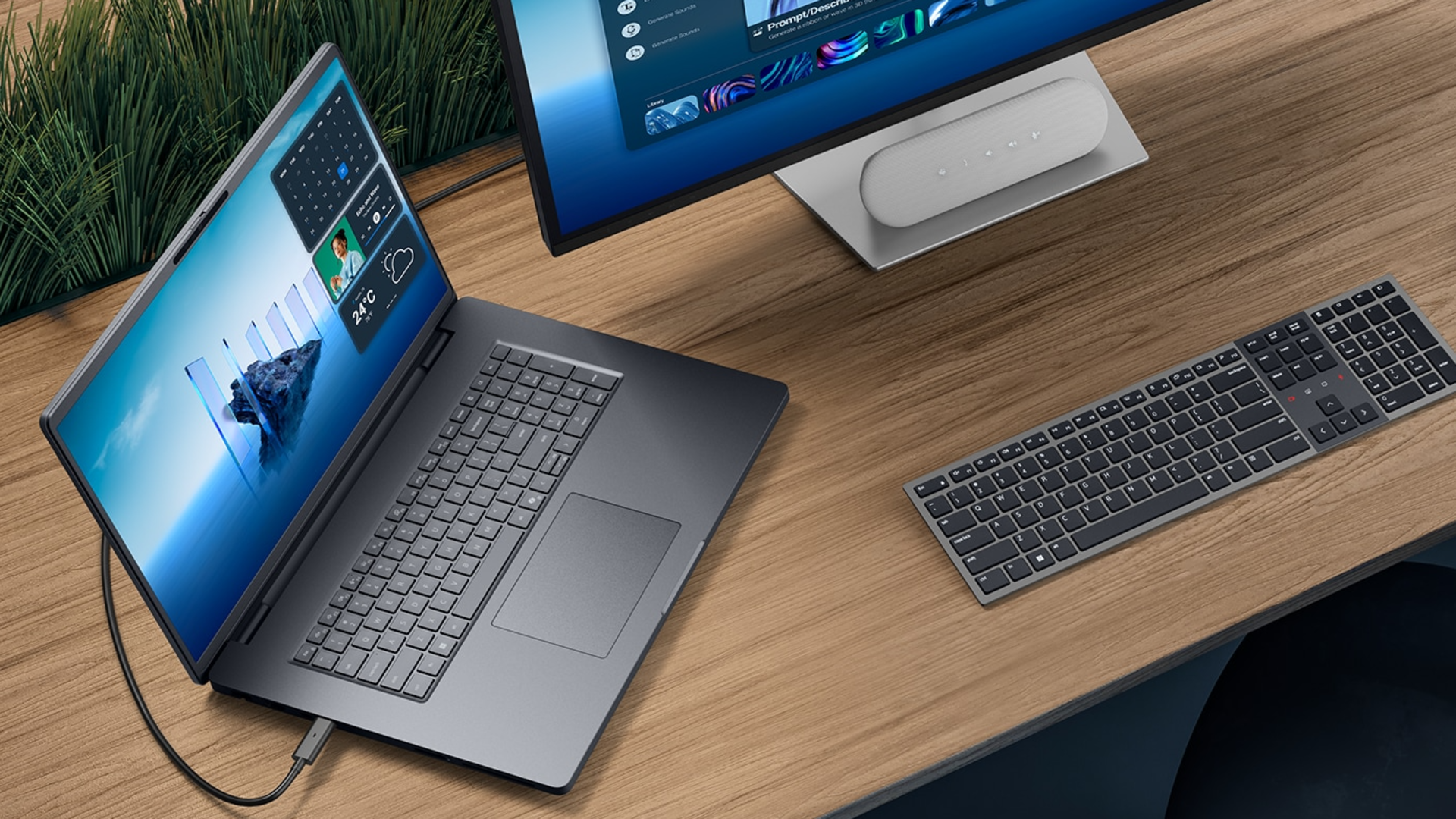
The Dell Pro Max 18 Plus still holds the title of fastest AI laptop, topping local AI rankings ahead of every other machine tested.
Its RTX PRO 5000 chip reached 185.1 tokens/s on the Phi model, 140.5 tokens/s on Mistral, and 119.7 tokens/s on Llama 3.
However this lead faces a test on October 16 2026, when Nvidia’s RTX Spark laptops go on sale from several manufacturers, with preorders already open.
RTX Spark arrival
Microsoft is expected to field the Surface Laptop Ultra from $2,599, while Dell is bringing the XPS 16 Creator Edition from $3,799.99.
Asus, HP, Lenovo and MSI are also launch partners, while Acer and Gigabyte are expected to add models later.
Nvidia rates RTX Spark at up to 1 petaflop of FP4 AI performance, with 6,144 CUDA cores and up to 128 GB of shared memory.
The 1 petaflop figure covers only FP4 calculations that exploit sparsity, an upper limit that everyday workloads may not reach.
The company also claims the chip can run large language models of about 120 billion parameters locally, with a context window of one million tokens.
That is slightly above the 109 billion parameters that the Dell Pro Max 18 Plus can reportedly handle locally.
This does not automatically mean that RTX Spark will outperform Dell’s workstation in AI workloads, as model capacity alone does not determine inference speed.
The price Dell buyers paid for the lead
The Pro Max 18 Plus offers Core Ultra 5, 7, or 9 processors and RTX PRO 1000 to 5000 graphics, with prices starting at $3,488.
Dell’s top configuration, equipped with an RTX PRO 5000, 128 GB of memory and two 1 TB drives, cost $9,245.52 when the laptop launched.
A similar configuration later appeared at roughly $14,000, while the laptop now sells for almost $18,600, double its launch price after 14 months.
The top model is built around the Intel Core Ultra 9 285HX processor with 24 cores, a 5.5 GHz boost clock and a 55 W rating.
Its RTX PRO 5000 graphics chip has 24 GB of GDDR7, a 175 W power ceiling and a graphics clock of 1,807 MHz.
Memory comes from a single 128 GB CAMM2 module running at 6,400 MT/s, while storage consists of two 1 TB Gen5 SSDs configured in RAID 0.
The 18-inch QHD+ display runs at 2560 × 1600 and 120 Hz, covers 100% of the DCI-P3 colour space and contributes to a minimum chassis weight of 7.17 lb.
Nvidia’s case for displacing Dell rests partly on RTX Spark’s shared memory, which can accommodate AI models exceeding Dell’s 24 GB graphics capacity.
However, Spark’s shared memory delivers about 300 GB/s of bandwidth, compared with 896 GB/s for Dell’s RTX PRO 5000. Spark also has 6,144 CUDA cores, fewer than Dell’s 10,496
To overtake Dell, an RTX Spark laptop must beat its token-generation rates for Phi, Mistral and Llama 3 under the same UL Procyon tests.
Matching those results while consuming 45 W to 80 W of chip power could also improve battery endurance beyond Dell’s recorded three hours and 39 minutes.
