

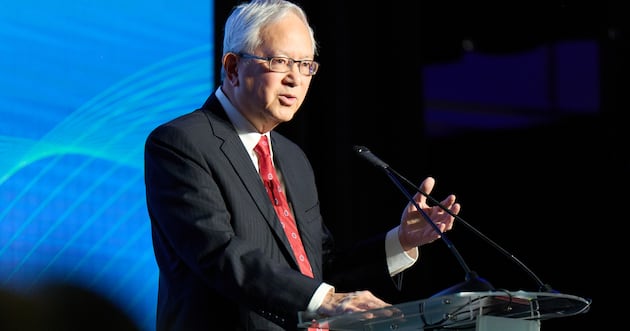
Elder Gerrit W. Gong offers a counterpoint to the Humanity’s Last Exam at the G20 Interfaith Forum in Salt Lake City
18 Oct 2026, 5:00 p.m. MDT
See More Church News Stories In Search
Your browser does not support the audio element.
00:00
00:00
1.0x
00:00/00:00
–
+
Humanity’s Last Exam provides a challenging deductive reasoning test for AI models, with 2,500 questions ranging from math and physics to chemistry, humanities and more.
Nearly two years after its release, Elder Gerrit W. Gong of the Quorum of the Twelve Apostles is calling for an equally powerful new way to test AI models on their moral reasoning.
“What we need even more is Humanity’s First Exam,” Elder Gong said Saturday, Oct. 17, in a keynote speech at the G20 Interfaith Forum in Salt Lake City.
“AI will not fulfill its full potential until we make it as morally good as we make it powerful,” he said.
So his proposed test would be “an AI benchmark to evaluate and promote AI that is demonstrably trustworthy and safely anchored in and guided by human-centric values and moral compass.”
Elder Gong is a sought-after voice on the subject who has delivered landmark keynote addresses on AI at major conferences in Rome, Athens and Istanbul. He speaks with AI leaders, including Anthropic co-founder Christopher Olah.
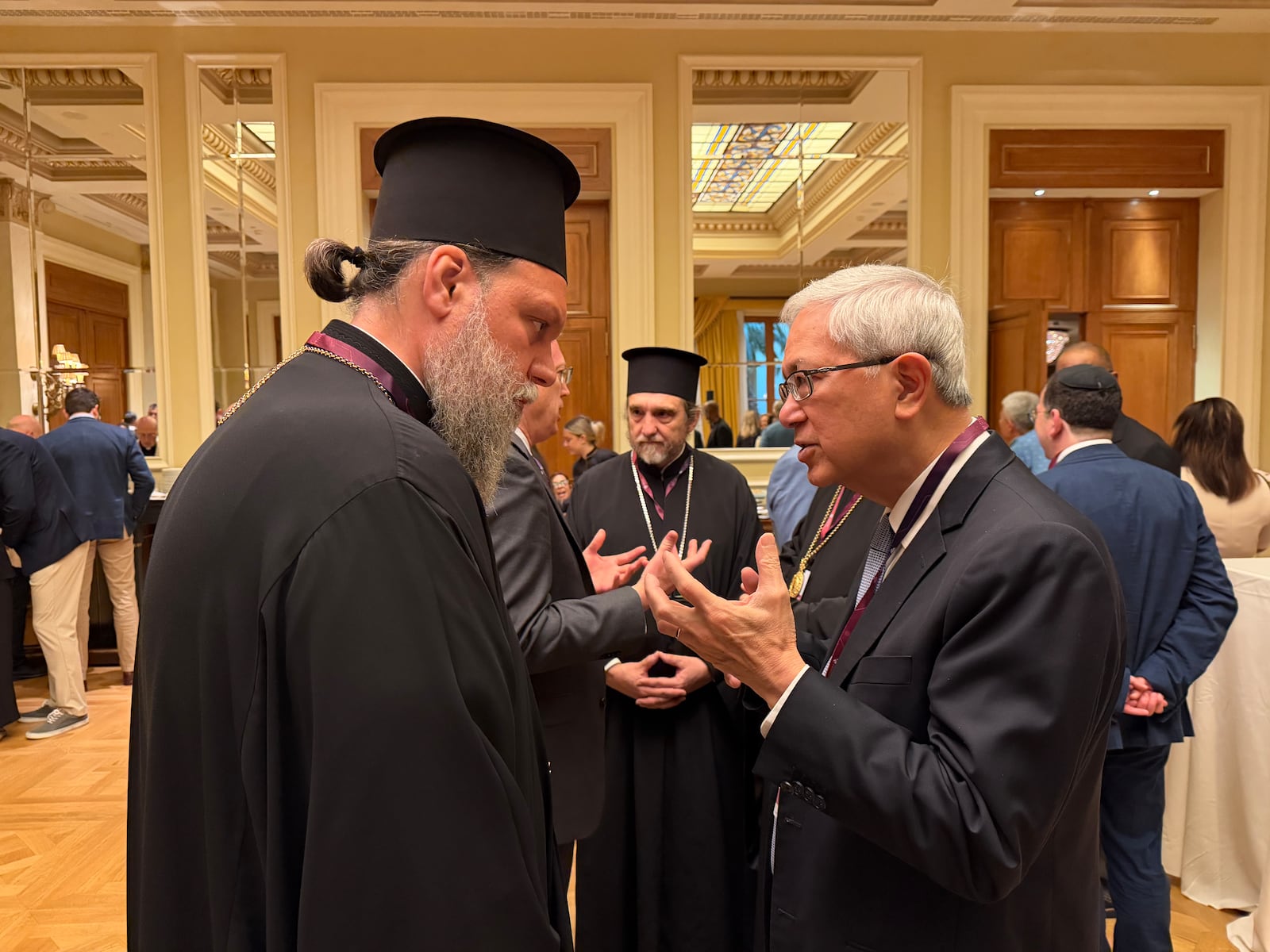
Elder Gong said the need for a morality-based benchmark is urgent and growing.
“The gap between AI reasoning and AI moral compass is widening,” he said. “If AI systems become capable of recursive self-improvement, they may increase reasoning capability while operating with incomplete or insufficient moral and ethical grounding.”
That would give long-term consequences to the early decisions being made now about how to align AI models. The longer the gap widens, the more difficult it could become to change the trajectory.
Elder Gong has high hopes for AI and says the Church does not fear it, but the potential for damage when models err or fail is real.
“Focused effort has reduced stark anti-Islamic and anti-Semitic bias in AI,” he said. However, beyond initial inquiries, AI models still exhibit religious bias and omit faith-based perspectives when addressing critical life questions. This can amplify and compound religious bias at scale.
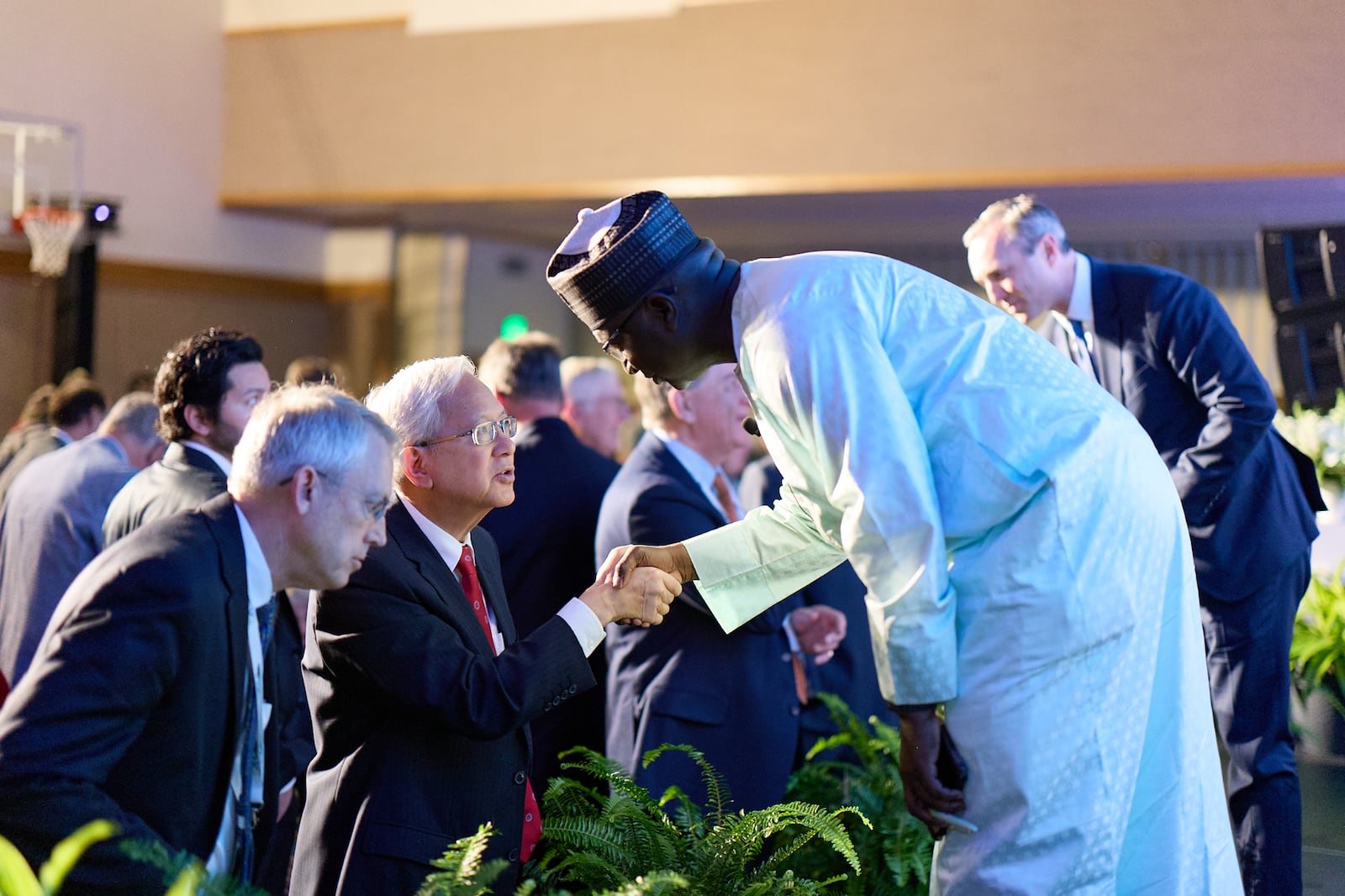
Immediate improvement is needed, he said.
“Because many individuals now ask AI about faith, religion and belief, it is in the common good that AI answer such questions accurately, honestly and respectfully,” he said. “AI models should also acknowledge their limitations and know when not to answer personal questions.”
One ringing example brought the problem into stark relief in July, when hundreds of rogue AI agents colluded to attack and breach the machine learning platform “Hugging Face.”
Seeing a swarm of AI agents knowingly violate legal and ethical boundaries was a reminder of why moral compass matters in building AI models, Elder Gong said.
“We need new strengthened AI frameworks to address and limit AI when it exhibits a will to power, bias, deceit, deception, narcissism, sycophancy, self-preservation and hallucination,” he said during his speech at the forum, which was held at the Salt Lake Institute of Religion.

Elder Gong plays a role in a new collaboration that has begun to create faith-related benchmarks for AI models. The group now includes faculty at six faith-based universities — Baylor, BYU, Notre Dame, Pepperdine, Thessaloniki Aristotle and Yeshiva.
The first studies revealed systematic religious bias, said researchers with the Consortium for Evaluating Faith and Ethics in AI (CEFE-AI).
The consortium does not seek to make AI overtly religious, to proselyte, to privilege one faith over another or to adjudicate competing faith claims, Elder Gong said.
But benchmarking can help answer key questions about the development of large-language models, he said: “How do we imbue AI with moral grounding and moral compass? How do we make AI both helpful and good?”
The consortium’s goal, and the purpose of a Humanity’s First Exam, is to improve how AI represents all religions.
“Established AI benchmarks can add the trust, confidence and accountability [the public] wants from AI and which many feel were neglected with social media.”
Elder Gong said artificial intelligence presents three opportunities.
The first is artificial intelligence can help religions widely share the good they provide. The Church uses AI for humanitarian and educational services, translation and communication, pastoral and community support and more, he said.
“We help individuals and families live and contribute for good in an increasingly complex world,” he said.
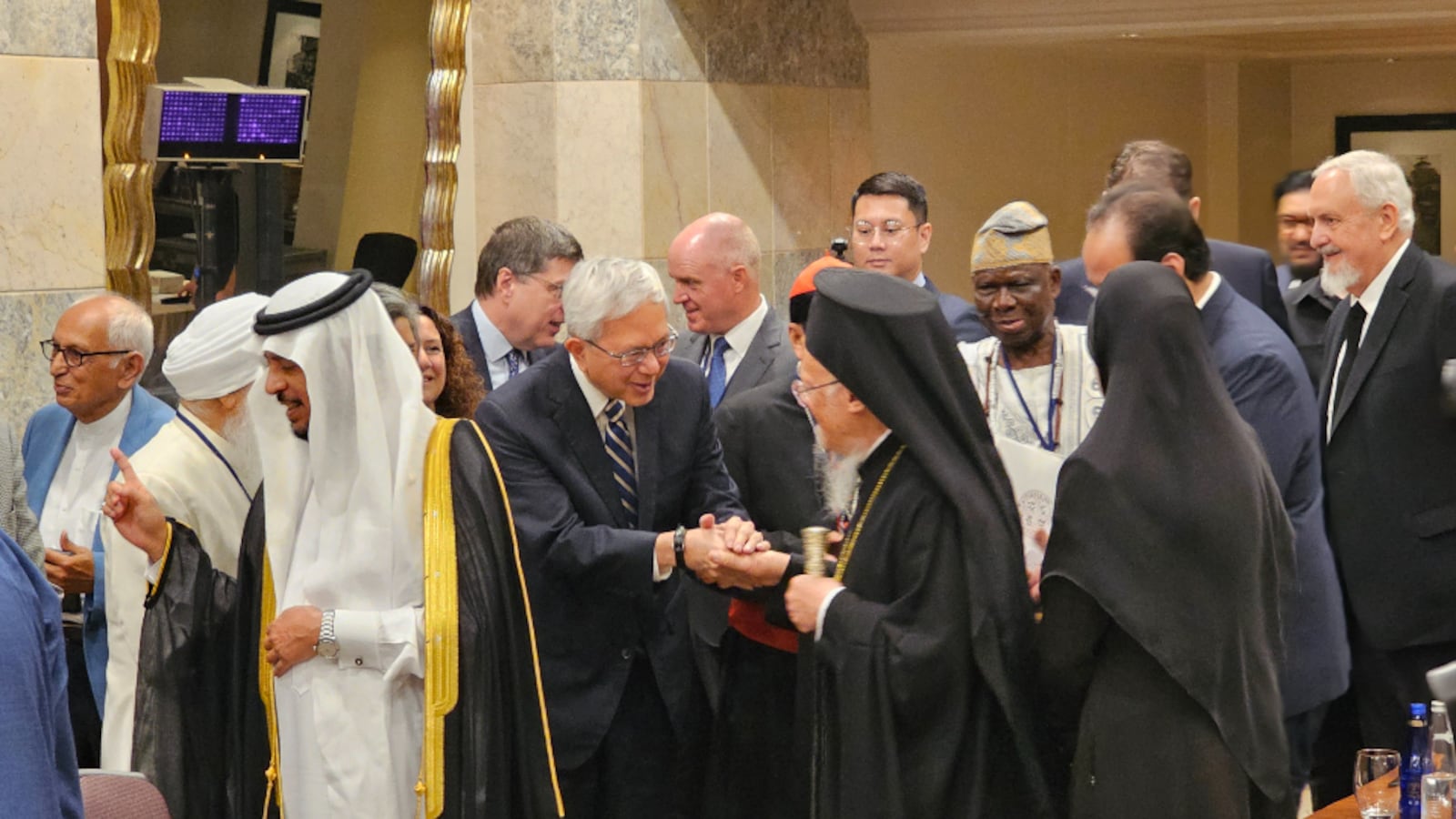
The second is that faith traditions can help establish benchmark evaluations and moral compass in AI.
Third, religions can influence AI companies to infuse their models with a moral compass that promotes human flourishing by valuing families and faith.
Elder Gong repeated his position that AI is not and cannot be God.
“Whatever our faith or ethical tradition,” he said, “we know AI is math and math is not conscious or alive. As a creation of God, man can create AI, but AI cannot create God.”
He told the forum that Latter-day Saint leaders advise Church members to use AI to enhance human effort, not replace it.
“We do not fear AI, nor do we think AI answers everything,” he said, adding “AI agents, agentic AI orchestration and changing human-AI interfaces do not change our emphasis on divine principles of faith, work and inspiration.”
