
Close Menu
MyAppsPlus

    Subscribe to Updates

    Get the latest creative news from FooBar about art, design and business.

    What's Hot

    Get Apple’s MacBook Pro with M5 Max chip and 36GB memory for a steep discount

    September 30, 2026

    Laptop sleeves, backpacks, bottles, more

    September 30, 2026

    a16z-backed EliseAI raises $350M, doubles valuation to $4B

    September 30, 2026
    Facebook X (Twitter) Instagram
    Facebook X (Twitter) Instagram
    MyAppsPlusMyAppsPlus
    Wednesday, September 30
    • Home
    • Breaking Tech
    • Apps & Software
    • AI & Automation
    • Android
    • iPhone & iOS
    • More
      • Reviews
      • How-To Guides
      • Deals & Discounts
      • Shop
    MyAppsPlus
    Home»Breaking Tech»Apple’s new iPhone and iPad security feature can protect you from scammers
    Breaking Tech

    Apple’s new iPhone and iPad security feature can protect you from scammers

    myappsplusBy myappsplusSeptember 29, 2026003 Mins Read
    Share Facebook Twitter Pinterest Copy Link LinkedIn Tumblr Email Telegram WhatsApp
    Follow Us
    Google News Flipboard
    Apple’s new iPhone and iPad security feature can protect you from scammers
    Share
    Facebook Twitter LinkedIn Pinterest Email Copy Link

    Apple wants you to stop falling for scammers, and this feature adds more safeguards.

    Apple has delivered a great new security feature with iOS 27 and iPadOS 27, though it’s not one that made headlines. Called Impersonation Risk Detection, it analyzes device behavior in real-time to flag active social engineering scams — the kind that trick you into handing over access yourself, even when your passwords and two-factor codes are working as intended.

    It runs entirely on-device, so Apple never sees your photos, texts or any other personal content. When a supported app requests a risk assessment, it receives a label with none of the underlying data behind that determination. This is an opt-in feature, making it a complementary tool to all the other steps you take to be safe online.

    Security features like two-factor authentication are great, but Impersonation Risk Detection is built for a different kind of danger. Social engineering scams don’t force their way through your defenses, but rather convince you to open the door yourself. From old-school callers posing as your bank to texts that look like a fraud alert, they all create a sense of urgency that tries to short-circuit your protections. When you’re opening the door yourself, no two-factor code can flag the problem. But this feature (hopefully) can.

    Understanding Impersonation Risk Detection
    A person checking their smartphone phone with "scam" text and warning signs overlaid.

    Impersonation Risk Detection works to detect the signs of a scam as it’s happening. When you take a sensitive action, such as making a payment or changing account security details, a supporting app can request a real-time risk assessment. Your phone generates that assessment by analyzing interaction patterns, timing, context and basic sensor data, which all runs on-device. Based on this analysis, the system assigns one of three risk levels:

    • Unknown: The system didn’t detect any suspicious activity (although this doesn’t mean it’s safe to go ahead).

    • Medium: The tool detected some signs of suspicious activity.

    • High: Major signs of suspicious activity were detected.

    An attacker posing as a bank representative or government official can pressure people into approving shady transactions or sending their passwords, which can be even more convincing with AI. Apple’s new tool fills a gap by catching suspicious behavior during the moments scammers rely on. However, the decision on what to do next belongs to the app developer. Depending on the risk level returned, the app might ask you to verify your identity, impose a short waiting period or display a warning.

    How to enable Impersonation Risk Detection
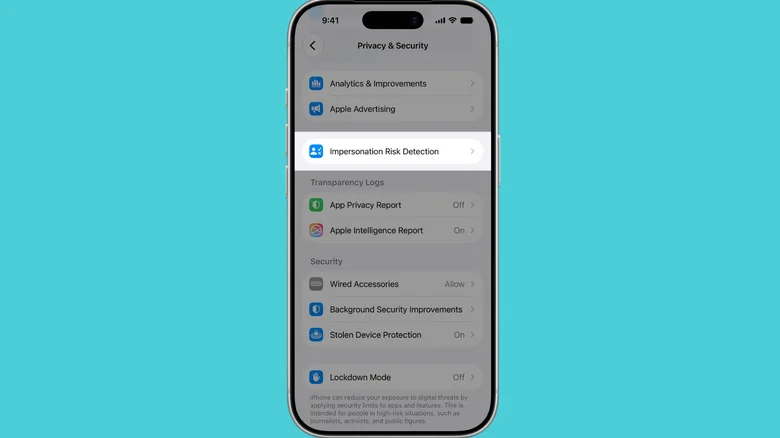
    The new Impersonation Risk Detection tool on an iPhone.

    If you want to enable this function for yourself or loved ones, follow these steps on your iPhone or iPad:

    1. Go to Settings > Privacy & Security.

    2. Scroll down to Impersonation Risk Detection and toggle on Share with App Developers.

    On the same menu as above, you’ll be able to see which apps have requested a risk assessment and why, and adjust their access. Apple also mentions that if someone contacts you and insists you turn this feature off, you should treat it as a red flag. For exactly this reason, toggling the feature off can take up to 24 hours to take effect.

    This feature only works with apps that are built to support it, and Apple hasn’t published a list of them yet. Hopefully, many will incorporate this this over time. Impersonation Risk Detection is a logical extension of the Apple’s privacy-first security focus, as seen in Safari’s anti-tracking tools. It addresses a blind spot that no browser setting or password manager can fully solve: manipulation.

    Apple Apples iPad iPhone Security
    Follow on Google News Follow on Flipboard
    Share. Facebook Twitter Pinterest LinkedIn Tumblr Email Copy Link
    myappsplus
    • Website

    Related Posts

    Get Apple’s MacBook Pro with M5 Max chip and 36GB memory for a steep discount

    September 30, 2026

    a16z-backed EliseAI raises $350M, doubles valuation to $4B

    September 30, 2026

    Get Kindle Unlimited free for 3 months with this early Prime Day deal

    September 30, 2026
    Add A Comment
    Leave A Reply Cancel Reply

    Top Posts

    Can reviews settle disputes that marked first two seasons?

    September 21, 20267 Views

    Experts call for leveraging AI, breaking key tech bottlenecks to propel advanced manufacturing

    September 19, 20264 Views

    Here’s what happens to your old computer parts you donate to Goodwill

    September 28, 20263 Views
    Latest Reviews

    More than 45 tech funding deals worth over €684M

    myappsplusAugust 24, 2026

    I’ve got a fly infestation — here’s the hack I found to tackle the problem for good

    myappsplusAugust 24, 2026

    What airports can teach us about the power of invisible business AI

    myappsplusAugust 24, 2026
    Stay In Touch
    • Facebook
    • YouTube
    • TikTok
    • WhatsApp
    • Twitter
    • Instagram

    Subscribe to Updates

    Get the latest tech news from FooBar about tech, design and biz.

    Most Popular

    More than 45 tech funding deals worth over €684M

    August 24, 20260 Views

    Who really needs Forward Deployed Engineers around AI?

    August 24, 20260 Views

    ‘Play Harder’: Garmin has stealthily scheduled a YouTube live event, presumably to launch the Fenix 9 — here’s when and how to watch

    August 24, 20260 Views
    Our Picks

    Get Apple’s MacBook Pro with M5 Max chip and 36GB memory for a steep discount

    September 30, 2026

    Laptop sleeves, backpacks, bottles, more

    September 30, 2026

    a16z-backed EliseAI raises $350M, doubles valuation to $4B

    September 30, 2026

    Subscribe to Updates

    Subscribe to our newsletter and get the latest tech news, app updates, AI trends, smartphone reviews, and exclusive deals delivered straight to your inbox.

    Facebook X (Twitter) Instagram Pinterest
    • About Us
    • Get In Touch
    • Disclaimer
    • Privacy Policy
    • Terms & Conditions
    © 2026 MyAppsPlus. All Rights Reserved.

    Type above and press Enter to search. Press Esc to cancel.