

Add preferred source
Global semiconductor output is on track to cross the $1 trillion threshold four years ahead of schedule this year, but the fruits of the AI boom are highly concentrated. Nvidia posted quarterly revenue of $96.221 billion, more than doubling year over year, while Taiwan Semiconductor Manufacturing’s revenue through the first eight months rose 39.26% and its market share reached 72.5%. The memory industry has entered a supercycle of shortages and price hikes, with Micron guiding gross margin as high as 86% and Samsung expecting 2026 profit to exceed its cumulative earnings over the past four decades. ASML, benefiting from advanced-node and HBM capacity expansion demand, has seen its stock surge 60% this year. Yet Taiwan-based IC design houses focused on consumer electronics are declining in tandem—ELAN Microelectronics, FocalTech Systems, Sensortek Technology, and Excellence MOS all posted revenue declines, while Solid State System is planning layoffs after its HBM development stalled. MediaTek is breaking out via its data center business, with related revenue expected to top $2 billion in 2026. The tech industry is shifting from broad-based growth to a winner-take-all polarization.
Key Elements
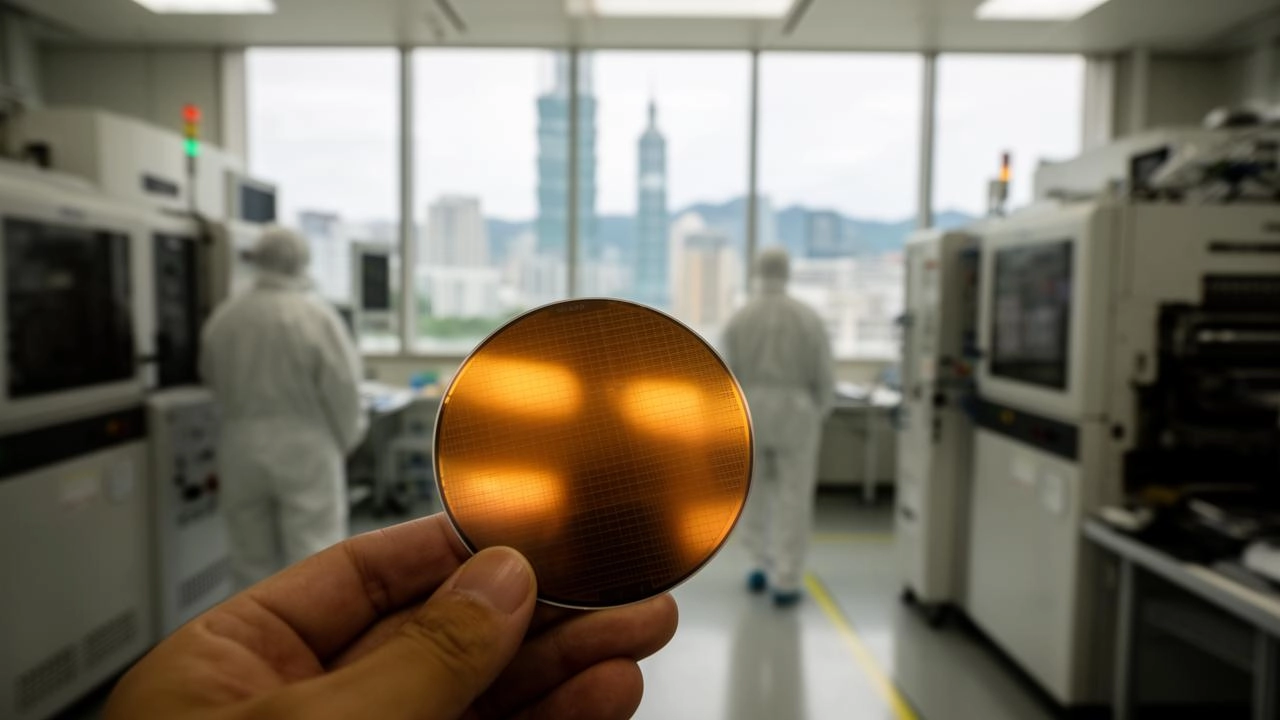
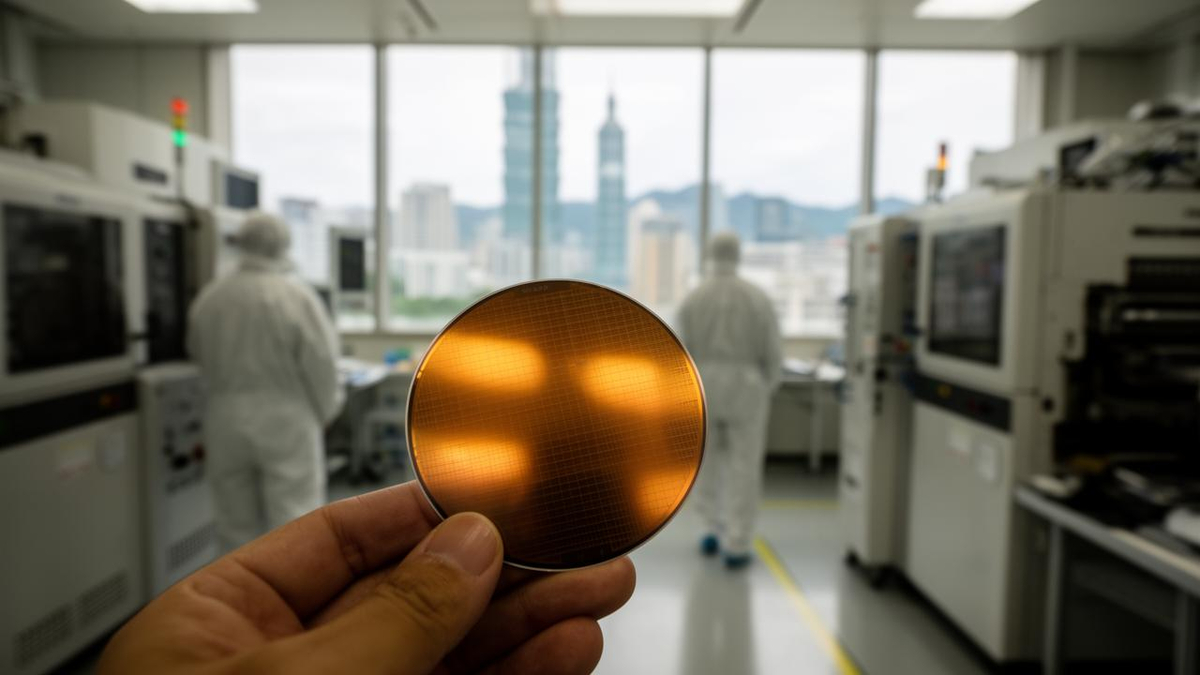
Global semiconductor industry output is poised to cross the $1 trillion mark four years ahead of schedule this year, driven by explosive demand for artificial intelligence—but the spoils of this wave are far from evenly distributed. Nvidia and Taiwan Semiconductor Manufacturing (2330.TW) are posting record revenue and profit, while major memory makers are enjoying an unprecedented supercycle. At the same time, Taiwanese IC design houses that rely on consumer electronics such as smartphones and PCs are seeing revenue shrink amid resource crowding-out and weakening end demand. The tech industry is now defined by extreme polarization.
Winner Takes All: The Golden Era for Nvidia, TSMC, and Memory Makers
In a recent interview with The New York Times podcast, Nvidia CEO Jensen Huang laid out a “five-layer cake” model to describe the AI industry stack—from foundational energy, AI factories, the model layer, and the application layer to industrial transformation. He stressed that traditional computers represent “retrieval-based computing,” while future AI data centers will be “generative AI factories,” with per-person computing demand set to grow by hundreds of millions of times. Huang also pushed back against market panic over AI extinction risk, arguing that the responsibility of companies and engineers is to turn concerns into solvable engineering problems rather than using fear to shift blame or delay product delivery.
Nvidia’s financials underscore the strength of this momentum. In the second quarter of fiscal 2027, the company posted quarterly revenue of $96.221 billion (approximately NT$3.1 trillion), gross margin of 75%, and net income of $59.688 billion (approximately NT$1.9 trillion)—with both revenue and profit more than doubling year over year. Huang further guided that total revenue for fiscal 2028 could grow another 70%. Nvidia has surpassed Apple to become TSMC’s largest customer, and its revenue now exceeds the combined total of the world’s second- through tenth-largest fabless chip designers.
TSMC is likewise riding the crest of this wave. Revenue through the first eight months of this year reached NT$3.38687 trillion (approximately $106.5 billion), up 39.26% year over year, with full-year dollar-denominated revenue growth expected to slightly exceed 40%. According to market research firm TrendForce, TSMC’s global foundry market share hit 72.5% in the second quarter, firmly cementing its leadership position. Flush with cash, Nvidia is also aggressively positioning for the future, making successive investments in Intel, Marvell, OpenAI, and xAI, acquiring AI chip startups, silicon photonics companies, and open-source AI platform providers. Most recently, it spent $3.5 billion (approximately NT$110 billion) to subscribe to MediaTek’s (2454.TW) overseas convertible bonds, strengthening bilateral cooperation.
The memory industry is experiencing an unprecedented wave of shortages and price increases. Due to the resource crowding-out effect caused by AI’s powerful pull, industry players expect the shortage to last at least until the first half of 2027. TrendForce estimates that server memory—a key procurement item for cloud service providers (CSPs)—saw cumulative contract price increases of 64% in the second half of 2025, with another roughly 270% increase possible in 2026. Enterprise solid-state drive (SSD) prices rose a cumulative 35% in the second half of 2025 and are expected to rise another 235% in 2026.
Micron (MU.US) projects that gross margin could reach 86% in the fourth quarter of fiscal 2026. The company will report earnings on <a href="https://myappsplus.com/icymi-heres-the-weeks-7-biggest-tech-news-stories-for-september-26-2026/” title=”ICYMI: here's the week's 7 biggest tech news stories for September 26, 2026″>September 30, and the market is closely watching whether profitability can continue to beat expectations. In its most recent quarter, Micron posted revenue of $41.456 billion (approximately NT$1.3 trillion), up about 346% year over year, with adjusted earnings per share of $25.11. The company has signed 16 strategic customer agreements, 14 of which are priced at contractual minimums, corresponding to cumulative revenue of approximately $100 billion (approximately NT$3.2 trillion) over the remaining term—providing substantial visibility into future revenue and earnings.
Memory leader Samsung Electronics expects its 2026 profit to exceed the cumulative earnings it has generated over roughly four decades since entering the semiconductor business. Taiwanese memory companies are also riding the upswing: module maker Innodisk and memory controller maker Phison Electronics (8299.TW) both delivered quarterly earnings per share exceeding NT$100 in the second quarter. Research firm Gartner forecasts that global semiconductor revenue will reach $1.6 trillion (approximately NT$50.9 trillion) in 2026, up 92%, with memory revenue reaching $837 billion (approximately NT$26.6 trillion)—lifting memory’s share of total semiconductor revenue from 27% in 2025 to 54%.
The Hidden Winner in Semiconductor Equipment
Upstream in the AI chip manufacturing chain, Dutch semiconductor equipment giant ASML has become an indispensable player. The company’s stock has surged 60% this year, as its extreme ultraviolet (EUV) lithography machines are essential equipment for manufacturing chips at 7-nanometer and below advanced nodes. As AI chips transition from 3-nanometer to 2-nanometer, ASML CEO Christophe Fouquet said at the July earnings call that 2-nanometer production is ramping rapidly to support next-generation high-performance computing and mobile applications.
ASML projects that system sales to memory manufacturers will jump 75% in 2026, while equipment sales to foundry and logic chip customers are expected to grow 25%. SK Hynix, Samsung, and Micron—the three memory giants—are simultaneously expanding capacity, with SK Hynix forecasting that the AI-driven memory shortage will persist until 2030. Market earnings expectations for ASML have been revised upward through 2028, with long-term EPS growth potentially exceeding 30% annually. PwC forecasts that global AI infrastructure spending will rise from $800 billion (approximately NT$25.4 trillion) in 2026 to $1.8 trillion (approximately NT$57.3 trillion) by 2050.
The Bitter Reality for Consumer Electronics Makers
Yet the memory supply crunch and soaring prices are putting sales pressure on consumer products such as smartphones and PCs. ELAN Microelectronics (2458.TW), a touch controller chip maker with heavy exposure to the notebook market, saw revenue through the first eight months decline year over year. FocalTech Systems (3545.TW), a display driver IC maker focused on the smartphone market, posted a 12.95% revenue decline over the same period. Sensortek Technology (6732.TW), a sensor maker serving primarily mobile applications, saw revenue fall 14%. Excellence MOS (5299.TW), a power semiconductor maker with notebook exposure, recorded a revenue decline of about 3%. None of these companies have benefited from the current AI boom.
The situation is even more dire for Solid State System (3259.TW), a memory controller maker. The company had intended to develop high-bandwidth memory (HBM)—a hot AI product—but due to difficulties in advancing the program and a lack of funding, it decided to redirect resources toward other R&D activities and daily operations. It plans to carry out phased layoffs of some employees starting November 23, 2026.
MediaTek is seeking to strike a balance between the two forces. Its smartphone chip business has been affected by weak market demand this year, but revenue through the first eight months still grew 5.75%, supported by growth in its smart device platform business. MediaTek’s data center business is progressing smoothly: its first AI accelerator application-specific integrated circuit (ASIC) is expected to enter volume production in the fourth quarter, and data center revenue could exceed $2 billion (approximately NT$64 billion) in 2026, with full-year dollar-denominated revenue growing 7% to 9%. MediaTek estimates its serviceable addressable market will reach $80 billion (approximately NT$2.5 trillion) in 2027, with a target market share of 15% to 20%. The data center is set to become the primary growth engine for future operations.
The Next Phase of AI Compute Expansion
AI applications are expanding from simple model inference to agentic workflows featuring continuous execution and multi-step collaboration. Products such as Meta’s Muse and OpenAI’s Astra enable a single user command to trigger a persistent chain of work spanning planning, retrieval, code execution, result checking, and error correction. This model simultaneously increases infrastructure investment required for both “model thinking” and “actual task execution.”
From an engineering perspective, as agentic tasks scale from a small number of high-frequency users to enterprise-wide daily processes, infrastructure demand is driven simultaneously by user scale, task frequency, task duration, and peak concurrency. GPUs and ASICs handle large-scale neural network computation, while CPUs manage virtual machines, browsers, code sandboxes, task scheduling, and tool execution. AMD’s PACE technology approach has explicitly adopted a collaborative model in which CPUs orchestrate while GPUs execute heavy inference—providing concrete engineering justification for CPU demand expansion and making server DRAM, storage, and networking key links in the same demand transmission chain.
Wall Street continues to revise upward its capital expenditure expectations for AI infrastructure. An S&P Global research report dated September 22 shows that the four tech giants—Meta, Alphabet, Amazon, and Microsoft—will spend a combined total of approximately $2.8 trillion on capital expenditures from 2026 to 2028. Morgan Stanley projects that combined data center capital expenditures from North America’s four hyperscalers plus AI application vendors such as Oracle will rise from $917 billion (approximately NT$29.2 trillion) in 2026 to $1.47 trillion in 2027 and $1.64 trillion in 2028, with deployed capacity expanding from 35 gigawatts in 2025 to 145 gigawatts by 2028.
In the interview, Huang also touched on the energy challenges facing AI data centers. He acknowledged that the United States will indeed need fossil fuels in the short term as a transitional bridge, but noted that the enormous electricity demand from AI is triggering the largest sustainable energy investment wave in history. From nuclear, solar, and hydroelectric power to next-generation battery technology, global venture capital is pouring into green energy at scale—accelerating grid upgrades and the sustainability transition without relying on government subsidies.
The AI boom has created unprecedented opportunities for Nvidia, TSMC, Samsung, and Micron, while also lifting equipment suppliers such as ASML onto the growth wave. Yet tech companies that failed to break into the AI arena may instead suffer from resource crowding-out. The semiconductor industry’s growth story is shifting from broad-based prosperity to extreme winner-take-all polarization.
Once added, BigGo Finance appears first in Google Search Top Stories, so you get the broadest, most up-to-the-minute, and most comprehensive global financial news first.
