

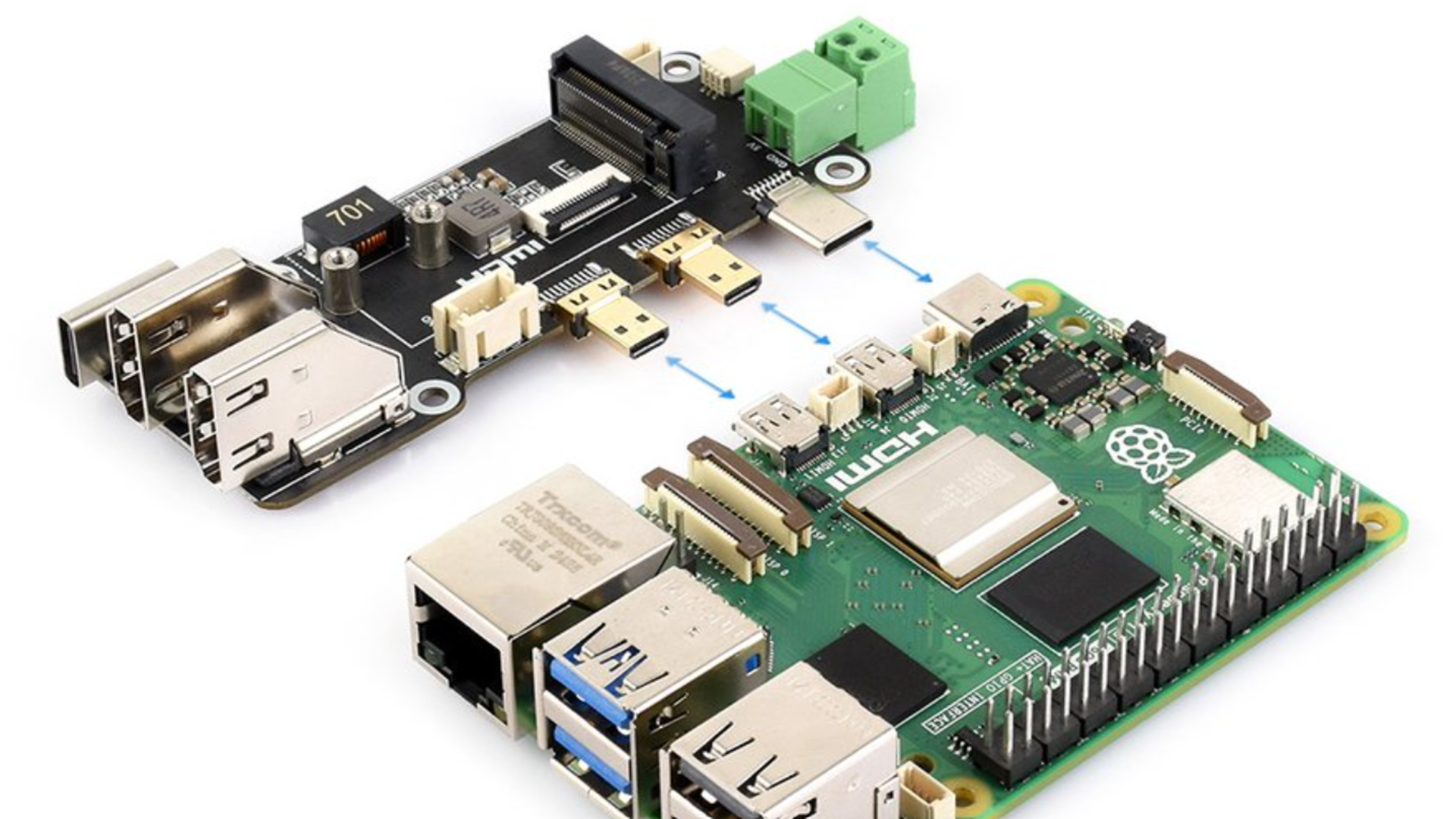
- Raspberry Pi has raised the 16GB Pi 5’s price by $80 to $385, more than triple its $120 launch price
- Company CEO blames lack of alternative 16GB DRAM supply, compounded by wider component shortages
- Raspberry Pi called the hikes temporary, but memory makers expect tight supply to last until 2028 to 2030
Raspberry Pi has raised the price of its 16GB Raspberry Pi 5 yet again, and the flagship board now sits far from the brand’s budget roots.
In a blog post, company CEO Eben Upton confirmed an $80 increase that takes the board to $385, which is more than triple the $120 it cost at launch in January 2025.
The 16GB variants of Compute Module 5 increase by $40 in the same round, while the Raspberry Pi 500+, the company’s keyboard computer that also offers 16GB of RAM, remains at its existing price.
A far-reaching memory crisis dictates prices
The threefold figure is cumulative rather than a single jump: The November 2026 increase on its own amounts to roughly 26%, but the rest built up over a run of rises that began in December 2025, when the 16GB Pi 5 went from $120 to $145. February added $60, leaving the board 70% more expensive than at launch, and April added a further $100.
That April 2026 round also brought a new 3GB Raspberry Pi 4, introduced to give buyers a cheaper middle option, with Upton saying at the time that the LPDDR4 memory used in the Pi 4 and Pi 5 had risen sevenfold in price over the previous year.
November’s change also comes barely a month after Raspberry Pi raised prices on its 2GB boards by $12.50 each, having decided that shielding those models from earlier price increases was no longer sustainable.
Upton’s explanation is more specific than a general complaint about RAM prices. He blamed “a lack of alternative supply for 16GB DRAM, compounded by other ongoing component shortages,” which suggests the bottleneck is sourcing at that particular density rather than cost alone.
Raspberry Pi, for its part, has been qualifying additional memory suppliers through 2026 to widen its options, and the wording implies those alternatives remain thinnest at the top of the range.
Interestingly, despite the price increases, demand hasn’t fallen but rather grown considerably. Direct sales of the Pi 5 rose 47% in the half, and Raspberry Pi says demand for the 8GB variants continued to grow despite higher prices.
For buyers, the new pricing produces some odd comparisons. The 8GB Raspberry Pi 5 lists at $175, which means the extra 8GB on the 16GB model now costs $210, more than an entire 8GB board.
The spared-but-similarly-specced Pi 500+ sharpens the point. For $25 more than the bare 16GB board, it pairs the same processor and memory with a 256GB NVMe SSD and a mechanical keyboard. It’s no substitute for embedded projects that need the bare board’s footprint, but for desktop use, the standalone 16GB Pi 5 is now difficult to justify once one considers the cost of a standalone SSD alone, even if the keyboard is considered a non-factor.
Buying a cheaper board and upgrading it isn’t a workaround either, since Raspberry Pi firmware locks boards to the memory capacity they shipped with. For those who don’t need 16GB at all, we have found that an 8GB starter kit can often be a better buy than the board on its own.
Upton’s own advice is to avoid paying for memory you don’t need by choosing lower-density variants or older models, or by optimizing applications. He also warned that some sellers are exploiting the shortage by inflating prices or misrepresenting products, and urged buyers to stick to approved resellers.
A “temporary” crisis might be an understatement
Raspberry Pi continues to describe the memory squeeze as temporary and says it intends to roll back its increases once costs fall. Its own definition of temporary is fairly elastic, though.
In the company’s September results, Upton described the current cycle as “a large, but ultimately typical, instance of a phenomenon that periodically affects the industry,” with meaningful new supply not expected until 2028.
Memory makers are gloomier still. SK Hynix titled a section of its third-quarter results “Memory supply shortage to persist through 2030,” and Micron has warned that shortages could run into 2028 or beyond.
TrendForce, whose latest outlook Upton linked in his post, expects DRAM suppliers to keep prioritizing server products through the fourth quarter, leaving the wider market undersupplied even as contract prices rise slowly.
The entry-level boards, however, remain a bright spot, with the 1GB Pi 4 and Pi 5 still at $35 and $45, respectively. Rising prices risk putting the Pi out of reach of schools and kids, and for now the bottom of the range is still holding the line. At the top, though, the 16GB Pi 5 has become a premium product by necessity rather than design, and the CEO’s optimism might not be shared by many consumers in the market for one in the near future.
