


New investment nearly triples campus GPU capacity with the launch of PARASOL
Story by:


Published Date
Story by:
Article Content
-
PARASOL will help UC San Diego keep pace with surging student interest in AI and machine learning.
-
The investment will expand computing resources for AI coursework, research and independent projects.
-
PARASOL will connect classroom learning with research and support AI exploration across disciplines.
Behind every artificial intelligence (AI) model is an essential ingredient: Parallel computing, or the process of running thousands of calculations simultaneously to train complex systems. As student interest in artificial intelligence surges, the University of California San Diego is expanding the infrastructure that allows <a href="https://myappsplus.com/google-will-cut-off-search-access-for-students-at-schools-that-reject-ai-tools/” title=”Google will cut off search access for students at schools that reject AI tools”>students to train models, analyze data and pursue increasingly sophisticated AI projects.
As demand for AI computing resources continues to grow, some UC San Diego students have turned to commercial cloud-based graphics processing unit (GPU) services to access the computing power needed for coursework and independent projects. Their willingness to invest in these resources underscores both the growing importance of hands-on AI experience and the need for accessible, university-supported computing infrastructure.
Enabled by its founding gift from computer scientist and philanthropist Taner Halıcıoğlu, the UC San Diego Halıcıoğlu School of Data Science and Computing is expanding access to advanced AI and machine learning resources through the campus’s shared AI computing platform.
PARASOL– or Platform for Applied Research, Analytics, Science and Open Learning – is the next generation of UC San Diego’s longstanding Data Science & Machine Learning Platform (DSMLP) that seamlessly spans classwork and research by students. A new reservation system helps manage that capacity, giving Halıcıoğlu School students and faculty first priority while PARASOL continues to serve coursework and student research campuswide.
“Transformational gifts to our schools enable us to promote our academic mission through new offerings and services,” said Chancellor Pradeep K. Khosla. ”As artificial intelligence becomes foundational across disciplines, thanks to Taner Halıcıoğlu, we are able to ensure that our students have the resources needed to learn, experiment and innovate.”
Added Halıcıoğlu School Dean Rajesh Gupta. ”The real underlying transformation here is the bridge between coursework and research for our students. This provides for an integrated learning environment for our students and helps remove barriers and expand opportunities for the next generation of AI leaders.”
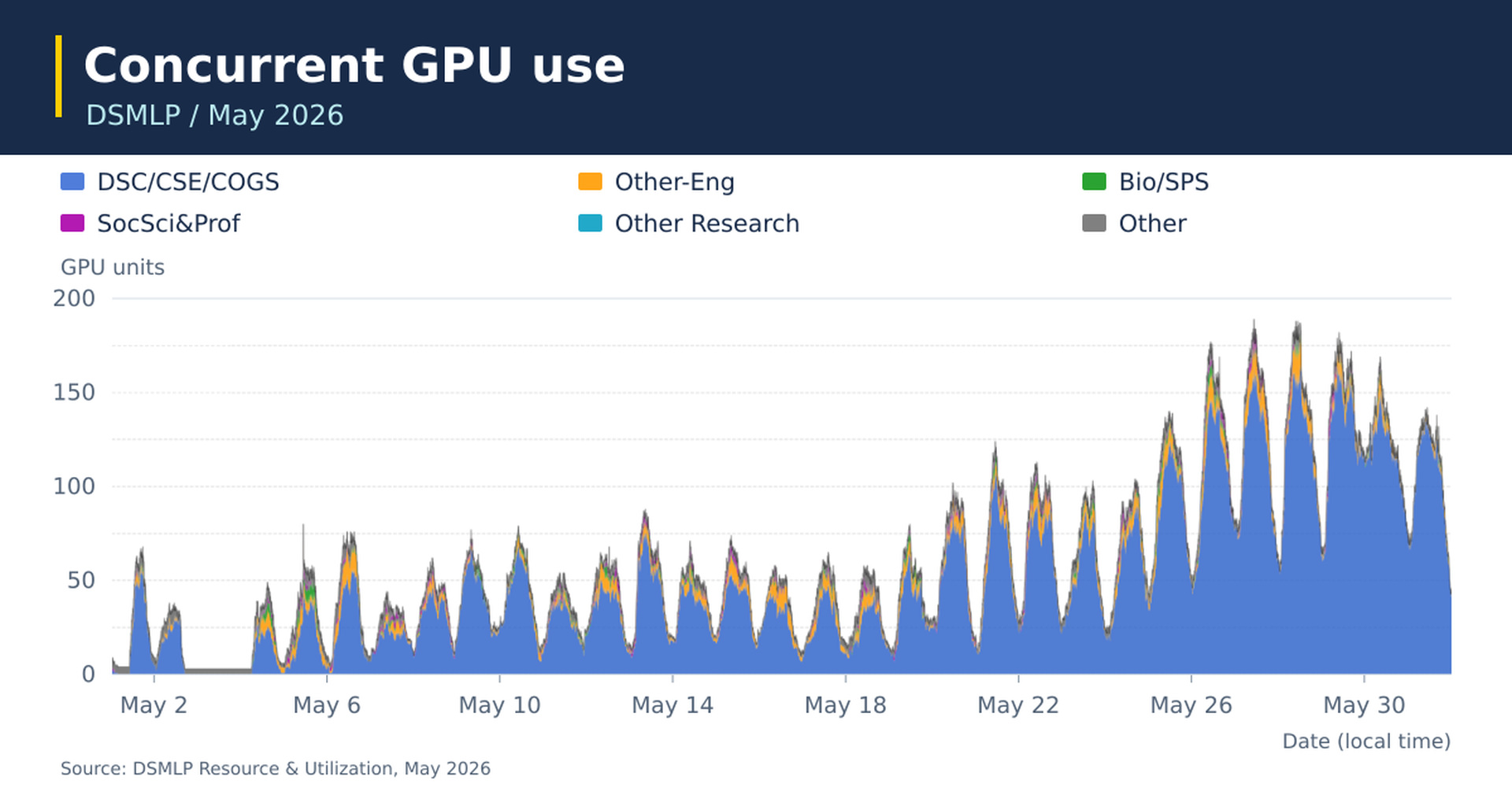
According to campus Information Technology (IT) Services leaders, demand for AI and machine learning computing resources is expected to grow dramatically over the next several years as enrollment expands and coursework increasingly incorporates advanced AI techniques. Demand from Halıcıoğlu School programs alone is projected to more than triple, from about 43,000 hours a year of processing on advanced GPU units in 2026 to more than 140,000 by 2030.
“Planning for that growth, and for rising demand across the rest of campus, led us to rethink how we deliver our DSMLP services,” said Adam Tilghman, lead architect of PARASOL at IT Services. “Together, the School’s investment and our changes to serve that demand are significant enough that the platform deserves a new name. The result is a stronger resource for students and researchers in the School and across campus.”
Beginning in Winter quarter 2027, new School-funded GPU servers will nearly triple PARASOL’s overall GPU capacity and nearly quadruple the peak-period capacity available to Halıcıoğlu School courses, helping close a growing gap between student demand and available resources. Each year, they will provide approximately 66,800 GPU-hours during peak instructional periods and more than 213,000 off-peak GPU-hours for research, capstone experiences, graduate work and coursework at other times.
The Halıcıoğlu School is expanding capacity through additional hardware and systems support, including four new high-performance GPU servers equipped with a total of 32 NVIDIA RTX PRO 6000 Blackwell GPUs.
Through DSMLP and its evolution to PARASOL, students gain access to computing environments that mirror the tools and workflows used in industry and research settings, providing valuable practical experience while supporting coursework and research across undergraduate, master’s and doctoral programs. Beyond their courses, Halıcıoğlu School students will also be the first to receive automatic access to Open Learning workspaces where they can explore large language models and other AI tools on their own – from personal projects to early-stage research and entrepreneurial ideas.
The initiative also lays the groundwork for future growth. The new deployment will allow university leaders to monitor demand, assess utilization and plan additional investments as AI education continues to evolve with additional software and services that make it easy for instructors and students, especially outside of STEM fields, to benefit from technology advances for an enhanced teaching and learning experience.
“As AI becomes part of more courses and disciplines, students need dependable access to the computing resources that make hands-on learning possible,” said Kevin Chou, Interim Chief Information Officer at IT Services.”PARASOL expands that capacity while helping UC San Diego build an infrastructure that can grow alongside student and faculty needs.”
Instructors can request PARASOL access for their coursesd Research Cluster users keep their existing accounts
Learn more about research and education at UC San Diego in: Artificial Intelligence
Read more news about: Halıcıoğlu School of Data Science and Computing,
Artificial Intelligence
