

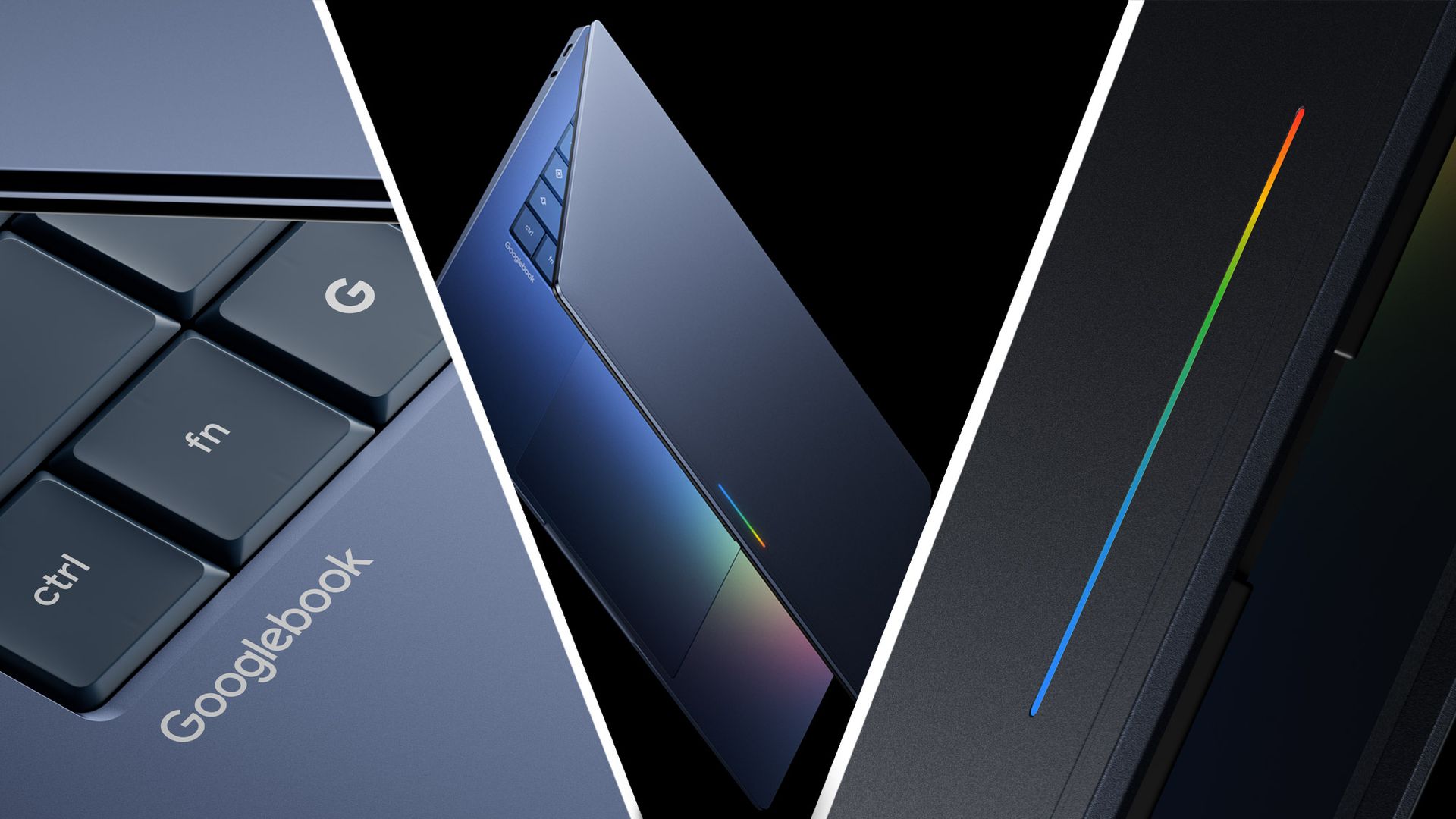
For recent generations of students, Chromebooks are ubiquitous: Google’s handy, budget-friendly laptops have become classroom fixtures across the US and beyond, handling everything from homework to essays and assignments.
But many of those students are now heading to university or entering the workforce, where choosing a laptop for themselves is a different prospect altogether – something Apple is making a play for with the MacBook Neo.
Google isn’t sitting idly by, though, and the recent launch of its Googlebooks is a big statement of intent.
Far from being the inexpensive Chromebooks familiar in schools, Googlebooks like the Acer Googlebook 14are premium laptops running a new Android-based OS, with deep smartphone integration and the company’s Gemini AI.
After years of gaining a deep familiarity with Chromebooks and ChromeOS, these students might be tempted to stick with Google’s ecosystem as they grow older and their computing needs change.
But is familiarity enough? Apple’s MacBook Neo and a wide range of cheaper Windows laptops also offer compelling alternatives, and both platforms are already deeply entrenched in work and everyday life.
School of Chrome
Google launched its Chromebook project back in 2011, initially as a general-purpose laptop, but its success really came in the education sector – long dominated by Windows – where inexpensive hardware, straightforward device management, and Google’s classroom tools won out.
Michael Boreham, principal analyst at Futuresource, told TechRadar that Chromebooks accounted for just 16% of US K–12 mobile PC sales in 2013, rising to 50% by the end of 2015.
Since 2020, Chromebooks have accounted for between 61% and 67% of annual US K–12 mobile PC shipments, a remarkable level of dominance.
The success of Chromebooks has led to millions of students spending their formative years using Google’s OS and apps, with services like Google Docs and Drive also available across Windows and macOS.
But those laptops were generally chosen by schools, rather than their students.
“As students transition from school-issued devices to choosing their own laptops, preferences typically shift away from the devices provided by their institution and towards products that align with personal needs and lifestyles,” says Boreham.
Old habits, new laptops
Carolina Milanesi, president and principal analyst at The Heart of Tech, draws an important distinction between students becoming familiar with Google’s software and actively wanting to buy its hardware.
“What a decade of Chromebooks built is familiarity with Google’s tools: Docs, Drive, Classroom, Gmail,” she says. “Those tools run in a browser on any laptop, so that familiarity travels with the student wherever they go, including to a Mac.”
“For most students the Chromebook was a device the school assigned, often low-cost and locked down, and the association is with schoolwork more than with a laptop they chose,” Milanesi adds.
Futuresource’s Student Journey research, which surveyed students in the US and UK, found that durability, value for money, storage, and battery life were among the main factors influencing their purchases.
“The lure of Apple is strong for university students given Apple’s unique position as a lifestyle brand and the power of its joined up ecosystem with the seamless integration between iPhone, iPads and MacBooks,” says Boreham.
When choosing a brand, students also considered compatibility with their existing devices, brand reputation, and previous experience. Most university students surveyed also reported paying for their devices themselves or using university loans and grants, making value for money especially important.
That presents an obvious challenge for Googlebooks: price. The laptops start at £999 in the UK, compared to £599 for the MacBook Neo – or just £499 with Apple’s education discount – and many of the best student laptopsare also considerably more affordable.
People choose personal laptops based on the phone in their pocket far more than on the computer they used in class
Carolina Milanesi, president and principal analyst, The Heart of Tech
These are different machines, for sure, but a price gap of up to £500 is hard to ignore when value for money is such an important factor.
Milanesi isn’t convinced it’ll be an easy sell: “It will be difficult. Younger buyers have a $499 to $599 MacBook on one side and Windows laptops at every price point on the other, and a new platform asking for a premium carries more risk for the buyer.”
Then there’s the software. Familiarity with Chrome is all well and good, but university students may need specialist applications that their school Chromebooks never had to handle.
“If Googlebooks can replicate or better the performance of a MacBook or Windows notebook and have access to key applications, like, for example, Adobe’s Photo Editing suite, then it may capture share of the student user base as they move beyond high school,” says Boreham.
For Milanesi, Google’s enormous user base will only get it so far. “Googlebook has to turn that comfort into a purchase, which means making the Google laptop the aspirational choice rather than the default one,” she says.
The Android in the room
Google’s biggest advantage might be sitting in its potential customers’ pockets: their Android phones.
“The Android phone base is the bigger opportunity,” says Milanesi. “People choose personal laptops based on the phone in their pocket far more than on the computer they used in class, and Apple has spent years proving how much phone-to-laptop continuity drives Mac sales.”
Features like Cast My Apps let users access their phone’s apps on a Googlebook, while the Files app can bring photos and documents from an Android phone onto the laptop. It’s the kind of connected experience Apple users have enjoyed for years, and an important part of Google’s pitch against Windows.
“Against Apple, Google is offering parity more than an edge,” says Milanesi.
While these ambitions might sound good on paper, the experience isn’t quite seamless yet. When we put the Acer Googlebook 14through its paces, the hardware and AI integration impressed, but connecting an Android phone proved more complicated than expected.
Milanesi points to another limitation: “Full phone integration requires Android 17, which shrinks the addressable base at launch given how slowly Android updates roll out.”
Every Googlebook already includes a year’s subscription to Google AI Pro, but Milanesi believes student discounts and more competitive bundles could help bring the overall price closer to Apple’s MacBook Neo. Cheaper models further down the line might also help Google reach a wider audience.
Full phone integration requires Android 17, which shrinks the addressable base at launch given how slowly Android updates roll out
Gemini could be another way for Google to stand out, although Milanesi thinks its importance hasn’t been obvious enough at launch. “I wish Gemini stood out more as a driver of the overall experience,” she says.
Googlebooks, then, could well benefit from the Chromebook generation, but their immediate success is likely to depend more on the smartphones those students carry than their school laptops.
