

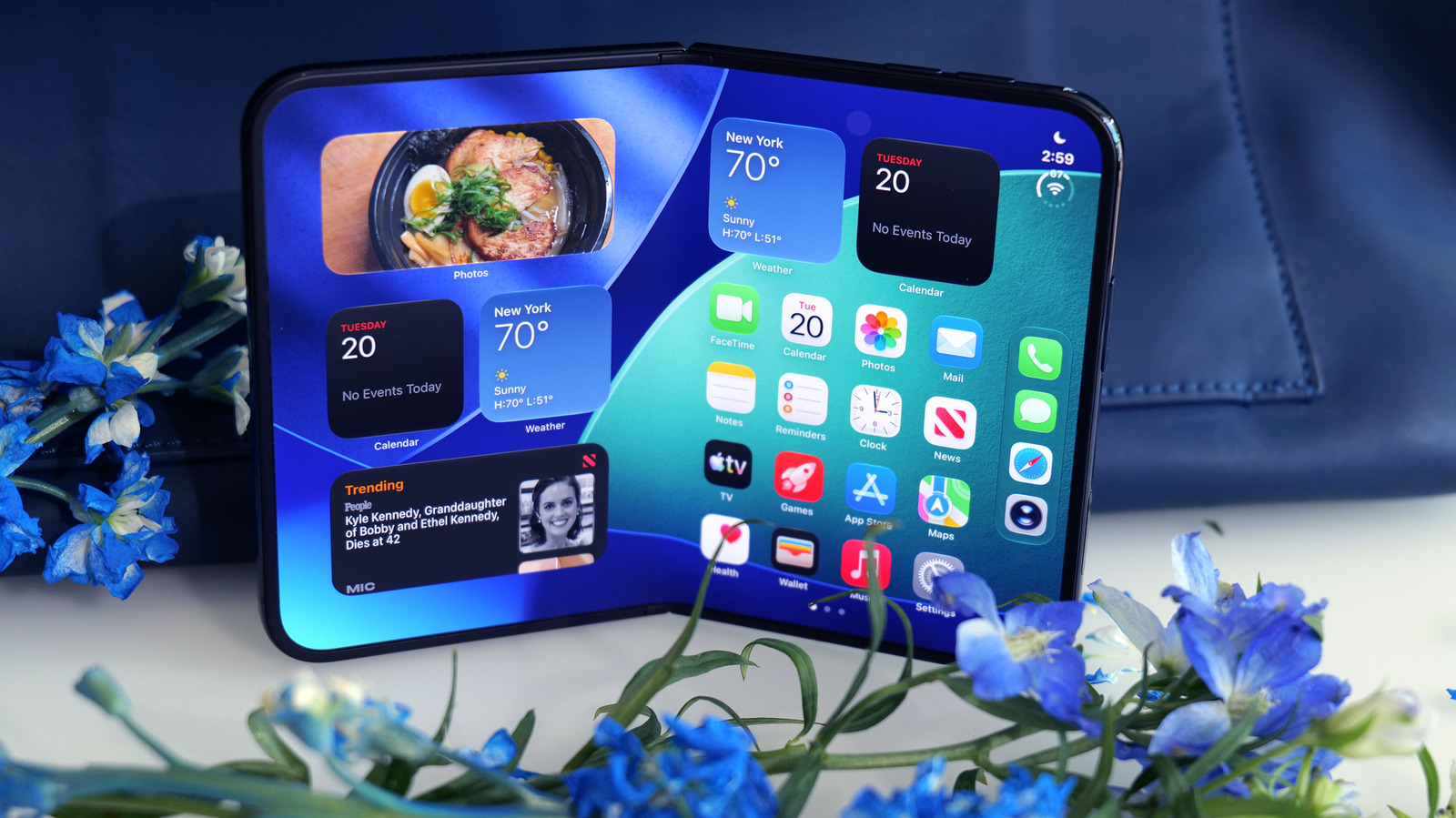
But a lot of apps still need fine-tuning to look their best on Apple’s first bendy iPhone.
Nearly a decade ago, the iPhone X ushered in major changes to the way Apple built its mobile devices and we are still seeing the effects of that today. However, between John Ternus taking the reins as CEO and the arrival of the iPhone Duo ($1,999), it feels like Apple has embarked upon another paradigm shift that could pave the way for the company’s next generation of hardware. While the Duo is heavy, expensive and late to the market compared to its Android rivals, it encompasses some of the best tech used by its competitors while also redeeming features that other manufacturers have seemingly left for dead. And even though many apps still need to be optimized to fully take advantage of the Duo’s design, the release of Apple’s first foldable has been worth the wait.
Design and displays
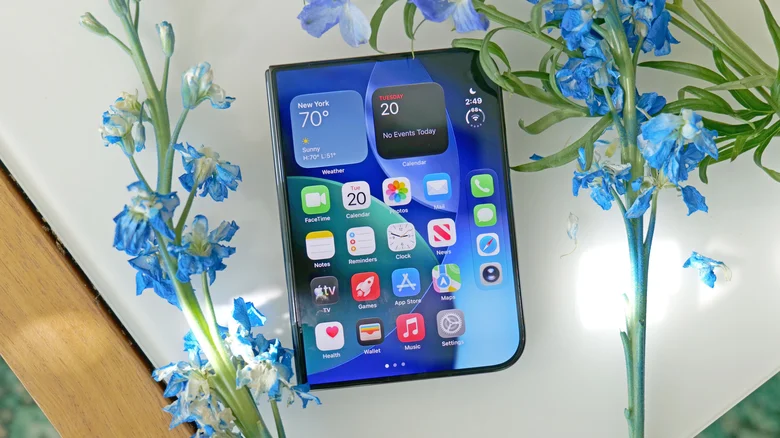
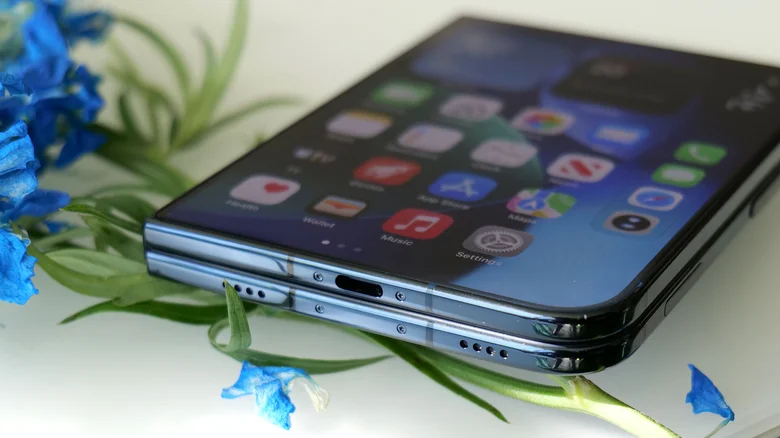
The move from one to two screens offers a world of possibilities for phone makers, but also a lot of traps. You make something too sleek and it might not have the durability to withstand the rigors of everyday life. And with not one but two displays to worry about, the handoff between from one panel to another becomes even more important. To balance things out, Apple went with a design that delivers strength and consistency, even though the downside of that decision is a device that’s significantly heavier than its closest competitors.
On the outside, the Duo features a glossy 1,878 x 2,670 5.4-inch OLED display with 120Hz ProMotion support and an impressive peak brightness of up to 3,000 nits. Meanwhile on the inside, there’s a larger 1,398 x 2,034 7.6-inch panel with a matching 1:1.4 aspect ratio and lofty luminance. This makes transitioning from one screen to another super smooth, as you get the same viewing experience (homescreen and all), just with twice as much real estate to work with. Additionally, Apple’s clever opening animation adds a bit of visual spice to tie everything together.
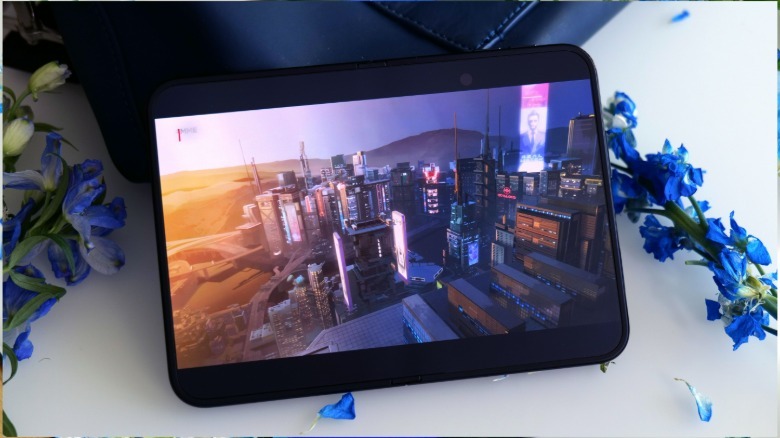
The one major difference is that the Duo’s inside screen has a matte nanotexture finish instead of a glossy treatment which serves a few purposes. Not only does it help protect the rest of the flexible display underneath, it also cuts down on reflections while hiding the appearance of a crease. To be clear, there is definitely a small divot that runs down the middle of the main display and if you’re looking for it at the right angle, it’s not hard to find. That said, during normal use when you’re looking at the phone head on, the crease basically disappears. A word of caution: While it is replaceable (for a $49 fee), the Duo’s nanotexture layer can be removed if you pick at it too much. And unlike with its Android rivals, there’s no warning during setup that this film should not be peeled off by anyone aside from Apple-certified technicians.
Regardless, the iPhone Duo’s two displays both provide excellent image quality. Its exterior display is a great size for one-handed use and the textured surface on its main panel should make drawing or taking notes with an Apple Pencil feel great (support for that arrives later this month). I also think the strong matte finish makes things like comics and anime look even better than they typically do on glossy screens. The small trade-off is that perceived color saturation and vividness from the Duo’s interior panel isn’t quite as pronounced in bright rooms, though at night, that deficiency goes away.
Elsewhere, the Duo is held together by a burly titanium chassis and one of the nicest hinges I’ve used on any foldable. Apple says it’s composed of more than 100 different components, but you’d never know just from using it because it’s so damn smooth. It can hold itself open in a huge range of positions while the amount of pressure needed to unfold the device changes the wider you go, which adds an extra level of sophistication when switching between screens. And somehow amongst all this, Apple found a way to give the Duo an IP68 rating for dust and water resistance, which is only available from one other family of foldables on sale in the US: the Pixel 11 Pro Fold line.
Notably, instead of Face ID, which has become a standard feature on modern iPhones, the Duo uses a Touch ID sensor built into the lock button on the side. This might seem like a weird choice, but on a device that’s meant to be used in a ton of positions, the idea of having to put infrared face readers on both the inside and outside of the phone just doesn’t make a ton of sense. Thankfully, Apple’s solution is really accurate, though it does take a bit longer to unlock than you might expect. The company says the thought process behind this is that this creates a more consistent experience when compared to other devices that still use Touch ID (like iPads and MacBooks). Apple says this also gives the phone a chance to wake up and display things like notifications on your lock screen before you get access to the entire device.
The main drawback to the Duo’s beefy build is that it weighs 254 grams (8.96 ounces), which is more than 25 percent heavier than a Galaxy Z Fold 8, despite the latter having the same number of cameras and larger displays. And that’s before you factor in the extra heft from a case. This kind of bulk is pretty significant to the point where the Duo can feel a bit like an anchor in your pocket if you’re wearing loose pants and during longer sessions, so you’ll probably want to hold the Duo with two hands instead of one.
Performance and software
Powered by an A20 Pro chip, the same as what you get in an iPhone 18 Pro, the Duo has no shortage of processing power. That said, I won’t belabor you with too many anecdotes of how fast Apple’s first foldable is. The Duo pumps out strong framerates while gaming and running multiple apps side-by-side is a breeze. You can technically even play multiple games at the same time thanks to the Duo’s multitasking capabilities, though at that point, having enough fingers and the brainpower to focus on two simultaneously becomes the bigger challenge.
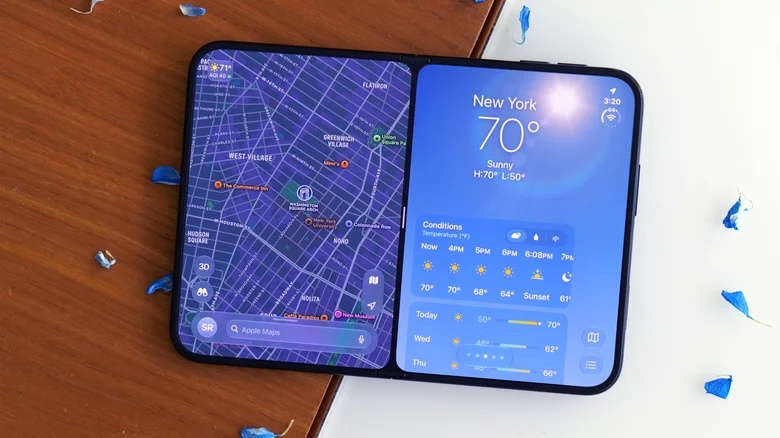
Speaking of multitasking, that can be accomplished in a handful of easy ways. You can simply press and hold on an app to summon a menu with a split view option. You can also do the swipe up and hold gesture, at which point you can drag apps to the left or right to have the Duo automatically snap them to either side of the screen. From there, you can even pin a pair of apps together by tapping on the small tab in the middle, so that the next time you open any one of the two, the phone will automatically summon both in split view mode. This is super handy for combos like your preferred email and calendar app, which I often want to see at the same time. You can also do this when holding the Duo vertically, though in that position, you are restricted to a top vs bottom split instead of being able to position them side-by-side.
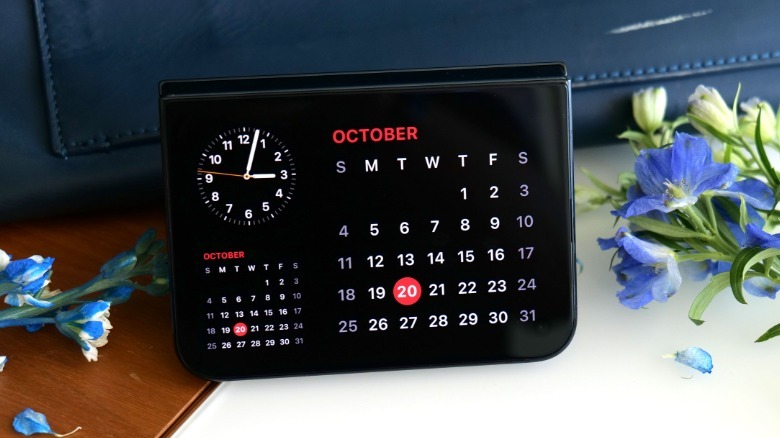
However, to account for the Duo’s wider displays, Apple made some major changes to the traditional iPhone UI in iOS 27. Regardless of whether the phone is opened or closed, the standard row of home apps rests on the side of the phone (usually the right), while icons for stuff like Wi-Fi, battery level and anything that would normally live in the Dynamic Island sits in the top right corner. This makes a lot of sense to me, and it allows you to open full-size apps without UI elements getting in the way.
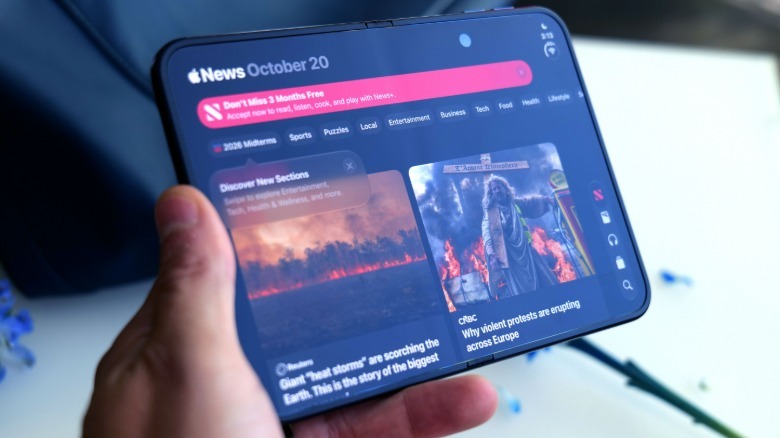
The one big wrinkle to this is that because the Duo is Apple’s first foldable, there are a ton of apps that haven’t been optimized yet to run on a device like this. To the company’s credit, first-party software doesn’t suffer from this shortcoming and it’s clear Apple has done a lot of work to utilize the Duo’s design. For example, things like the App Store and Contacts have been tweaked to present a dual-pane design that makes the Duo’s large inner display really shine. Plus, there are subtle additions like shifting UI elements over to the side and out of the middle when the phone is bent in half, which can make touching the center of the display feel a bit awkward. The Duo even supports multiple positions like when it’s halfway closed while resting on a table, which is great for taking photos without a tripod or simply watching a video while eating.
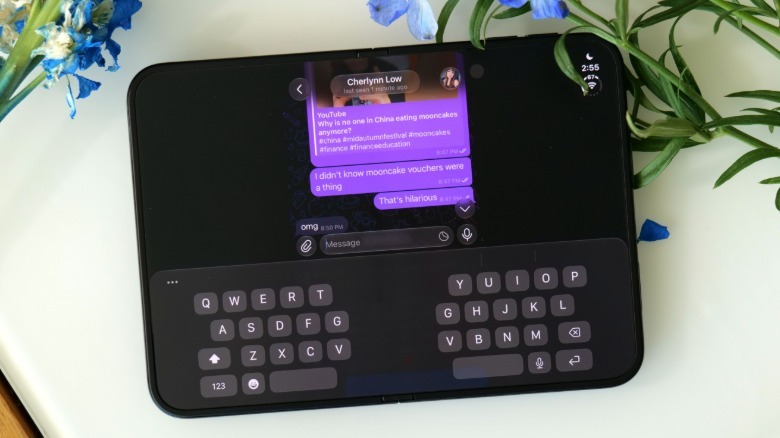
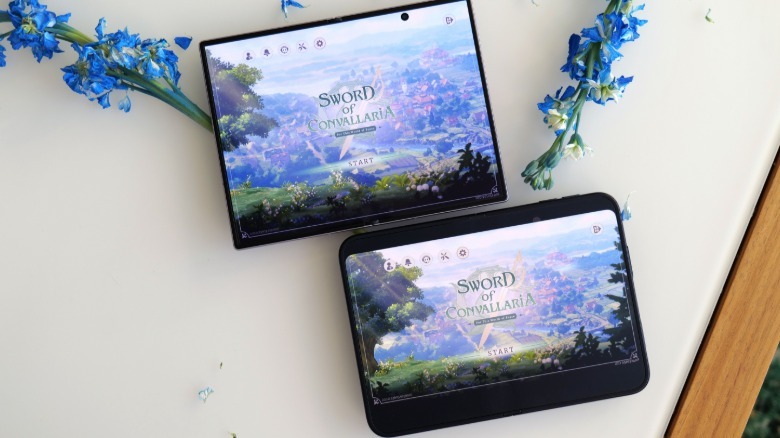
Unfortunately, there is a lot of other software that hasn’t been updated yet. Apps like Telegram are big offenders. Even on the Duo’s big interior display, when you open Telegram, you get a portrait orientated app with tons of dead space on either side. Apple has tried to account for this by giving you buttons that will rotate and expand the app into landscape for a better fit, but even then, it’s far from ideal. Then there are games like Sword of Convallaria, which is landscape by default, that still have significant letter boxing at the top and bottom of the app.
Google has been pushing for things like adaptive resolutions in Android apps for several years, so you don’t run into the same issues. Sometimes it even feels like Google and others are trolling Apple, because apps like Gmail that have custom UIs on Android foldables don’t have a similar setup on the Duo. But I’m going to chalk that up to newness rather than malice this early on. Now I’m sure this will change over time as developers go back and update their apps, and to be fair, there are a number of big names like Netflix, Instagram and OpenTable that have already adjusted themselves for the Duo. But still, the difference between optimized and unoptimized apps is the biggest growing pain you’ll face on Apple’s first foldable.
Cameras
The Duo’s primary camera setup consists of dual 48-megapixel sensors in back, which offers a 2x optical zoom along with two main focal lengths (a 26mm equivalent primary view and a 13mm ultra-wide). Meanwhile, in the top right of the exterior display, there’s a 12MP Center Stage camera for all your FaceTime and selfie needs, and all three of these cameras do a great job of taking sharp, detailed images. In fact, when tested side-by-side against a Z Fold 8, the Duo easily kept up with Samsung‘s image quality, and in some cases, like taking low-light photos, Apple’s foldable captured more well-exposed pics with more accurate colors.
The Duo even supports a number of advanced features like 4K video recording at up to 120fps and the same set of adjustable Photographic Styles you get on the main iPhone line. I also like little Duo-specific features such as using the exterior display to give subjects a preview of your shot when using the rear cameras or Kid Cue to stimulate a genuine smile when snapping pics of children (though existing analogues already exist on Android foldables). But if you want the best cameras Apple can put in a handset, the iPhone 18 Pro is still the best option thanks to things like its variable aperture lens and longer zoom range.
But perhaps my favorite feature on the Duo is the under-display-camera hidden beneath its main display. Instead of a standard punchhole, Apple did some truly clever engineering by changing the sub-pixel layout above the camera, allowing light to pass through so you can still take pictures, but without leaving an ugly black dot on the screen when it’s not being used. This feature is similar to the tech Samsung introduced way back on the Galaxy Z Fold 3, but for some reason later abandoned on the Z Fold 6, and I’ve been mad about that ever since. But Apple revived it and made it better than ever, and it really adds to the beautiful widescreen experience you get from the Duo’s main display.
Battery life and charging
Apple doesn’t publish official battery capacity specs for its phone, but if you believe the leaks, the Duo features a cell of around 4,883 mAh. When I performed a local video rundown test, the Duo lasted 28 hours and 48 minutes, which is about half an hour longer than a Galaxy Z Fold 8 (28:14), but not quite as long as what you get from a Moto Razr Fold (31:00) and its big 6,000 mAh power pack. And in the real world, the Duo’s longevity often feels even better. Even while testing the phone, which includes running a handful of benchmarks and prolonged multitasking, Apple’s foldable routinely had 40 percent of more juice left in the tank at the end of the day. Depending on how hard you push it, I wouldn’t be surprised if people can go two days between charges.
Meanwhile, when it comes to topping off the Duo, Apple says it can get up to 50 percent charge in 20 minutes when using a 60-watt power adapter, or the same amount of juice in half an hour with a slower 35-watt brick. Notably, while Apple doesn’t make a first-party 45-watt charger, the company says that’s actually all you need in order to max out its wired charging speed. Alternatively, if you prefer a wireless pad, there isn’t a huge drop in exchange for the added convenience as the Duo supports Qi2 chargers (and MagSafe accessories) at up to 25 watts.
Wrap-up
There’s a warning that often comes up between gadget nerds when considering a new product: Don’t buy first-gen devices. As exciting as contraptions with novel form factors can be, they are also often a test to see how a concept will fare in the real world. The big difference here is that Apple allowed rivals like Samsung and Google to explore and revise foldable phone design for several years before making one of its own. The company had the luxury to learn from its competitors’ accomplishments and missteps, which means the iPhone Duo has sidestepped most of the growing pains a new class of gadget might normally encounter.
The result is a foldable iPhone that features an exquisite design with highlights that include a beautiful main display, a tough titanium frame, great battery life, solid cameras and excellent performance. And while I think the Duo’s more vertically-aligned UI will need to be tweaked down the line, it makes a lot of sense given Apple’s approach to mobile multitasking.
There’s no doubt that starting at $2,000, the iPhone Duo is extremely expensive and I really wish it wasn’t as heavy as it is. But sadly, this is just the going rate for a premium foldable these days. The Duo’s biggest issue is that it’s going to take time for developers to update their apps to support the phone’s novel design. When software is properly optimized, the Duo feels more powerful and capable than any iPhone that came before it when it comes to multitasking. And even when they aren’t, things may look a bit awkward, but you still get a very functional experience. So even though the Duo is Apple’s first attempt at a device like this, there’s no doubt Ternus and company have made a first-class foldable.
