

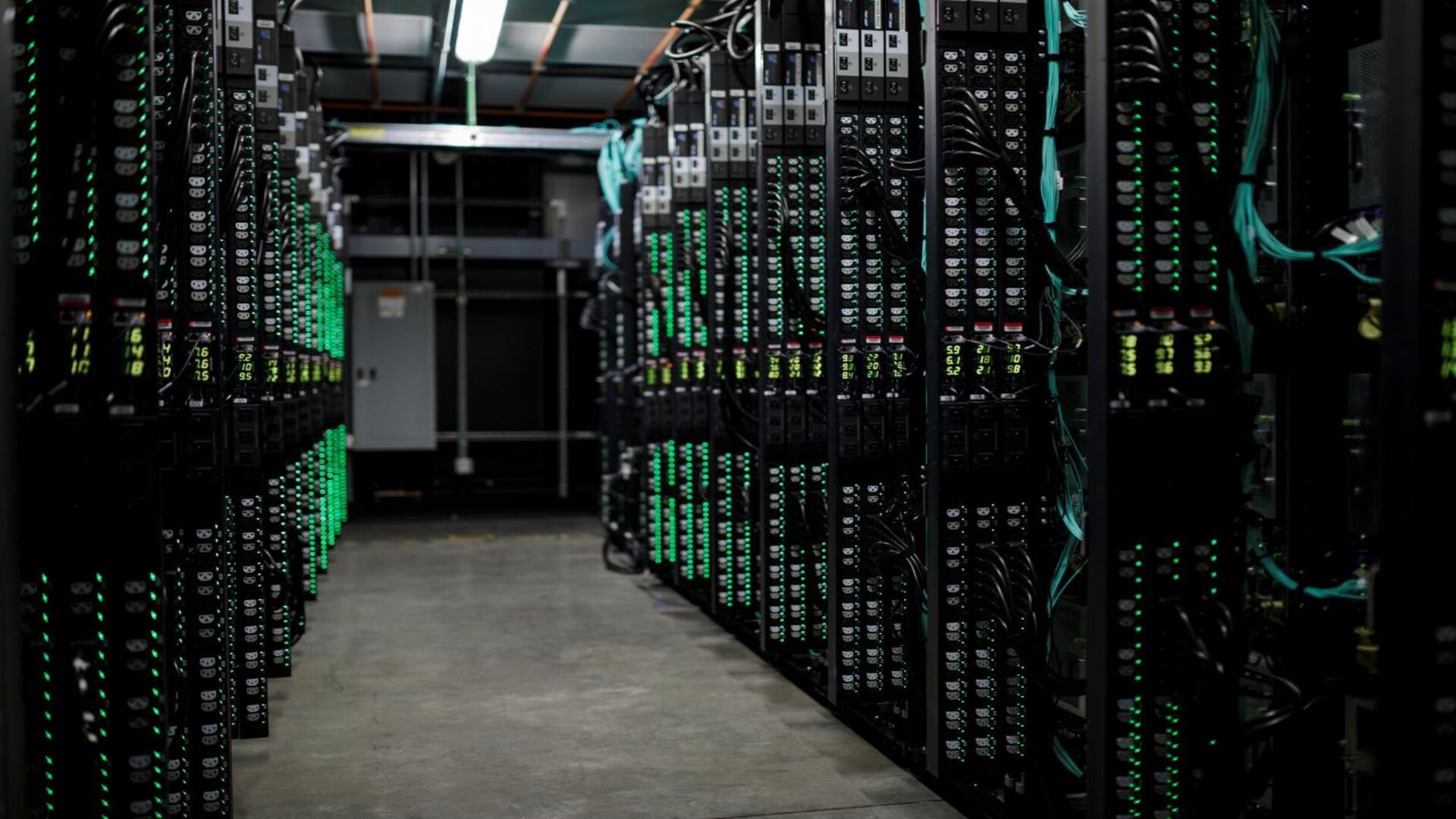
- US data center developers have requested 1,066GW of grid connections, but Wood Mackenzie expects utilities to commit to only about 28%
- Utilities are demanding collateral, longer contracts, and study fees; Exelon’s high-probability load fell from a whopping 18GW to 11GW once it insisted on the former
- Because grid costs are shared, phantom demand risks landing on household bills, and nobody knows how much of it is real yet
US utilities and grid operators are now demanding higher rates, longer contracts, collateral, and steep engineering study fees from data center developers, in an attempt to weed out what the industry calls “phantom” data centers.
Reporting from <a href="https://www.wsj.com/business/energy-oil/phantom-data-centers-are-demanding-more-from-the-power-grid-than-they-need-77e322bb” rel=”nofollow noopener” target=”_blank”>The Wall Street Journal claims the reasoning is straightforward: Grid costs are shared, so if a utility builds substations and transmission lines for a project that never shows up, everyone else on the network ends up helping to pay for them.
The numbers back up the nerves in play: developers have requested 1,066GW of grid connections for US data centers, according to a Wood Mackenzie analysis first reported by Bloomberg in August 2026, a figure equal to roughly 83% of the country’s entire utility-scale generating capacity at the end of 2025.
A queue full of ghosts as collateral becomes the norm?
Wood Mackenzie expects utilities to commit to serving only about 28% of it: roughly 12% that already has firm service commitments, plus a further 17% that looks likely. The WSJ also cites a separate Wood Mackenzie measure that puts just 23% of disclosed requests in its high-confidence category.
Much of the gap is due to duplication; developers who don’t yet know which utility can deliver power fastest file the same project with several of them and keep every option open until one pans out.
Others are simply speculators: commentary in POWER Magazine argued that private equity funds, land brokers and shell companies are claiming queue positions without site control or a signed customer, betting that land with a grid connection attached will find a buyer.
The phenomenon isn’t new. Utility Dive was writing about phantom data centers in 2025, and TR reported in July that 67% of electricity executives surveyed by Capgemini were seeing speculative applications for capacity. The change is that utilities are now pricing the problem, and it is causing many adverse effects.
Exelon’s attempts to lock down potential consumers
Exelon, which runs utilities across the Mid-Atlantic and Midwest, offers the clearest look at what happens when developers are asked to put money down.
After it began requiring transmission security agreements (TSAs), contracts that bind customers to credit obligations, committed revenue contributions, and shortfall payments, its high-probability data center load fell nearly 40%, from 18GW at the end of 2025 to about 11GW in the second quarter. Its wider pipeline of projects under study dropped from about 43GW to 25GW.
Jeanne Jones, Exelon’s CFO, told the WSJ that typical requests used to be around 50MW and now often run to 1,000MW or more. The question she kept fielding, internally and externally, was “How do you know what’s real?”
Exelon, however, also told analysts its $41 billion capital plan through 2029 is unchanged, so a 40% cut in expected data center load has not, so far, shrunk the spending plan.
None of this would matter much if grid capacity were cheap, but it simply isn’t. PJM, the largest US grid operator, saw its capacity auction clear at the price cap for the third time in a row this summer while missing its reliability target by 6.8GW.
In September, its independent market monitor told federal regulators that 4,017MW of forecast data center load, 42% of the growth PJM had assumed, had already been canceled or delayed.
Households are feeling the cost increase; reports in July indicated that Henrico County, Virginia, asked staff and schools to cut electricity use after a 24.9% rate increase. Virginia has also moved to stop utilities passing data center costs onto everyday users, and Texas bills are rising faster than inflation. Lindsey Short of the Ohio Manufacturers’ Association warned against building the grid around “the most optimistic number on somebody’s spreadsheet.”
Underbuilding carries its own risks, though, especially when transformers can take years to arrive, as a recent deep dive on grid bottlenecks laid out. That is why utilities are locking in the customers they do accept. Average minimum contract lengths for large customers have risen to about 10.8 years from 4.6 before 2024, according to filings aggregated by Halcyon and cited by the Journal, and a separate research brief built on Halcyon’s tracker found a similar jump.
What nobody can yet say is how much of the AI power rush is real, and that poses problems for planners, stakeholders, and households alike. Until it does, utilities are doing what any lender would: asking to see the money first; households just happen to be roadkill if things don’t pan out.
