

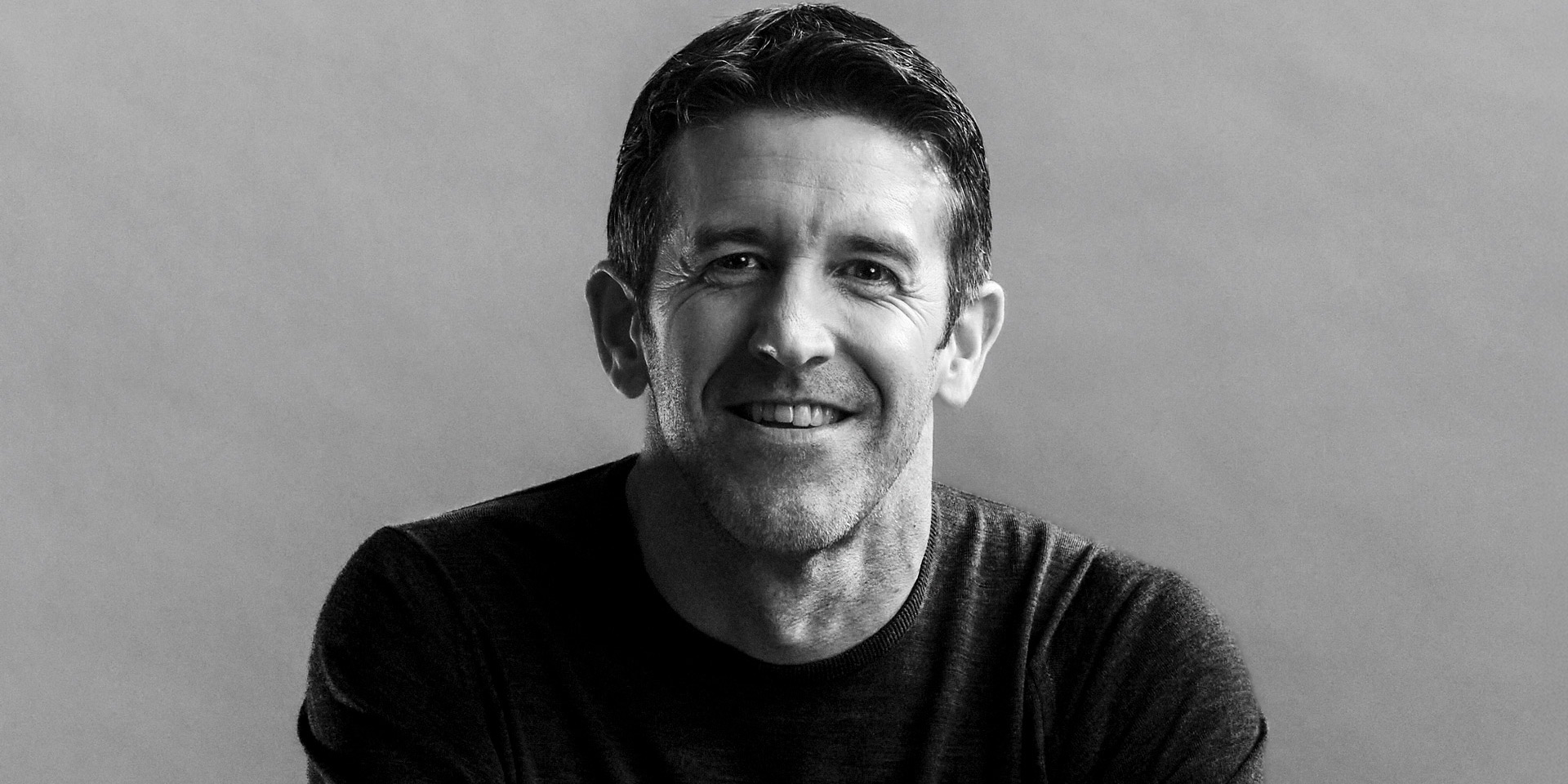
Just below the broad smile he’s been wearing all morning, John Ternus’ hands are shaking.
On this September day in Silicon Valley, Apple’s new CEO is surrounded by celebrities, tech enthusiasts, and reporters who have flocked to Apple Park from around the world to catch a glimpse of the company’s new and long-awaited foldable phone, the Duo. After Ternus takes a few photos with the device, an Apple PR rep pulls the influencer known as IShowSpeed out of the crowd to meet him. Winning over the 21-year-old isn’t exactly the toughest assignment Ternus has faced in his 25-year Apple career: Speed barks when he sees the phone and then gleefully springs into a backflip.
But IShowSpeed also happens to be livestreaming the encounter to his 61 million subscribers on YouTube. And as Ternus thumbs through the $1,999-and-up phone, attempting to drag a photo into a text-message box, eagle-eyed viewers notice his hands quivering. Ternus later explains that he didn’t sleep much the night before. “I was on such a moment of adrenaline and caffeine and excitement for the day,” he tells TIME.
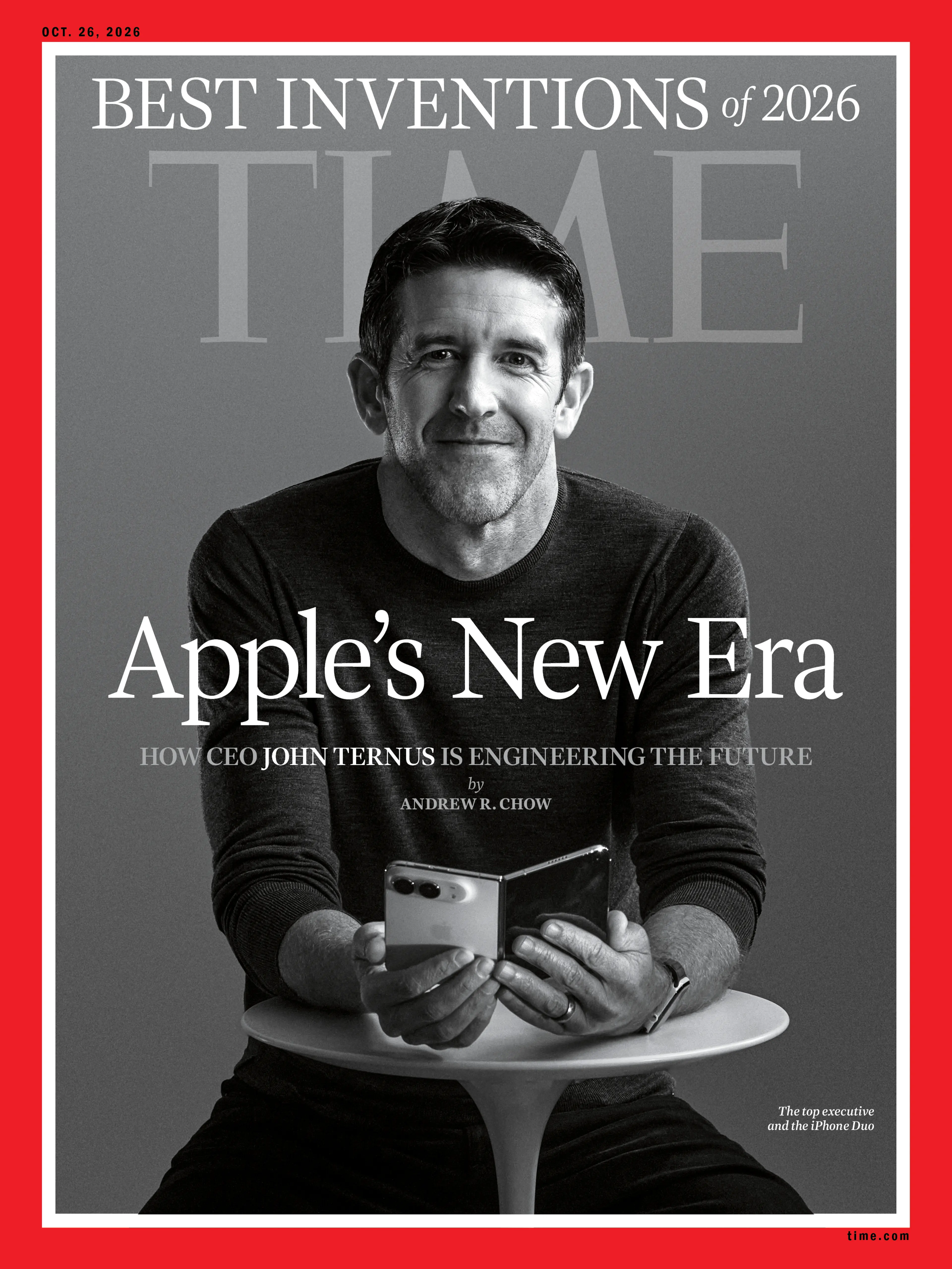
Ternus, who took over as CEO on Sept. 1, was chosen to run Apple because he has ably applied his engineering and design expertise to shape products that redefined entire categories of technology, from the Mac to iPad to AirPods and the iPhone. But becoming the face and front man for the second biggest company in the world by market cap is another proposition entirely. Ternus’ hard technical skills may not translate easily to a position that involves toggling from Hollywood to stockholders, to politicians shaping policy, to rival CEOs in the constellation of tech companies whose power challenges nation-states.
His predecessor, Tim Cook, gained stature on the world stage as a power broker deftly navigating global politics, markets, and supply chains. Cook’s predecessor, Steve Jobs, was a rock-star visionary who sold the world on the deeply personal and even spiritual nature of tech creations. Ternus is different from both: a private, detail-oriented engineer, little known outside the company until he became a senior hardware executive in 2021.
Rather than try to replicate his forerunners’ styles of success, Ternus has so far played to his own strengths—which are also those of Apple, a company that first and foremost builds beautiful products that spark productivity, creativity, and joy. Ternus’ interaction with IShowSpeed is clearly designed to capture this (and, of course, to goose preorder numbers among the influencer’s young and massive audience). To some critics, however, the scene might read as a legacy company aura-farming to sell expensive gizmos instead of building the actual technological future, which is artificial intelligence.
Virtually every one of Apple’s fellow Goliaths—Microsoft, Google, Meta, Amazon, and now Nvidia, OpenAI, and Anthropic—have flung themselves into the AI arms race, pouring hundreds of billions of dollars into training ever more intelligent thinking machines. While Apple trains its own models, it is nowhere near the technology’s frontier, leaving the company vulnerable to being left behind if super-smart AI transforms industry and society in the coming years. At the end of September, Apple was conspicuously absent when President Donald Trump hosted a luncheon for AI power players like SpaceX’s Elon Musk, Meta’s Mark Zuckerberg, and Google’s Sundar Pichai, who lobbied him on their visions for America’s tech future.
But Ternus and other Apple executives say they aren’t concerned. In the midst of a populist AI backlash, they contend that they are building a modest but personalized and privacy-preserving form of AI that will actually help ordinary people as opposed to merely dazzling Silicon Valley’s “lunatic fringe,” as Greg Joswiak, senior vice president of worldwide marketing, puts it. And besides, Ternus argues, even if other companies succeed in their mission of building super-intelligence, users will still want to talk to it on Apple devices.
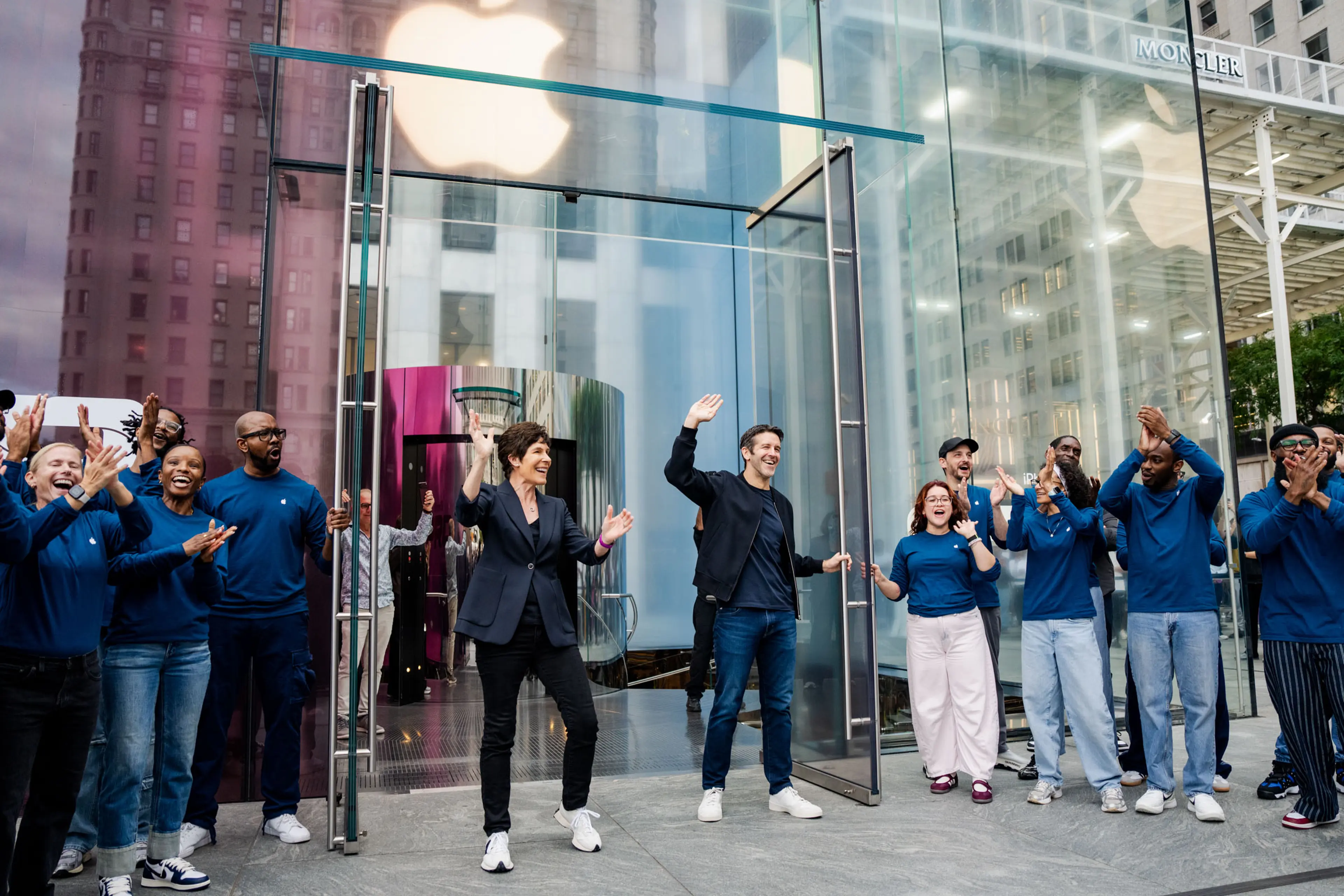
“People want physical things,” he says a week later at the company’s flagship store on Fifth Avenue in New York City, wearing an amiable but guarded smile. He spent the morning greeting superfans who had lined up all night to get their hands on the iPhone 18. “They want to talk, to see images of loved ones, to take pictures. So I don’t see a scenario where all of a sudden, our devices disappear and we don’t have a need for an iPhone.”
Ternus is barely olderthan the company he’s running. Born in 1975 in Orange County—Apple was founded in ’76, just 400 miles north—he grew up as Steve Jobs was redefining the personal computer as a societal force. When Ternus was 8 years old, his father bought an Apple II. “I started playing games on it and fell in love with Apple,” he says. A decade later, he took his family’s newer Mac, an SE model, to college at the University of Pennsylvania, where he studied mechanical engineering.
In 2001, Ternus left a virtual reality company to join Apple at 26 as an engineer. He has now spent half his life at the company, rising through the ranks on his propensity to consider both how products are made and how the user will experience them. “John was really at the center of driving the spirit of collaboration across the company to make sure that end-to-end these products give you that delightful experience—and the technology kind of disappears as you’re using it,” says Richard Dinh, Apple’s vice president of product design.
Over the past 15 years, some critics have accused Apple of failing to innovate the way it did in previous eras, when the company popularized the home computer, the MP3 player, and the smartphone. But it is undeniable that Apple’s core products—its computers and phones—have remained elite thanks to behind-the-scenes innovations in hardware and software. And Ternus, Apple executives say, has been a big part of these improvements.
When Cook, 65, announced in April he would step down following a 15-year tenure, it was no surprise that the company tapped Ternus as his successor. Other executives describe him as pragmatic, meticulous, and unifying. “Ternus is a logical pick,” says Neil Cybart, an analyst who has been following Apple for more than a decade on his site Above Avalon. “He has been a big believer in this design-first culture that defines Apple, as well as the idea that it’s not just technology here; there needs to be something more.”
In the late 2010s, Apple executives shifted their messaging to focus more on fast-growing services like iCloud, the App Store, and Apple Music. But growth in service revenue has moderated this year, and the promotion of Ternus, a hardware and product guru, signals a return to the company’s roots.
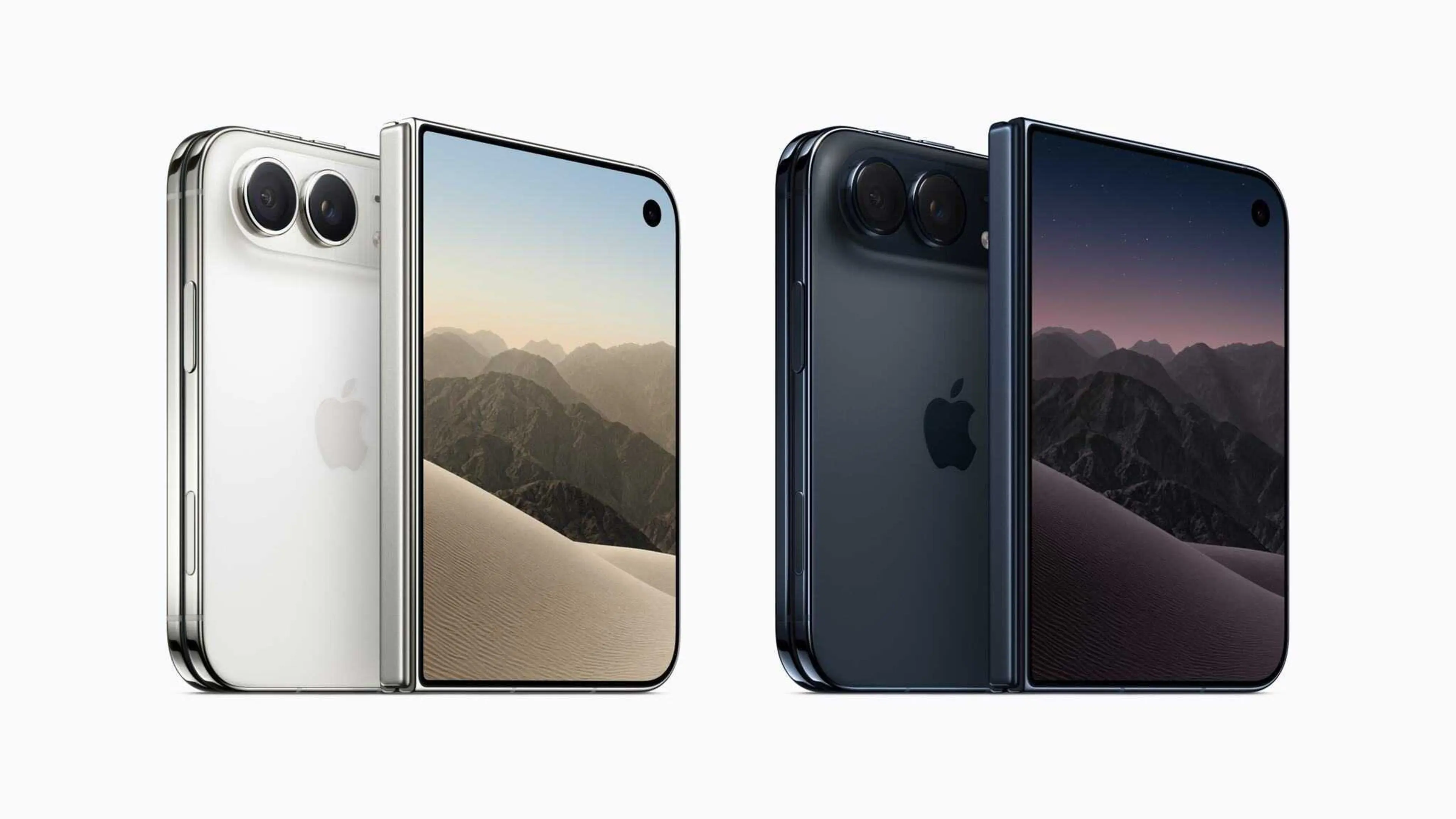
So it’s fitting that his ascension coincided with the announcement of the Duo, Apple’s most radical design change to the iPhone since its 2007 release. Apple has been exploring the concept for years. In 2011, when many people still carried around flip phones, Ternus and five other engineers filed a patent application for foldable electronic devices, exploring what kind of batteries and circuit boards might be needed for such an idea. “It felt clear that we were going to eventually get to a place where OLED displays were going to be flexible,” Ternus says.
Many challenges stood in between the patent and the final product. The first attempts at a foldable smartphone in the 2010s from other companies tended to be fragile and not all that useful, with a big, ugly crease in the center interrupting the experience. “The other examples in the world felt kind of cheap and crappy,” Ternus says.
Across hardware and software teams, Apple engineers and designers got to work. With advancements in Apple silicon chips, they created a new display engine that facilitates seamless transitions between the inner and outer screens. They redesigned iOS to move the phone’s main controls from the bottom to the right side for easier thumb access.
Along the way, Ternus encouraged the team to invest more time and effort in the project, even as other foldables beat them to market. Dinh says that at one point, he asked Ternus whether his team should proceed with a top surface material similar to those of its competitors, which Dinh felt had flaws but was potentially good enough.
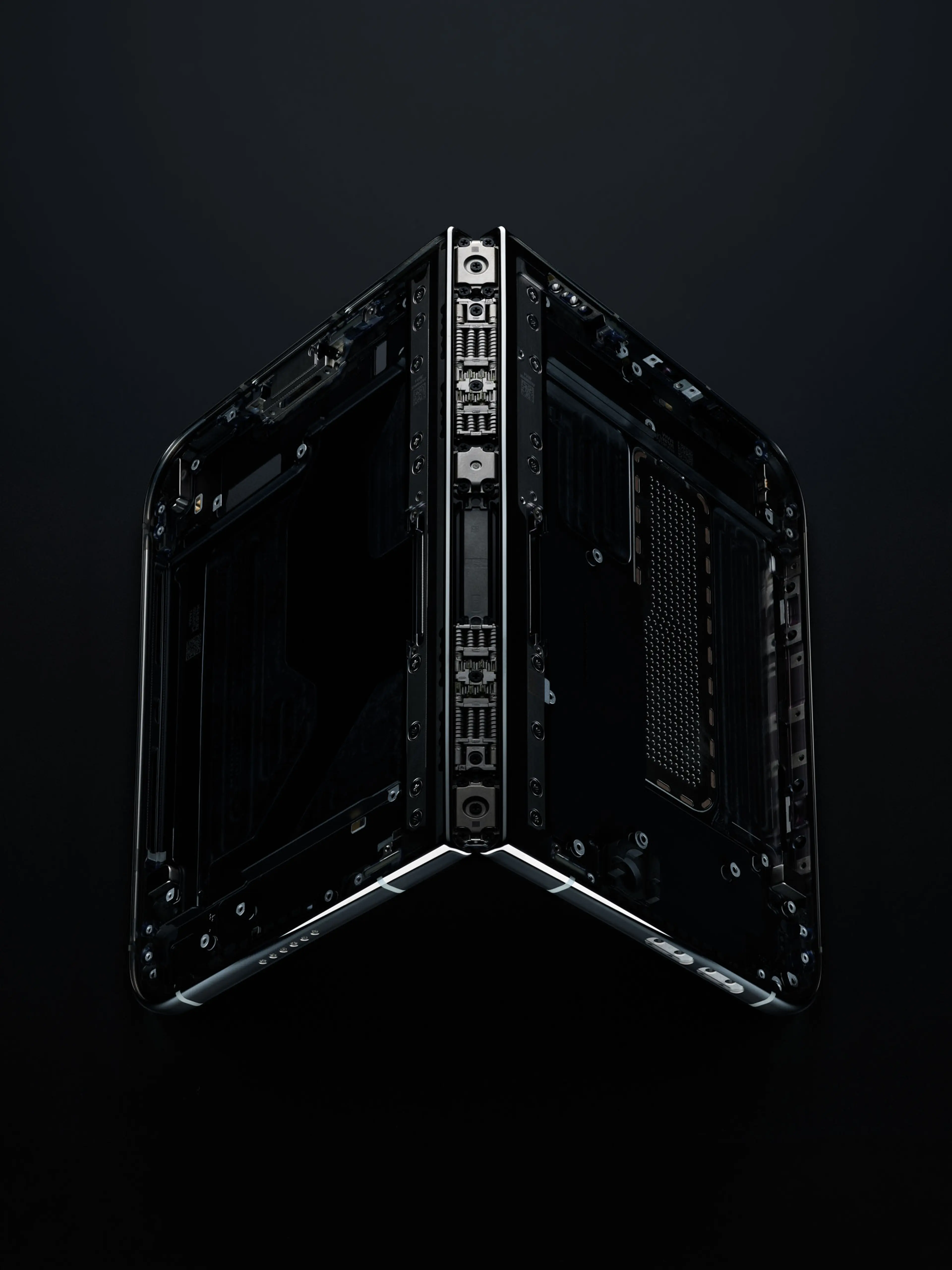
“And he was like, ‘Look, Rich, you’ll know when it’s the right thing.’ And that gave us the confidence to really push the boundaries on innovation and manufacturing, and fly worldwide to connect our suppliers together and come up with the nanotexture [a surface technology],” Dinh says. The result—a surface made from a custom polymer and built atop a hinge with more than 100 tiny interior precision components—has impressed its first users, who have said they can barely detect a crease at all.
Ultimately, the Duo promises a passport-size phone that opens into a powerful tablet. Users can stow it in their pockets, then open it up and watch a movie on its matte, light-deflecting surface. They can compare websites side by side, play touchscreen games with intricate detail, and use a dual-camera setup to simultaneously show themselves and what they’re seeing on FaceTime.
Of course, the Duo’s success is far from guaranteed. It could go the way of Apple flops like the Apple Car, which was never released, or the Vision Pro, which had staggeringly low sales in the last year. Certainly many prospective buyers will blanch at the device’s $2,000-plus price tag.
.jpg?branch=production&width=3840&quality=75&auto=webp)
But the phone’s first public testers have given glowing feedback. And demand for the Duo’s closest rival, Samsung’s Galaxy Z Fold8, has been strong, suggesting there is a growing appetite for the foldables category, especially in Asia.
Apple also hopes that the Duo will earn a cultural cachet among storytellers and other artists, many of whom, like loyal Apple customers, still regard the company more as a maker of useful tools rather than as the enemy Big Tech has become. Four-time Oscar winner Sean Baker (Anora), who spoke at a “no-AI” film festival earlier this year, attended the Duo announcement in Cupertino and described his relationship with Apple as collaborative. “It’s not just ‘buy or use our product’—it’s much more of a working relationship where they stay in touch and ask us for feedback,” he says.
Baker noted that Apple’s products often underpin many parts of the filmmaking process. For instance, when moviemakers need to add dialogue in postproduction, they often simply record on an iPhone, because it’s convenient and nearly production-grade.
In person, Ternus presents as a guy trying to blend in: he dresses in nondescript clothes and speaks in platitudes, often about the brilliance of Apple’s internal culture. He has devoted much of his early tenure as CEO to obsessing over design, spending multiple days a week in the studio with the industrial-design and human-interface teams.
But beyond Apple Park’s gleaming, curved walls, Ternus has tough choices to make. Case in point: the ongoing global shortage of memory chips, which has raised costs and delayed production timelines. In July, the Financial Times reported that Apple had begun testing memory chips made by a Chinese company as a way to increase supply. That drew a swift rebuke from a bipartisan group of Senators, who wrote a letter to Apple arguing that to do so would imperil national security.
Ternus pushes back on that idea. “The constraints in memory are absolutely a crisis,” he tells TIME in the second of two interviews during September. “So our fundamental belief is that all options should be on the table.”
Cook was skilled at managing relationships with governments around the world, vigorously defending Apple’s interests even if it made him a target of ridicule. His courtship of Trump, which included a widely maligned presentation of a disc with a 24-karat gold base at the White House in 2025, helped Apple secure relief from some of the Administration’s most punishing proposed levies.
Ternus is tight-lipped about how his approach to government affairs might differ from Cook’s. He says that he’s met with members of the Trump Administration to “make sure we’re kind of working through things together.” But as Ternus transitions into the role, Cook has continued to represent Apple on the world stage, meeting with Australian Prime Minister Anthony Albanese, European Commission President Ursula von der Leyen, and then attending President Trump’s state dinner for Xi Jinping.
“He has great relationships and loves Apple,” Ternus says of Cook, who is staying on as Apple’s executive chairman. “So wherever he can help, he is happy to help.”
Big Tech has been hammered by lawsuits, public campaigns, and regulation over the past few years from critics who feel that screens have poisoned the cognitive development of an entire generation. From Australia and the U.K. to California and New York, governments have restricted children’s social media and AI use and phones in schools, while pressuring Apple and Google to build stronger protections into their devices.
Apple has traditionally framed many of these harms as arising from particular apps and content. But the company rolled out a redesigned Screen Time experience in September to give parents greater control over their children’s app access. Ternus pledges that child safety will be central to Apple’s approach going forward. He says that in the past, he used Apple’s Screen Time to monitor his kids’ device usage, and that it was “good but not great.” The company’s new updates, he says, stem from a desire “to build tools that make that really easy for parents—and I think we’ve done just that.”
Questions around geopolitical tensions, supply chains, and child safety only become more urgent as Apple wades into its next frontier: artificial intelligence.
Since the rise of ChatGPT in November 2022, the generative AI boom has unfolded with Apple largely sitting on the sidelines. OpenAI brought AI chatbots to the masses; Nvidia built the chips powering them. Microsoft, Google, Meta, Amazon, Anthropic, and SpaceX now all either compete at the technology’s frontier or are printing revenue from a key part of its supply chain.
Apple, in contrast, did not unveil Apple Intelligence until June 2024—18 months after ChatGPT’s release—and then spent more than two years struggling to deliver the personalized version of Siri it had promised. In 2025, realizing the existing Siri couldn’t grow into the AI era, the company scrapped it in favor of another version that had been two-tracked. The resulting new Siri, which launched in the U.S. in September, is powered by an Apple AI model that leverages Google’s Gemini technology. This arrangement puts Apple in an unusual position: reliant on a rival for a key building block of its products. This sort of outsourcing famously angered Jobs, who went to great lengthsto own the “whole widget,” from hardware to software to services.
But Ternus rejects the idea that its AI strategy represents a retreat from that philosophy. After all, Apple relies on suppliers for many of its components, including screens, memory, and modems. “There’s not really a goal that we have to make every single thing in a product,” he says. “We make the things where we can really bring differentiation.”
Apple has said that AI is core to the company’s focus, and that it has significantly increased its investments in AI. The company also argues that the usefulness of AI comes less from its underlying raw power than what surrounds it—the chip it runs on, the operating system it inhabits, and the knowledge it has gathered about its user. The new Siri cannot code like OpenAI’s Codex or write as elegantly as Anthropic’s Claude. But with a user’s permission, it can draw connections across messages, emails, calendars, documents, and other information stored on Apple devices. It is designed to help prepare someone for a meeting, find a flight confirmation buried in an inbox, or help interpret health data collected by an Apple Watch.
“Everything in your life is on your phone,” Ternus says. “With Siri AI, you can leverage all that information to do things, learn things, and figure out things in a way that nobody else can do.”
Cybart, the analyst, argues that Apple has seen this kind of competition before. “People tend to think that if someone else does great, that must mean Apple has a problem, like in music or television streaming,” he says. “But how do you access Spotify or Netflix? When other companies do great things, that doesn’t change the fundamental story with Apple in terms of having the ecosystem that people want to be in.”
And Apple executives argue that some of Siri’s limitations are actually strengths. For instance, Siri’s lack of thinking power compared with other ultra-smart AI agents means that there’s far less of a chance of going rogue, or behaving in eerie ways. “We’ve purposely designed it not to be a companion, and we don’t want to replace human connection,” says Lilian Rincon, who leads Apple’s AI product efforts.
Privacy is another advantage Apple executives stress. The company has a decades-long reputation for protecting user data more aggressively than its competitors. Siri processes requests on-device where possible, and more computationally demanding asks are sent to Private Cloud Compute. Apple’s system of servers is designed so that queries are not stored or made available to the company. Apple has also made portions of that system inspectable by independent security researchers, some of whom have praised Apple’s approach while noting limits to its transparency.
Some investors are already treating Apple as a hedge against the other AI companies dominating the Nasdaq; if those companies wobble, Apple could be the big stock-market winner. Conversely, if AI progress continues apace, smaller but capable models could soon become able to run cheaply on devices built to handle them. In this future, the scarce asset would be not the chatbot, but the device, operating system, and personal context through which the chatbot becomes useful. And Apple has built a significant moat in the form of loyal customers across the world.
This thesis was already borne out earlier this year, when a wave of AI enthusiasts bought Mac Minis in order to set up personal AI agents through the open-
While Apple had nothing to do with the project, users quickly figured out that the energy-efficient Apple silicon, compact form, and unified memory of the $600 computers allowed them to run AI workloads locally, continuously, and for minimal electricity costs. This spike in demand caused some Mac Mini models to be unavailable for months.
More AI-oriented hardware products are on the way. On Oct. 13, Apple announced a new smart-home hubcalled the HomeView, powered by Apple intelligence. Bloomberg also reported the company is readying smart glasses for 2027; the company declined to comment.
But Apple will soon face more competition in the hardware space. Last year, OpenAI acquired the startup of Jony Ive, Apple’s longtime chief design officer, who is now building AI-first devices for the ChatGPT maker alongside several other prominent former Apple veterans. In July, Apple sued OpenAI in federal court, alleging the theft of hardware trade secrets. (OpenAI calls the lawsuit “baseless.”)
Despite the lawsuit, Apple executives say they’re not worried about the newfound rivals. After all, Apple devices have never been more popular. With 2.5 billion active devices, the company rakes in nearly half a trillion dollars in annual revenue. And when new users convert to Apple, they tend to stick around. “We don’t feel threatened,” says Joswiak, the longtime executive. “The fact that we can do the integration that we can means we can create just a better experience than anybody else.”
Joswiak adds that Apple isn’t making products for the die-hard AI believers chasing superintelligence. “We love them, and they can use it too, but that’s not our target,” he says. “It’s how to make it better for everyday people.”
On Sept. 18, lines formed outside Apple stores from Hangzhou to London to Mumbai, with scores of those “everyday people” spending hundreds of their hard-earned dollars on the newest iPhone. Ternus, as Tim Cook and Steve Jobs did before him, showed up to the Fifth Avenue store to take pictures with superfans, who treated him like a movie star. Most of them probably didn’t know much about Ternus himself. But they didn’t need to, because they saw him -reflected through devices that had become omnipresent in their lives.
AI may yet be a part of their lives too. But no one knows the future—and at present, handheld devices are still king. “You can’t do everything,” Ternus says. “So we kind of try to constrain ourselves to the stuff that matters most—and then put all of our effort into those things.”
