

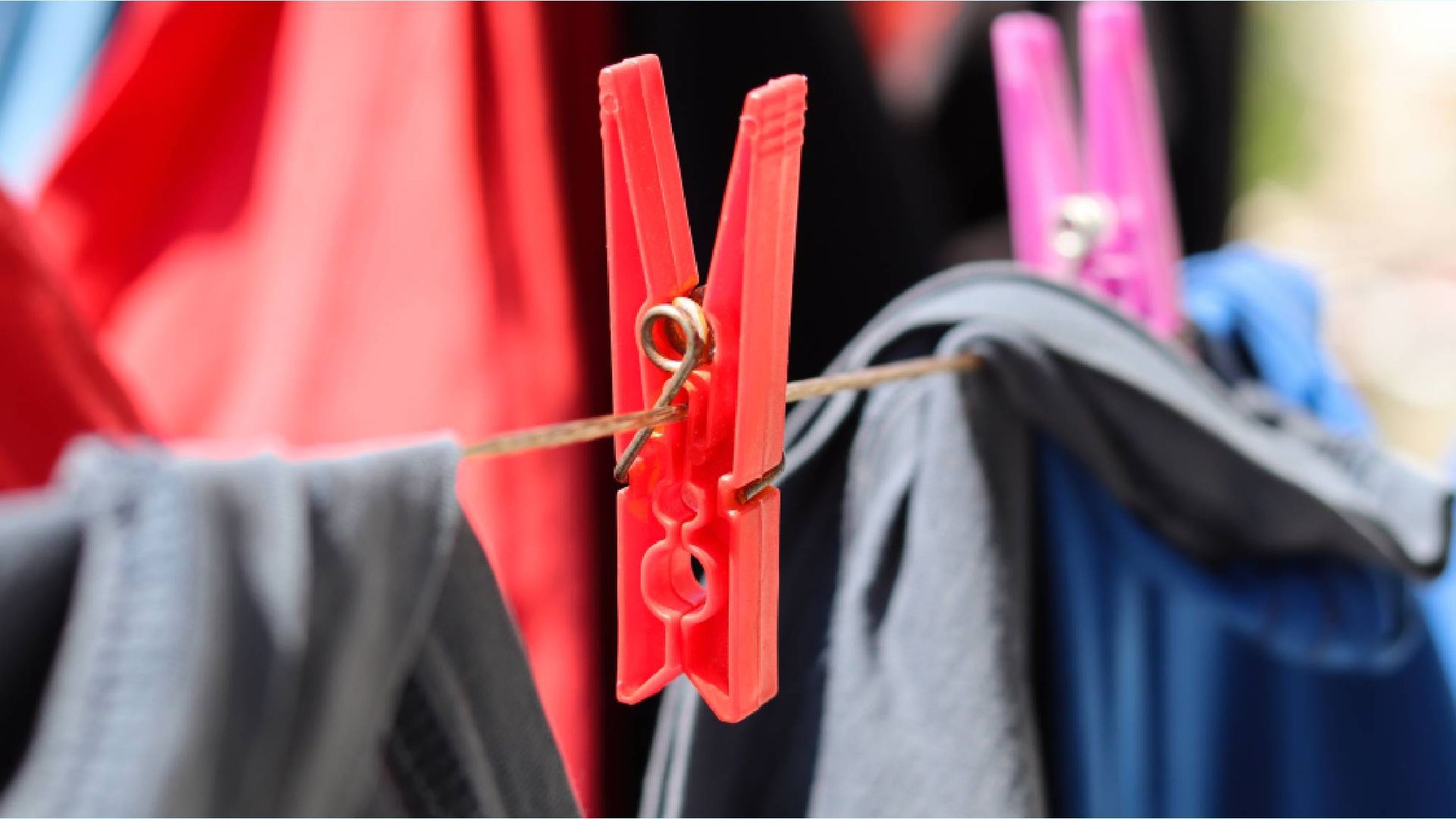
The humble clothespin (or clothes peg, if you live outside the US) has remained virtually unchanged for nearly two centuries. It is such a familiar fixture of daily life that most of us use it on complete autopilot. We squeeze the ends together, clamp the jaws directly over a shirt onto the line, and call it a day.
However, if you take a closer look at the inner profile, you’ll notice a deliberate little engineering trick hiding in plain sight: two distinct circular cutouts running along the gripping jaws.
Far from being a decorative choice, these separate openings <a href="https://myappsplus.com/37-deals-actually-worth-shopping-during-the-walmart-deals-event/” title=”37+ deals actually worth shopping during the Walmart Deals event”>actually serve a specific purpose.
The secret anatomy of a standard clothespin
If you inspect the inside jaws of a clothespin, you will notice one opening positioned closer to the metal spring and a second cutout set near the tip. The smaller cutout nearest the spring is designed to wrap around the clothesline itself.
The second, larger opening is contoured to hold fabric underneath or across the line. When you clamp the entire pin directly over heavy fabric and a thick wire at the same time, you force the jaws wide open, which concentrates all the spring’s clamping force into two sharp pressure points.
3 ways to use clothespin holes to save your clothes
Prevent stubborn peg marks on fine fabrics
(Image: © Shutterstock)
The primary benefit of using the cutouts correctly is eliminating the deep, unsightly indentations that clothespins often pinch into shirt shoulders and waistbands.
This reduces the harsh compression on delicate cottons and knits, allowing garments to dry with significantly fewer marks and wrinkles.
Stop delicate garments from slipping
(Image: © Shutterstock)
Hanging thin or slippery synthetic fabrics like silk, polyester, or activewear often leads to clothes sliding off the line in a light breeze. The smaller inner cutout creates a snug, non-slip anchor directly against the rope or wire.
When a lightweight item is secured within that tighter inner groove, the pin maintains consistent tension on the line without requiring excessive clamping pressure that could stretch out fine fibers.
Secure heavy items along reinforced seams
(Image: © Shutterstock)
While the dual holes offer superior gentleness for lightweight clothing, heavier items like wet denim jeans, thick towels, or blankets require maximum support.
For these heavy loads, position the clothespin directly over reinforced structural areas, such as thick waistbands or side seams, ather than thin, plain fabric sections.
Leveraging the full depth of the jaw opening along strong seams prevents the pin from twisting askew under weight while keeping heavy laundry firmly anchored during windy weather.
- The safe way to bleach white towels and linens — without ruining the fabric
- Your lost socks are hiding in this washing machine spot — here’s where to look
- I tried this genius dryer sheet trick on my baseboards, and it got rid of all the dust in 30 seconds
