

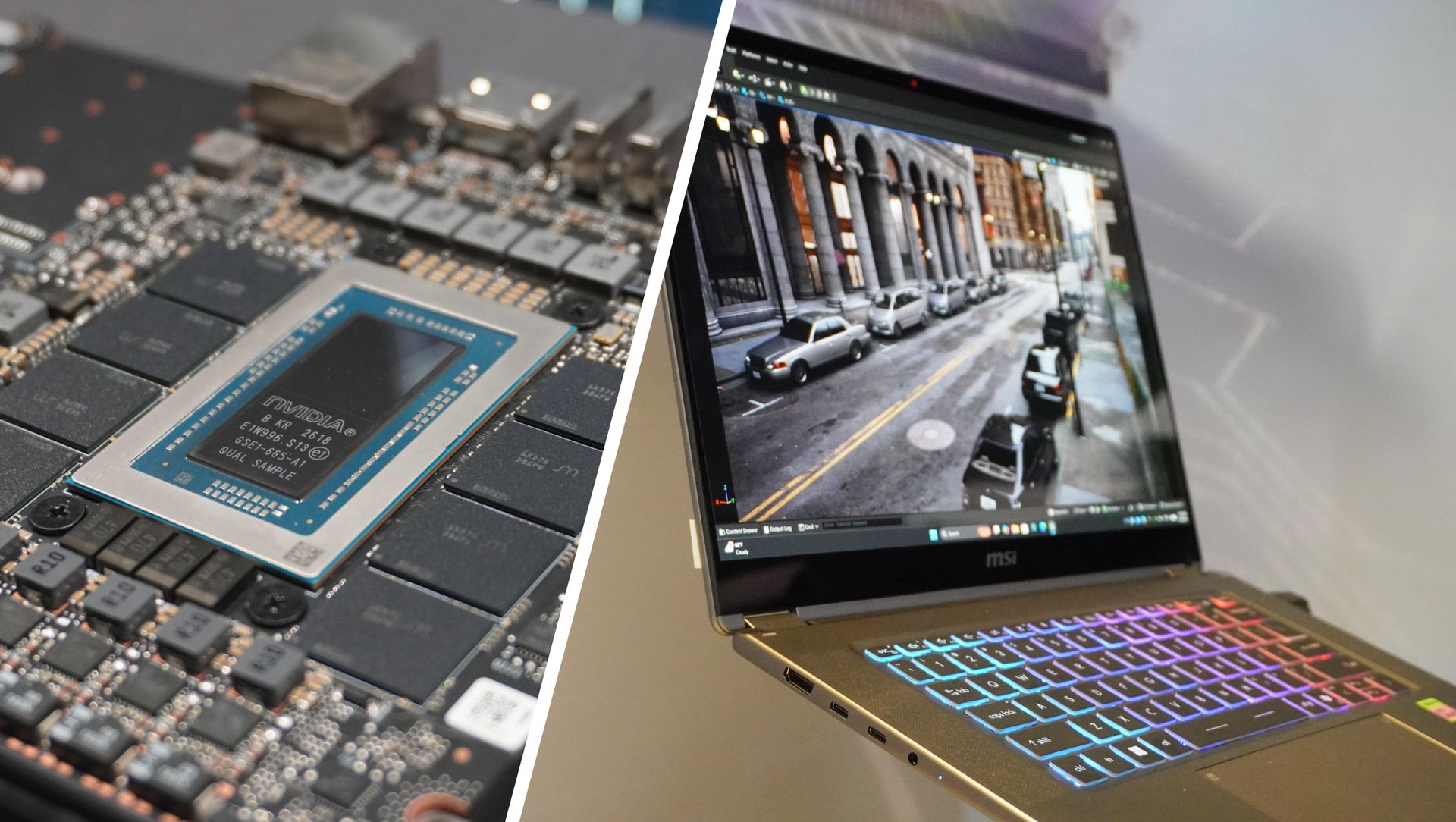
So Nvidia’s RTX Spark is officially here, and Team Green is making a big stink about its mission to “reinvent the PC” in the age of local agentic AI. But can I be honest with you, dear reader? The AI stuff is cool, but it’s also fixing this one key gripe with Windows laptops, which has me believing in this reinvention.
As the headline gives away, I’m talking about getting the same performance both on and off the charger. The snail’s pace I’d get on a Windows laptop whenever it’s disconnected has become a commonplace gripe of mine — so much so that I was suspicious of whether Nvidia had actually cracked it.
Well, turns out the company proved me wrong royally with some key examples over the months, showing just how efficient this is with that battery to deliver the same speeds no matter where you are.
The accident
Probably the most surprising view of this potential is in Blender. For those out of the know, this is a seriously intensive app for 3D animation and digital art — it demands a lot of your CPU and GPU in remapping pixels every time you move an image.
During IFA 2026, I saw a Blender demo that was supposed to show the app with and without DLSS activated on two identical Surface Laptop Ultras. Instead, it revealed the raw stamina of an RTX Spark system because one was left unplugged.
Speaking to Nvidia, the demo had been turned on/setup at 9 am, and I attended it at around 2:30 pm. After 5.5 hours, the 10% battery warning had only started showing.
Even on something super power-efficient like a MacBook Pro, you’d be lucky to get 4-5 hours out of it. So you can imagine how blown away I was in this situation.
On top of that, I saw Unreal Engine 5’s biggest sample map running on the MSI Prestige Flip N16 without any stuttering off the charger.
No more gaming frustration
And since this is Nvidia, we have to talk about gaming. You already know the key gameplay specs here — DLSS 4.5 supported through the sheer heft of all those Blackwell GPU cores and the horsepower to run 1440p games at buttery-smooth frame rates.
Nowhere was this more obvious than with the Microsoft Surface Laptop Ultra. That magnetic USB-C port may have stolen my heart, but at the same time, I got to see Gears of War: E-Day (a game that’s being translated to work with the silicon) run at exactly the same frame rate.
That standard gaming laptop frustration of watching your FPS dip is a thing of the past here. No more massive cut in performance!
What does this mean for battery life?
But let’s get real here. What is the battery life in reality? All of this sounds great, but there isn’t anything concrete beyond a claim of “all-day battery life.”
Throw in the fact that this is an Arm chip and that emulation isn’t necessarily the most power-efficient way to run apps, and this is something I’m very keen to test.
- NVIDIA RTX Spark laptop preorders are live: here’s where to buy them
- AMD just flaunted its own 192GB monster chip to spoil Nvidia’s RTX Spark party — Ryzen AI Max+ Pro 495 should worry Apple, too
- I tried Microsoft’s new haptic Surface Mouse — and standard mice now feel completely broken
