

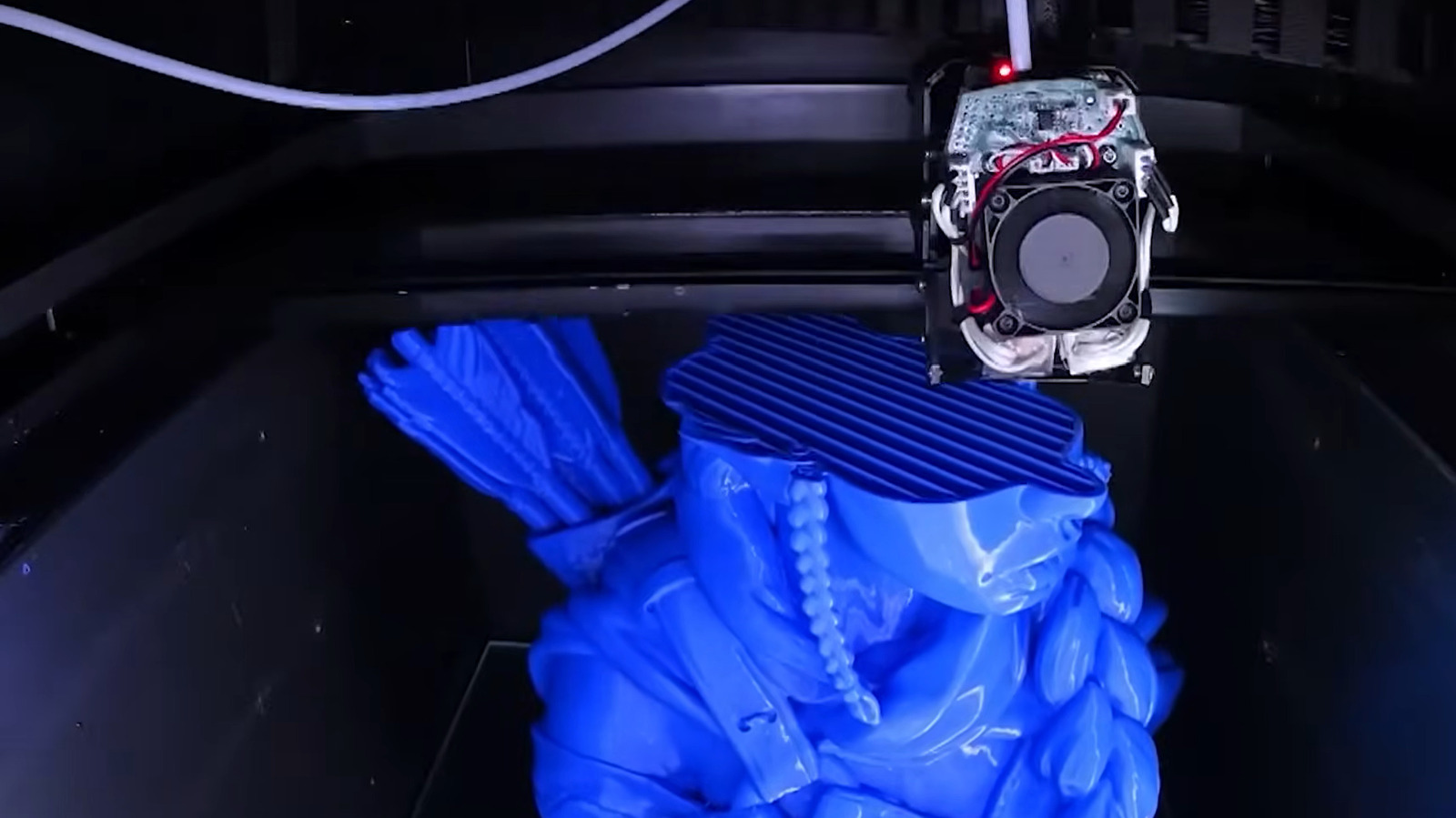
FDM printers are incredibly common.
3D printers are all the rage, with professionals and hobbyists alike deploying the technology to print everything from razor parts to entire homes. Fused Deposition Modeling (FDM) is one of the most popular types of printing technologies and is ideal for those looking to break into the world of 3D creations. FDM printers build three-dimensional objects through layers of thermoplastic filaments that fuse together to form a cohesive object.
FDM prints often begin with a computer-aided design file, or CAD, that is translated into instructions your printer can understand. Next, the printer funnels spools of filament through a heated nozzle. The printer then layers this melted filament upon the build plate according to the CAD’s designated pathways. Once that initial layer is complete, the printer will lay the next layer atop the model. The process continues in this way for hours or even days, depending on the printer used, the print settings, and the model size and complexity.
FDM printers are compatible with a variety of non-resin print materials. One of the most popular filaments is polylactic acid (PLA), an inexpensive biodegradable polymer plastic that has become a favorite of 3D printing fans for its ability to be printed at low temperatures, making it ideal for beginners. Another option is PETG, or polyethylene terephthalate glycol, a durable plastic often used in water bottles and praised for its glossy surface and print accuracy. If you are searching for a tough, sturdy material to use with your FDM printer, acrylonitrile butadiene styrene (ABS) is a great option. For higher-quality prints, you can opt for thermoplastic polyurethane (TPU) or nylon filament. You can also use wood and metal filaments as well as high-density polyethylene (HDPE) and polyethylene co-trimethylene terephthalate (PETT). These possibilities make FDM printers fairly flexible, providing a range of color and material options. Some materials call for high temperatures that most beginner printers can’t accommodate, and others require special nozzles or proper ventilation to eliminate fumes. So if you’re hoping to print in a specific material, make sure your printer and space can handle it safely.
Pros and cons of FDM printers
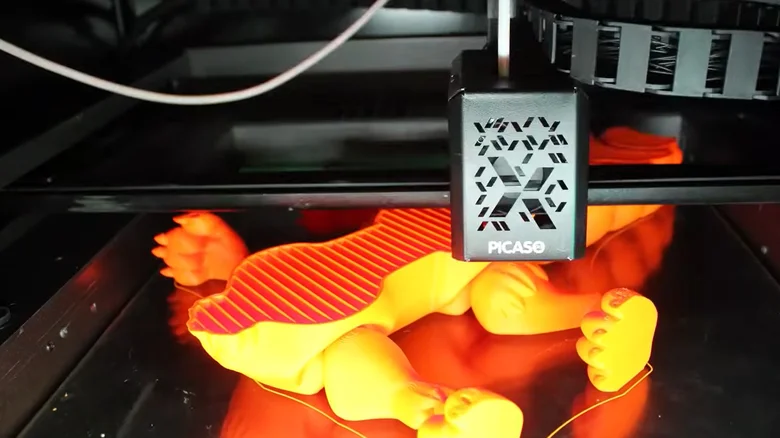
FDM printers provide a quick turnaround, often taking anywhere from minutes to a few hours to finish a small print. The speed of the printing process makes them popular for prototyping, allowing engineers and other users to quickly and efficiently test and rework their designs. Moreover, the ability to use cheaper filaments helps make FDM prints fairly inexpensive. Add low equipment costs and minimal maintenance, and FDM printers are ideal for those looking for budget proof-of-concept or parts production.
But FDM printers have their limits. For one thing, FDM models are low resolution, meaning it is more difficult for them to produce the finer details of a print. Due to the relative thickness of each layer, FDM prints struggle to produce prints with small, intricate parts. As such, Apple probably won’t use an FDM printer to make your next phone or watch — it opts for precise, industrial-grade printers that can print titanium. Warping is another common issue with FDM printers, as the filament often cools at different rates, causing uneven pressure to warp your designs. Because these printers lay down layers horizontally, FDM prints are also prone to breaking when facing acute pressure on the z-axis and shouldn’t be relied on to make strong, sturdy pieces. A common FDM printing technique known as infilling, in which the model’s interior prints with lower density to save time and filament, also makes them prone to breaking.
Good beginner FDM printers are affordable, reliable and somewhat low maintenance. However, if you want to create sturdy, precise structures, you may need to invest in a higher-end printer from a highly-regarded brand like Prusa Research, Bambu Lab or Ultimaker. For ultimate precision, consider stereolithography (SLA) and digital light processing (DLP) printers, which deploy light to cure layers of resin, creating models with fine details and smooth surfaces. Selective laser sintering, or SLS, deploys lasers to fuse nylon powders together and is ideal for creating sturdy, support-free structures. Multi Jet Fusion (MJF), direct metal laser sintering and selective laser melting are other worthy options, depending on your intended use case and materials.
