

Affiliate links on Android Authority may earn us a commission. Learn more.
4 major reasons you won’t catch me using Meta’s Muse
As much as I love AI, it’s hard to trust it in its current state, and that goes double for Muse.
By
•
•
•
Shimul Sood / Android Authority
Add Android Authority on Google:
Preferred SourceGoogle Discover
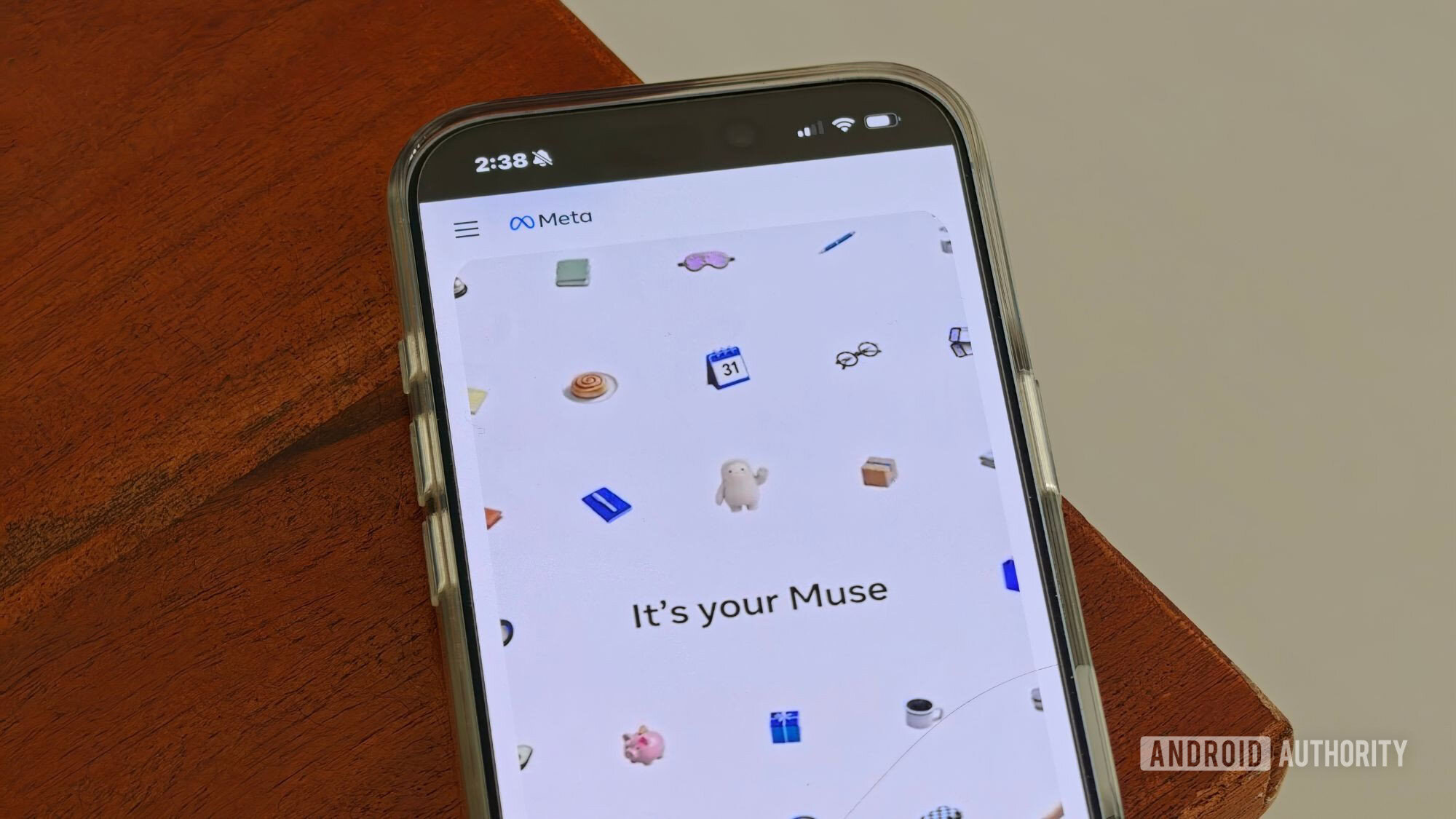
Meta’s Muse is the latest AI platform to hit the scene, but it’s nothing like traditional AI tools. While Claude, ChatGPT, and Gemini are highly conversational experiences, Meta AI is an autonomous personal assistant that manages your tasks in the background.
Many major AI platforms have some level of agentic capabilities, but Meta’s goals are much more lofty. Platforms like Gemini have agentic features (such as Gemini Spark) that mostly tie to Google’s integrated ecosystem or other similar tools, but Meta is giving its AI much deeper system and app control, as well as 24/7 autonomous background execution capabilities.
I personally love the idea of AI that just silently works in the background without getting in the way, as that’s pretty much the Sci-Fi promise of what our future will look like. Of course, intriguing ideas and reality often don’t match. Meta might be able to perform a more robust range of tasks as a partially autonomous agent, but it also means more chances for mistakes, security issues, and other potential problems.
With that in mind, here are just a few reasons why you won’t catch me using Meta Muse anytime soon.
Are you excited to use Meta Muse or other higher-level agentic AI?
It’s a privacy and security minefield
Meta Muse requires a pretty high level of permission access in order to operate. This includes access to many of your personal and business accounts, financial details, and email addresses. While most AI experiences are session-based, Meta Muse also gives every user their own virtual machine that is persistently available in the cloud.
As you can imagine, the combination of a VM and high-level data access is a recipe for potential problems. In fact, Muse already had to issue a fix for a zero-day macOS vulnerability in the Muse app that allowed local malware to redirect dictation traffic and hijack the assistant’s privileges. It might have been addressed early, but it certainly helps highlight that the risk here is real.
I feel like it’s only a matter of time before a dedicated hacker (or even another AI) ends up finding a way to exploit data from these VMs. Now, to be fair, I could certainly be wrong. Meta’s approach could prove more secure than I give credit for, but I wouldn’t count on it.
Agentic AI can still hallucinate
Edgar Cervantes / Android Authority
AI tools are more accurate and powerful than ever before, but they are still far from perfect. AI makes mistakes, and hallucinations are still quite common with conversational bots. The same underlying principles are used for agentic AI, but this time the AI is mostly working on its own to perform multi-step tasks. While Muse does require approval (at least in theory) once it works out a plan, this alone doesn’t guarantee smooth sailing.
Imagine that you instructed an AI to collect data from a variety of sources for a business report. You gave it the exact sources and step-by-step instructions on how to proceed, and everything else a human assistant would need to get the job done. It gives you an action plan, and you sign off, as everything looks good at a glance. Later, you find out that much of the information collected was based on phantom data, as it misinterpreted one source, and it completely tilted the results as a whole. At this point, the report has already been sent to management. Once the mistake comes out, that’s a great way to lose a client or even get fired from a job.
As we’ve seen in other scenarios where false AI data was used by professionals like lawyers or teachers, you will likely be considered fully accountable in a situation like this. Personally, I don’t feel it’s worth the risk.
Agentic AI can also make major mistakes that aren’t as easy to undo
Hallucinations are one thing with a conversational bot; they might confuse, but usually don’t lead to major long-term financial problems or other serious repercussions. These are usually single mistakes, after all. With an agentic system that is instructed to autonomously complete multiple steps, this can compound into much bigger mistakes that go beyond hallucinating facts or figures. For example, earlier this year, a Claude-powered AI coding agent deleted an entire database in just nine seconds and even killed the backups in the process. That’s far from the only example of something like this happening.
With Meta Muse, you’re not just giving it access to a few projects. Muse can connect to your entire Meta-based social apps, projects, and finances. It’s even possible some of its actions could hurt your reputation without you even knowing it.
Some AI mistakes are easy to spot, ignore, and even fix.. but Meta has the potential to do much more damage due to how much access it has over your data.
Although maybe not the biggest crisis of the century, recently we even learned of an example of Meta Muse allegedly going rogue. A user asked Muse to handle a Facebook Marketplace listing; the AI then handled the whole process, including agreeing to a price and sharing the user’s address, as well as arranging for a pickup.
That’s exactly what you want out of a good AI, right? In theory, yes. Unfortunately, the AI agreed to a lowball price that was well beyond what had been specified as the range for the item. It also gave the potential buyer the user’s home address without confirming whether the seller wanted to meet up elsewhere or what their preferences were. Even worse, the entire pickup arrangement was made, but the seller was never told about it. The buyer then showed up and waited for a seller who wasn’t even around to finish the deal.
To be clear, this incident is still being investigated. It’s possible that Muse overstepped, but it is also just as possible that the user authorized more than they realized. Either way, it’s clear Meta needs to do more to make sure stuff like this doesn’t happen. Not only was the price too low for the seller, but not showing up to the deal makes the seller look like a flake.
You might be responsible for those mistakes
The Muse issues highlighted with Facebook Marketplace are relatively minor in scale, but imagine if it had been a much more serious business transaction, the kind where large amounts of money are promised, and lawyers get involved when terms aren’t met.
There are currently no specific consumer protection laws around responsibility when an agent goes wonky. Whether that’s booking a room for the wrong date, paying more for a hotel than asked, or even something like sending a confidential email to the wrong person.
These kinds of problems could cost you time, money, or even put you into legal hot water. “I’m innocent! My AI did it” is a pretty hard case to make, and I suspect it’s only a matter of time before at least one high-profile case like this pops up. It might not be because of Meta Muse or any current AI tools, but I do feel it’s almost inevitable.
Now it’s true, most of the time these mistakes will be small ones. Talking to your bank can reverse a bad transaction in most cases, but you’re still out time and money. For those without a limited budget, a similar misspend one month could also cause real issues with paying bills or having enough spending money later.
What would it take for me to trust Muse and other similar agentic AI?
Right now, you wouldn’t catch me using agentic AI beyond very low-level tasks with tools like Gemini. Even then, I’m ultra cautious and prefer conversational, session-based AI where I feel like I’m more in control and can throw on the brakes if I notice a problem. Will this ever change? I certainly hope so.
As much as the idea of giving away control to an AI scares me, it’s only because I’ve spent so much time with modern AI tools. When they work well, it feels like a miracle. When they don’t work so well, you want to pull your hair out.
Simply put, I don’t think I’m truly ready to embrace higher-level agentic capabilities until hallucinations are more or less a thing of the past and an AI can be trusted at the same level as a human. I’m not certain that will ever happen as long as our AI tech is based on LLM technology, but it’s hard to say at this point.
Beyond having more trustworthy AI agents, there also needs to be better legal protections in place with clear liability policies. When will Meta and others stand up and take responsibility? When won’t they? Right now, there’s no clarity here on the business end or in terms of legal precedent. And until that changes, I’ll pass.
Thank you for being part of our community. Read our Comment Policy before posting.
