

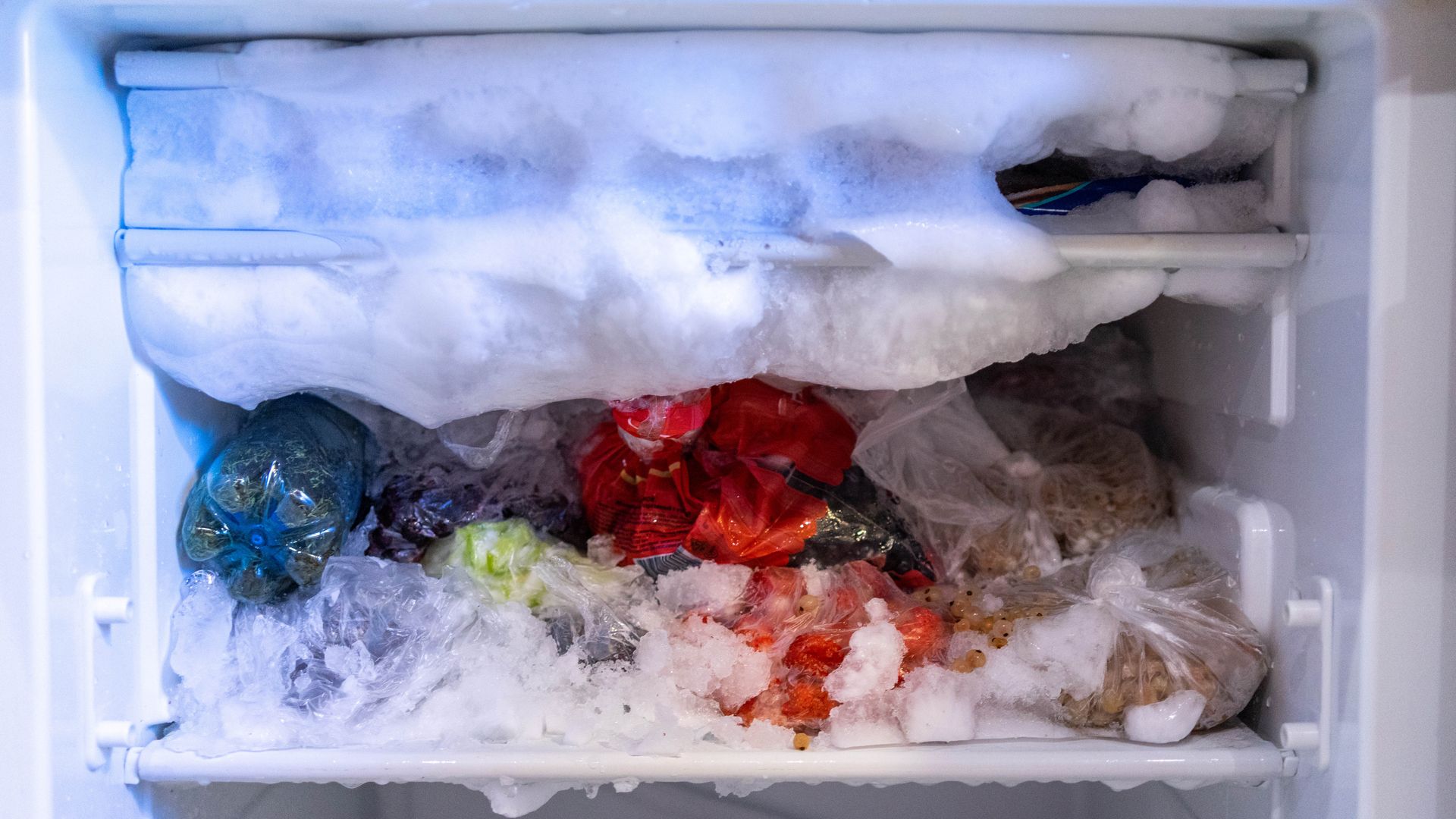
Opening your freezer to find your food buried under a heavy layer of white frost is a frustratingly common problem. In most cases, freezer ice buildup is caused by simple everyday issues like blocked airflow vents, improper food storage, or a worn door gasket letting warm, humid kitchen air sneak inside.
Before chipping away at the ice with a scraper, or calling for repair, you can usually solve the problem yourself in just a few minutes. Here’s why your freezer keeps frosting up, how to fix the underlying cause, and the simple steps to keep ice from coming back for good.
Why frost builds up in your freezer
Frost forms whenever warm, moisture-heavy room air meets the freezing temperatures inside your appliance. When that humidity hits the cold interior walls or vents, it instantly freezes into ice crystals.
Overpacking your freezer or pushing boxes tightly against the back vents blocks cold air circulation, creating localized cold spots where moisture settles and freezes. Storing hot food too quickly also releases a cloud of steam that immediately turns into a layer of frost across surrounding items.
A dirty, cracked, or warped rubber door gasket allows a continuous stream of room air to leak inside. Even a tiny door gap caused by an overstuffed drawer or stray ice cube will coat the entire freezer in white fuzz within hours.
The clogged defrost drain problem
Modern frost-free freezers automatically run a heating cycle several times a day to melt frost off the hidden evaporator coils. This melted water flows down a small drain hole at the back of the compartment and travels through a tube into a drip pan underneath the appliance, where it safely evaporates.
If this drain hole or tube becomes clogged with food debris or ice, the meltwater cannot escape. Instead, it backs up, flows out onto the floor of the freezer compartment, and freezes solid into a thick, flat sheet of ice during the next cooling cycle.
How to fix and prevent freezer frost
Restoring proper airflow and sealing out moisture takes just a few simple 5-minute adjustments.
Avoid jamming your freezer to capacity and leave a few inches of clearance around the interior air vents so cold air can circulate freely. Keep your freezer about three-quarters full for optimal efficiency.
Always let hot cooked foods drop to room temperature on the counter before freezing them to prevent condensation build-up.
Try the dollar bill test. Close the freezer door on a dollar bill. If you can pull the bill out easily without resistance, your rubber gasket is loose or worn and needs to be cleaned or replaced.
If you spot a sheet of ice on the bottom floor of your freezer,unplug the unit, melt the ice with warm water, and flush the drain hole at the backwith a squeeze bottle of hot water.
When to contact a professional
If your freezer continues to heavy-frost despite fixing airflow and cleaning the door seal, the internal defrost timer or heating element may have failed.
At that point, skip the DIY hacks and contact a qualified appliance repair specialist to inspect the electrical component.
- I almost threw my stained cutting boards away — then I tried this simple salt hack that totally restored them
- My dishwasher was leaving a cloudy film on glasses — here’s the quick fix that cleared them
- I revived my stiff, scratchy bath towels to their original softness using simple pantry staples
