


Add to Google Preferred Sources
Caterpillar is applying lessons from its autonomous mining business to deploy AI across the rest of its operations, according to Chief Technology Officer Jaime Mineart. The company’s Cat AI Assistant lets field technicians use voice commands to access repair procedures and identify parts, drawing on data from about 1.6 million connected assets and more than 16 petabytes of structured information. Caterpillar is also using AI for site scanning, digital twins and software development. Mineart said the hardest part is integrating the technology into customer workflows, not building it. The company plans to invest $100 million over five years to train its 118,000 employees in AI, autonomy and robotics. The push coincides with record quarterly revenue of $20.5 billion, driven partly by a 72% jump in power-generation sales tied to data center demand.
Key Elements
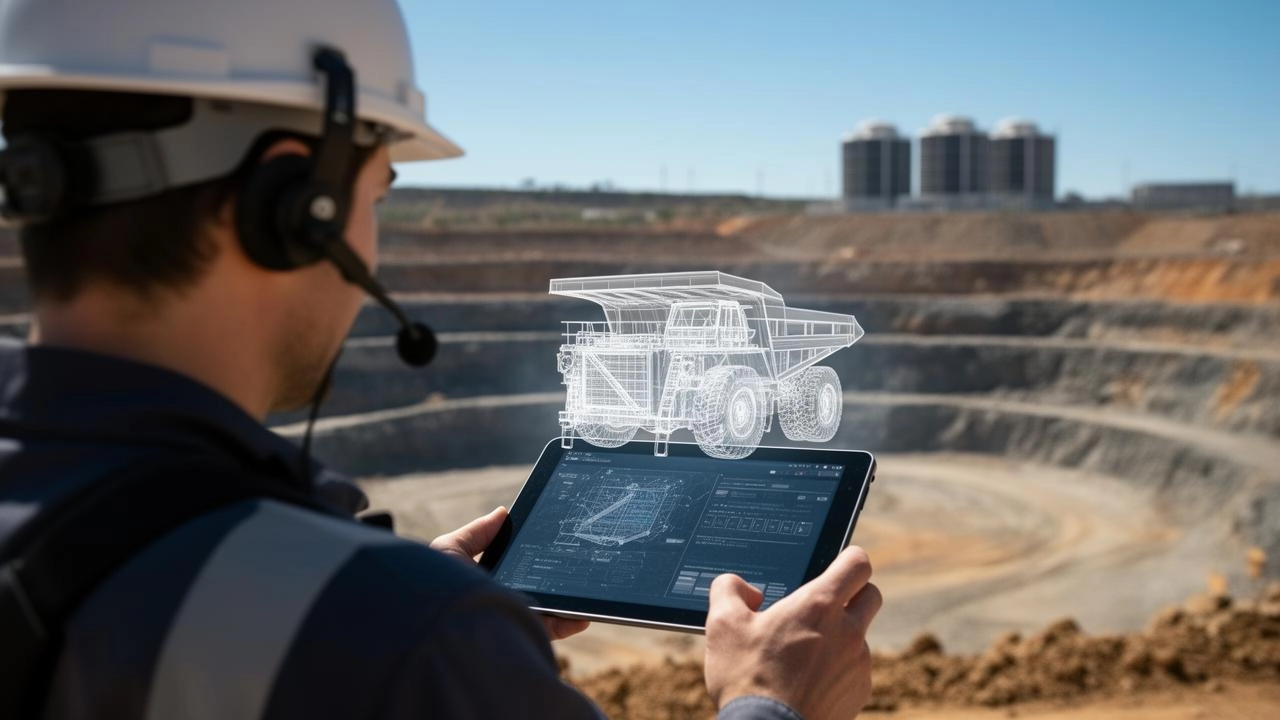
Industrial equipment maker Caterpillar is taking what it learned from years of running autonomous mining operations and applying those lessons to artificial intelligence across the rest of its business, from voice-activated repair tools for field technicians to software that helps modernize legacy code.
The company’s chief technology officer, Jaime Mineart, described the shift as a natural extension of work that began in mines, where labor shortages and dangerous conditions pushed Caterpillar to develop self-driving haul trucks, automated drilling systems, underground loaders and dozers. The company also sells remote-controlled construction equipment plus software for fleet management and terrain intelligence.
“Now we’re in this super exciting time where we can take all of that learning from mining and bring it into much more dynamic environments, jobsites, quarries, and construction sites,” Mineart said on the sidelines of the Ai4 conference in Las Vegas earlier this month.
One of the most visible products of that effort is the Cat AI Assistant, a tool that lets technicians standing next to a machine use voice commands to call up repair procedures, work through potential problems and identify parts before starting a job. Mineart said customers, operators and technicians are already using it.
The assistant runs on Caterpillar’s own data, drawn from roughly 1.6 million connected assets worldwide and more than 16 petabytes of structured information. The company is also deploying AI for site scanning, digital twins used to analyze manufacturing operations, and internal software development, where AI agents help update aging code, generate and test new programs, and catch defects earlier.
The Harder Half: People and Workflows
Mineart cautioned that building the technology is only part of the challenge. Getting an autonomous machine to work is not the same as getting a job site to actually use it, because companies also need to rethink how people operate alongside the equipment and how existing processes should change.
“The hard part about autonomy and about physical AI is incorporating that technology into the customer jobsite and into the workflows,” she said.
Caterpillar leans on veteran operators to help train its AI systems, tapping institutional knowledge accumulated over decades. As machines take on more tasks by themselves, some operators may move from running one vehicle to overseeing several from a remote command center.
That shift has created a training burden for the company’s 118,000 employees. Caterpillar plans to spend $100 million over the next five years on workforce education in AI, autonomy and robotics, Mineart said.
AI Infrastructure Lifts the Top Line
The investment arrives as demand for AI-related infrastructure is already boosting revenue. Caterpillar reported quarterly sales of $20.5 billion in the second quarter, an all-time high, helped by strong orders for power-generation equipment used in data centers. The power-generation division posted a 72% jump in sales to $3.10 billion.
Chief Executive Joe Creed said demand for cloud computing and generative AI infrastructure shows no signs of easing. “No one is slowing down,” he said.
The company’s trajectory highlights a broader challenge for industrial firms: integrating AI into physical operations is harder than adding it to software products. Caterpillar’s approach, pairing proprietary machine data with heavy investment in retraining workers, offers one model for how traditional manufacturers can move beyond pilot projects and scale AI across dynamic, real-world environments.
Once added, BigGo Finance appears first in Google Search Top Stories, so you get the broadest, most up-to-the-minute, and most comprehensive global financial news first.
