

PreviousHow AI Voice Generation on Mobile Is Replacing IVR and Chatbots
7 Top AI-Integrated Custom Software Development Companies You Can Hire in 2027
Previous
CategoryArtificial Intelligence
DateOctober 23, 2026
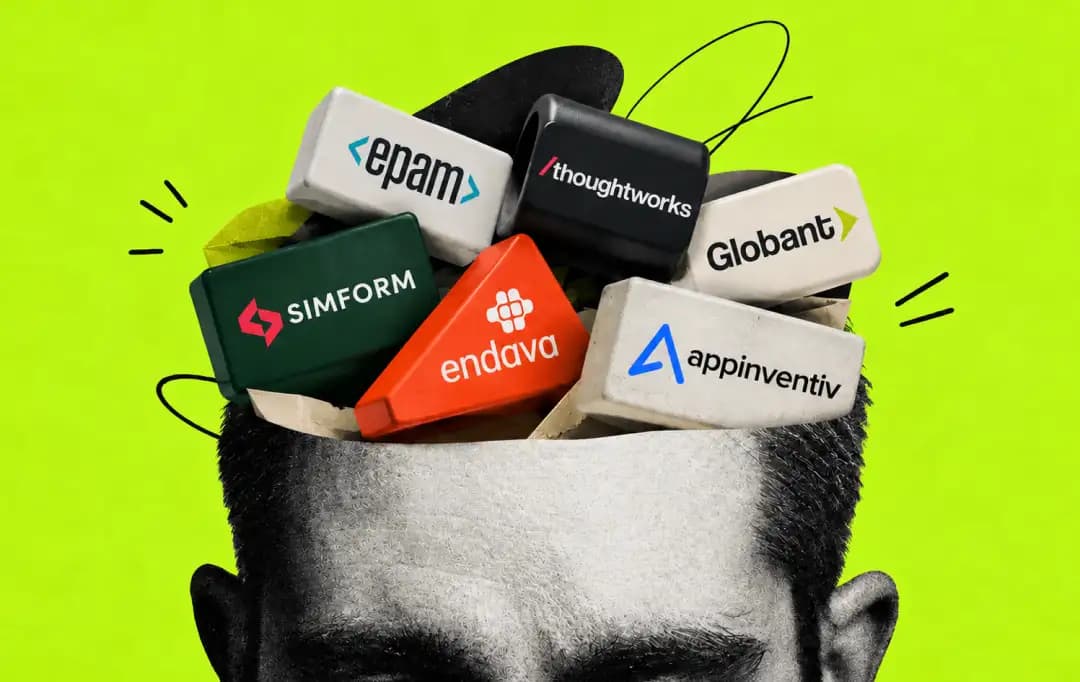
Picking an AI build partner shouldn’t feel like gambling. Here’s who’s worth your budget in 2027, and how to choose.
Two years ago, “we use AI” on a vendor’s website meant they had a chatbot demo and a slide deck. Now almost every agency says it, and most say it about as convincingly as a gym that calls itself “state of the art” because it bought a new treadmill.
That’s the problem if you’re a founder or a business lead trying to pick a build partner for 2027. The label is everywhere, the substance isn’t. Some teams have rebuilt how they write, test and ship code around AI. Others bolted an API call onto the same old process and raised their rates.
This guide is meant to help you tell the difference. We’ll cover what AI-integrated custom software development really involves, how we shortlisted seven firms that earned a spot, what you’ll likely pay, and the questions that quickly expose a weak vendor.
What “AI-Integrated” Actually Means (and What’s Just Marketing)
The phrase gets stretched in about four directions, so let’s pin it down. When we talk about AI integrated custom software development companies, we mean firms that do two things at once: they build AI into the product you’re paying for, and they use AI inside their own delivery process to build it faster and with fewer bugs.
Both halves matter. A team that only does the first can ship a clever <a href="https://myappsplus.com/kindle-android-app-borrows-a-useful-new-feature-from-alexa-tablets/” title=”Kindle Android app borrows a useful new feature from Alexa Tablets”>feature on a shaky codebase. A team that only does the second might be quick, but hands you a product with nothing intelligent inside it.
AI-augmented vs. AI-enabled vs. AI-native
You’ll see these terms thrown around like they’re interchangeable. They’re not.
| Term | What it usually means | What you should expect |
|---|---|---|
| AI-augmented software development services | Human engineers using AI tools (code assistants, automated testing, review bots) to work faster | Quicker sprints, lower rework, same overall process |
| AI-enabled software development services | AI capabilities built into your product: search, recommendations, copilots, forecasting | A smarter product, and a team that can handle data and model work |
| AI-native delivery | The whole workflow is designed around AI agents plus human oversight | Smaller teams, shorter timelines, heavier focus on governance |
Most serious partners in 2027 will blend all three. If a vendor can’t explain which one they mean, that’s your first yellow flag.
How to Spot the Best AI Integrated Software Development Companies
Finding a solid agency means knowing the red flags before you commit. Before you sign any contracts for AI-augmented software development services, here is a quick checklist of what you should be looking for in a tech partner.
| Criteria | What to Look For | What to Watch Out For |
|---|---|---|
| Tech Stack | Deep knowledge of Python, TensorFlow, OpenAI APIs, and custom LLMs. | They only know how to integrate basic off-the-shelf wrappers. |
| Track Record | Case studies showing actual ROI and problem-solving capabilities. | Vague portfolio with no real metrics or client testimonials. |
| Communication | Clear, jargon-free updates and regular agile syncs. | Ghosting you for days or talking in circles when issues pop up. |
| Scalability | Building architecture that won’t break when your user base explodes. | Hardcoded, rigid solutions that are an absolute nightmare to update. |
The 7 Top AI-Integrated Software Development Companies to Consider in 2027
Here’s the list of the Top AI-Integrated Software Development Companies we’d put in front of a buyer heading into 2027. Each one comes with who it suits best and where you might want to push back during talks.
1. Appinventiv
Best for: Startups and mid-to-large enterprises that want one team to take an idea from strategy to a scaled, AI-powered product.
Founded in 2014, Appinventiv has grown into a firm that industry roundups put at well over a thousand engineers (figures around 1,600 get quoted), working with clients from early-stage startups to Fortune 500 names. What stands out is how wide the AI side of the house is.
They cover generative AI, AI agents, predictive analytics, chatbots and conversational interfaces, and they pair that with data services and MLOps/AIOps, which is the unglamorous plumbing that keeps models healthy after launch.
Their sector depth is a real plus. Fintech, healthcare, retail, education, travel and government-facing projects all show up in their work, so you’re less likely to be the first client in your vertical. They also talk openly about responsible and explainable AI, which matters if you’re in a regulated space.
- End-to-end coverage: consulting, build, deployment and long-term support
- Strong mobile-first product experience, which helps when AI features need to live inside an app people actually use
- Mature data and MLOps practice for keeping models accurate over time
- Experience across regulated industries
- Which team members will be on your project day to day, since larger firms can vary by pod
- How they scope phased delivery if you want to start with a small pilot
2. EPAM Systems
Best for: Large enterprises running complex, multi-year engineering programs.
EPAM has been unusually public about its AI shift. In its Q4 2025 results, it reported more than $105 million in AI-native revenue for the quarter and said it expects that figure to pass $600 million across 2026. The company defines that tightly, excluding foundational AI work and AI-assisted delivery, so the number is stricter than it first sounds.
It also picked up Microsoft and AWS partner recognitions in 2025, and its internal developer agent ranked in the top five on the SWE-bench Verified leaderboard.
- Deep engineering bench and global delivery scale
- Clear public AI-native positioning, with numbers behind it
- Strong cloud and data modernization work that supports AI rollouts
- Minimum engagement sizes, since big-company pricing may not suit smaller budgets
- How much senior attention a mid-sized project receives
3. Thoughtworks
Best for:Organizations stuck with legacy systems that need to modernize before AI can really pay off.
Clean architecture, continuous delivery, sensible testing, these are the foundations of Thoughtworks’ reputation as an engineering company. It has launched AI/works, a new agentic development platform designed to revolutionize software delivery, for example, and uses AI to power code review, testing, and platform engineering. When data and systems are all jumbled up, this is the type of partner that unjambles data and systems in the process.
- Strong engineering culture and practices
- Legacy modernization experience
- Thoughtful, consultative approach to AI adoption
- Whether the consultative style fits your timeline if you need a fast MVP
- Rate levels compared with leaner product shops
4. Globant
Best for:Brands that want AI woven into customer-facing digital experiences.
Globant blends design, engineering and AI, and it has been organizing delivery around “AI Pods,” a more productized way of packaging AI capabilities for clients. Their strength sits where experience design meets engineering, so consumer apps, personalization and omnichannel platforms are natural territory.
- Combines creative, product and engineering under one roof
- Packaged AI delivery models that shorten setup time
- Comfortable with large consumer-brand programs
- How the pod model adapts if your requirements are highly unusual
- What happens to team continuity as the engagement scales
5. Simform
Best for: SaaS companies and growth-stage firms that need cloud-native engineering with AI built in.
Simform is a digital engineering firm in the cloud, data, AI and experience engineering space. It was included in Everest Group’s 2026 Software Product Engineering PEAK Matrix as an Aspirant, a recognition of momentum rather than a top-tier ranking.
It’s offered through cross-functional pods, common accelerators and AI support for development, and it’s been assisting software firms establish an agentic engineering approach in-house.
- Solid cloud-native architecture skills
- Reusable accelerators that can cut early-stage effort
- Willingness to help clients build their own AI-native engineering capability
- Case studies that match your size and sector
- How their accelerators get customized rather than copy-pasted
6. Endava
Best for:Enterprises that care a lot about governed, auditable AI delivery.
Endava combines product development with a structured AI delivery approach called Dava. Flow, positioned around keeping humans in control and processes traceable. That’s attractive to finance, insurance and other sectors where “the AI did it” won’t satisfy an auditor.
- Governance-first mindset
- Strong fit for regulated industries
- Good blend of nearshore and offshore delivery options
- How flexible the framework is for smaller, scrappier projects
- Proof points on measurable delivery gains
7. GeekyAnts
Best for:Startups and scale-ups building AI-native digital products, especially across web and mobile.
GeekyAnts is better known as a product engineering company than a classic outsourcing shop. Its toolkit spans Flutter, React, React Native, Next.js and Node.js, alongside cloud and design systems, with AI work layered into the product build. For founders who want a nimble team that thinks like product people, it’s a reasonable pick.
- Strong front-end and cross-platform expertise
- Product mindset rather than ticket-taking
- Suits lean teams that need speed
- Depth of experience with heavy enterprise integrations
- Scale of their dedicated AI and data science bench
At-a-Glance Comparison
| Company | Best for | Standout angle | Typical buyer |
|---|---|---|---|
| Appinventiv | End-to-end AI product builds | Wide AI stack plus strong mobile and sector depth | Startups to enterprises |
| EPAM Systems | Large, complex programs | Publicly tracked AI-native revenue | Global enterprises |
| Thoughtworks | Legacy modernization | Engineering rigor and AI/works platform | Established organizations |
| Globant | Customer-facing experiences | AI Pods plus design strength | Consumer brands |
| Simform | Cloud-native SaaS | Accelerators and agentic SDLC practices | Growth-stage companies |
| Endava | Regulated sectors | Governed delivery via Dava.Flow | Finance and enterprise |
| GeekyAnts | AI-native digital products | Product engineering and cross-platform skills | Startups and scale-ups |
What AI-Integrated Development Will Likely Cost in 2027
Pricing is where vendors get slippery, so here’s a realistic frame. These are ballpark ranges, not quotes. Actual numbers swing with scope, region and team seniority, so treat them as a sanity check rather than a budget.
| Project Type | Rough Timeline | Rough Budget Range (USD) |
|---|---|---|
| AI feature added to an existing product (chat assistant, smart search) | 6 to 12 weeks | $25,000 to $90,000 |
| MVP with core AI functionality | 3 to 5 months | $80,000 to $250,000 |
| Full custom platform with agents and integrations | 6 to 12 months | $250,000 to $1M+ |
| Ongoing model monitoring and improvement | Continuous | 10% to 20% of build cost per year |
A few things push the price up fast:
- Messy or siloed data that needs cleaning before anything intelligent can happen
- Strict compliance requirements (health, finance, children’s data)
- Custom model training instead of using existing foundation models
- Heavy integration with legacy systems
Pro Tip:A vendor quoting dramatically below everyone else probably isn’t a bargain. They’re either skipping testing and governance or planning to make it up in change requests.
Final Thoughts
The seven firms above each bring something different. Some are built for scale, some for speed, some for governance, and one or two sit in a nice middle ground for businesses that want breadth without a corporate maze. Use the shortlist, ask the hard questions, run a small pilot, and trust the evidence over the pitch.
Do that, and you’ll end up with a partner who actually moves your business forward, instead of one that just adds “AI-powered” to the invoice.
Frequently Asked Questions
Arpit is a dreamer, wanderer, and tech nerd who loves to jot down tech musings and updates. With a knack for crafting compelling narratives, Arpit has a sharp specialization in everything: from Predictive Analytics to Game Development, along with artificial intelligence (AI), Cloud Computing, IoT, and let’s not forget SaaS, healthcare, and more. Arpit crafts content that’s as strategic as it is compelling. With a Logician’s mind, he is always chasing sunrises and tech advancements while secretly preparing for the robot uprising.
latest
How AI Voice Generation on Mobile Is Replacing IVR and Chatbots
Why Product Teams Are Using Gamification to Build Habits, Not Just Features
AI in Game Development: Everything From Faster Video Generation to Dynamic NPCs
How to Build a Digital Workplace That Employees Can Actually Trust
Uncover executable insights, extensive research, and expert opinions in one place.
