

From Lockdown Mode to privacy controls, these simple iPhone adjustments can keep your personal information safe.
It can be a little scary to think about all the personal data on your phone and what could happen if that fell into the wrong hands. Thankfully, for the iPhone, Apple offers many layers of protection in iOS to prevent sensitive information from falling into the wrong hands.
While some of these features are enabled by default, others require configuring and are easy to overlook. Properly adjusting your settings can thus make a lot of difference if your iPhone is stolen or even if someone tries to snoop on it. Features like Lockdown Mode, Find My and Safari’s privacy controls can all help keep the data on your iPhone more secure, and they’re all easy to understand and use.
Limit what your Lock Screen gives away
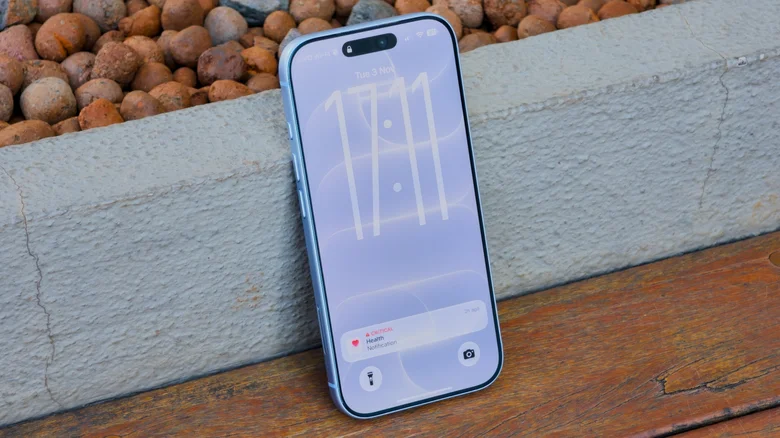
Your iPhone’s Lock Screen is what anyone sees immediately when they turn on the screen. Even without your passcode, it exposes more than you might think because by default, anyone can open Control Center or use Siri. That might not seem like much, but someone could use this to play pranks or even put your lost iPhone into airplane mode, making it harder to find. The good news is that you can limit what appears on your iPhone’s Lock Screen.
Start by making sure your iPhone only shows notifications when it’s unlocked. Open the Settings app and go to Notifications, then Show Previews. Select the When Unlocked option so they remain hidden until you authenticate with Face ID or Touch ID. Next, go back to the main Settings screen and tap Face ID & Passcode (or Touch ID, depending on your iPhone). Enter your passcode and scroll down to Allow Access When Locked.
Here, you can limit what can be done from the Lock Screen without authenticating, including accessing Control Center, using Siri, searching, replying to messages and controlling your home. Turn off the features you want to restrict (Control Center is one you should turn off). The features you disable will become available again as soon as you unlock your iPhone.
Run Safety Check and review your app permissions
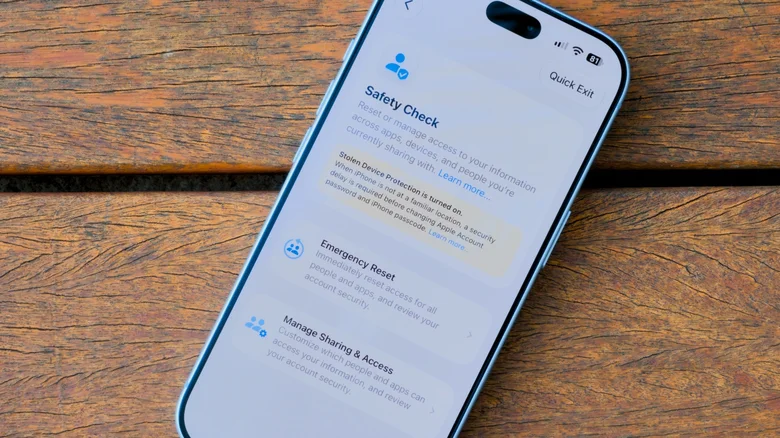
Many iPhone apps ask for permissions the first time you open them, such as access to your location, camera or photos. With so many prompts, people often end up tapping Allow without reading or thinking twice, which gives access to sensitive info apps don’t really need. Because of this, the latest versions of iOS include a feature called Safety Check to help you review privacy settings.
Again in Settings, go to Privacy & Security and then Safety Check. Tap Manage Sharing & Access and iOS will walk you through several steps to review your privacy settings, including controls like who you share your location with in Find My and which apps have been accessing your sensitive information. You can revoke any of these permissions with a single tap, and you should do so for apps where you don’t utilize those permissions anyway.
If you want to dig deeper, go back to the Privacy & Security menu and check each category to see which permissions you’ve granted to apps. For example, for those that use your location, set access to While Using instead of Always, and turn off Precise Location so apps can’t access your exact coordinates (except for those that need it, such as navigation apps). You can also turn on App Privacy Report to get details about how often each app has accessed your location, microphone or other data on your iPhone.
Lock or hide your most sensitive apps
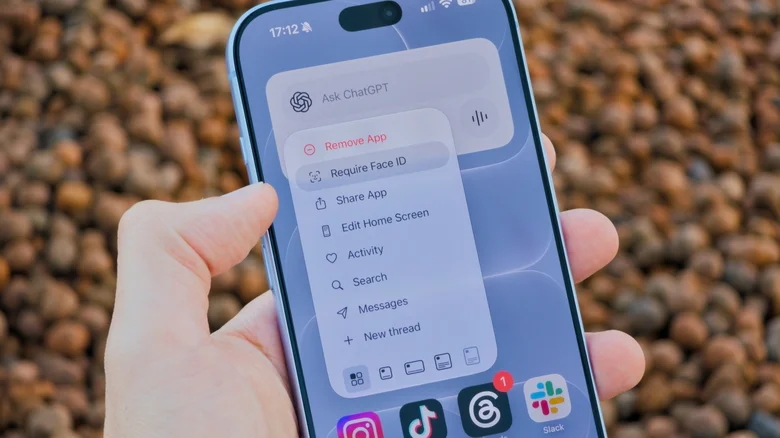
Sometimes we hand our iPhone to a friend to show them a photo or video, which is fine. But with your unlocked iPhone in their hands, someone can easily look through your messages and notes. That’s why it’s a good idea to lock some of your apps with Face ID or Touch ID, or even hide them in a secret folder (a feature that’s been available since iOS 18).
To lock an app, press and hold its icon on the Home Screen, then tap Require Face ID (or Require Touch ID) and confirm. From now on, the app will require authentication every time it’s opened, even if the iPhone is already unlocked. This protects against schemes where someone asks to use your phone to make a call in an “emergency,” then quickly use payment apps like Venmo to take your money.
If you don’t want anyone to know you have a specific app, you can also hide apps on iOS. Follow the same steps of pressing and holding an app icon, but then choose the Hide option from the confirmation menu. The app will disappear from your Home Screen and move to a Hidden folder in the App Library; accessing this folder requires authentication every time. Keep in mind that hidden apps won’t show notifications or calls, so this option works best for apps you don’t need alerts from.
Stop apps from tracking you
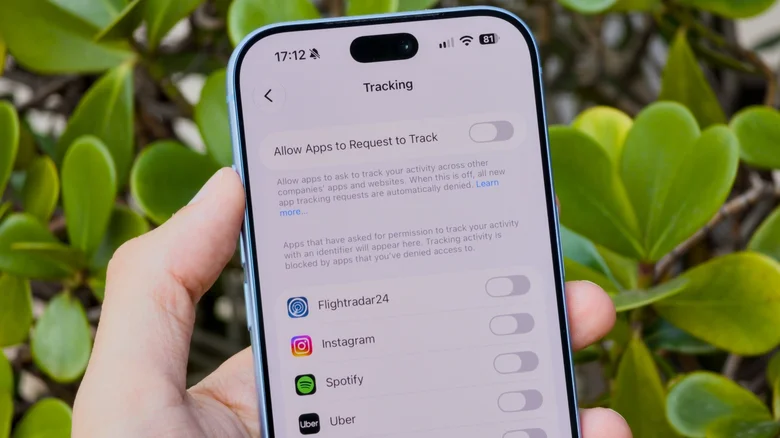
Apps and websites can collect a lot of info about you, and that data often ends up being sold to advertisers. Since iOS 14.5, Apple has required apps that collect your data to explicitly ask for permission to track your activity, with this pop-up showing the first time you open an app.
But instead of responding to each request, you can turn off tracking for all of them at once. Back in the Privacy & Security settings, open Tracking and turn off Allow Apps to Request to Track — this will automatically deny requests from apps to track you. Of course, this doesn’t block all data collection, but it’s a good way to reduce the amount of data apps and websites have about you.
Apple also has its own advertising platform that runs ads in the App Store, Apple News, Stocks and even ads in Apple Maps now. Although the company doesn’t share this data with third parties, you can also opt out of sharing your search history with Apple so you don’t get tailored ads. In the Privacy & Security settings, look for Apple Advertising and turn off Personalized Ads. You’ll still see ads in these apps, but they’ll be less targeted.
Turn on Stolen Device Protection
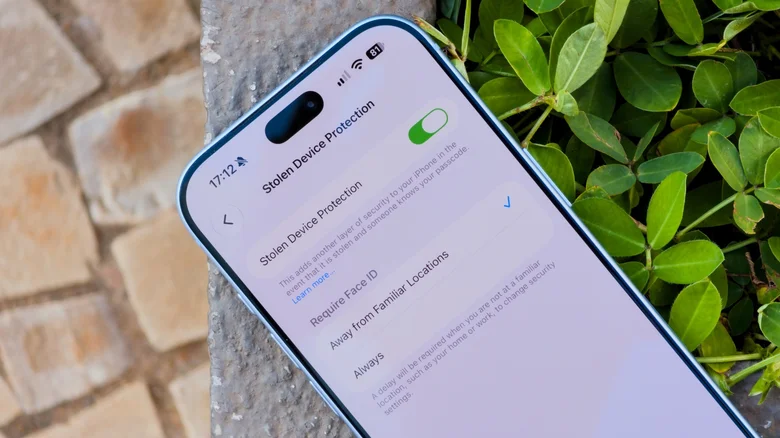
Criminals have figured out a trick to unlock a stolen iPhone: they watch someone enter their passcode from a distance, steal the phone and use that passcode to access apps that require authentication or even change your Apple Account password. But you can prevent this with Stolen Device Protection, and you should definitely have this feature on.
Once enabled, your iPhone detects when it’s away from familiar places like your home or work. Then even if someone has your passcode, it blocks sensitive actions such as accessing your passwords or changing Apple Account settings. You can still do all this in unfamiliar locations after a one-hour delay, but you’ll have extra time to mark your phone as lost and contact your bank to block your cards in case something bad happens.
Newer iPhones come with this feature enabled by default, but it’s worth checking to be sure. Open the Settings app and go to Face ID & Passcode (or Touch ID). Look for Stolen Device Protection and make sure it’s enabled — you’ll need two-factor authentication set up on your Apple Account, and Find My must also be turned on. Don’t forget to turn off Stolen Device Protection before selling your iPhone or giving it to someone else.
