

Add preferred source
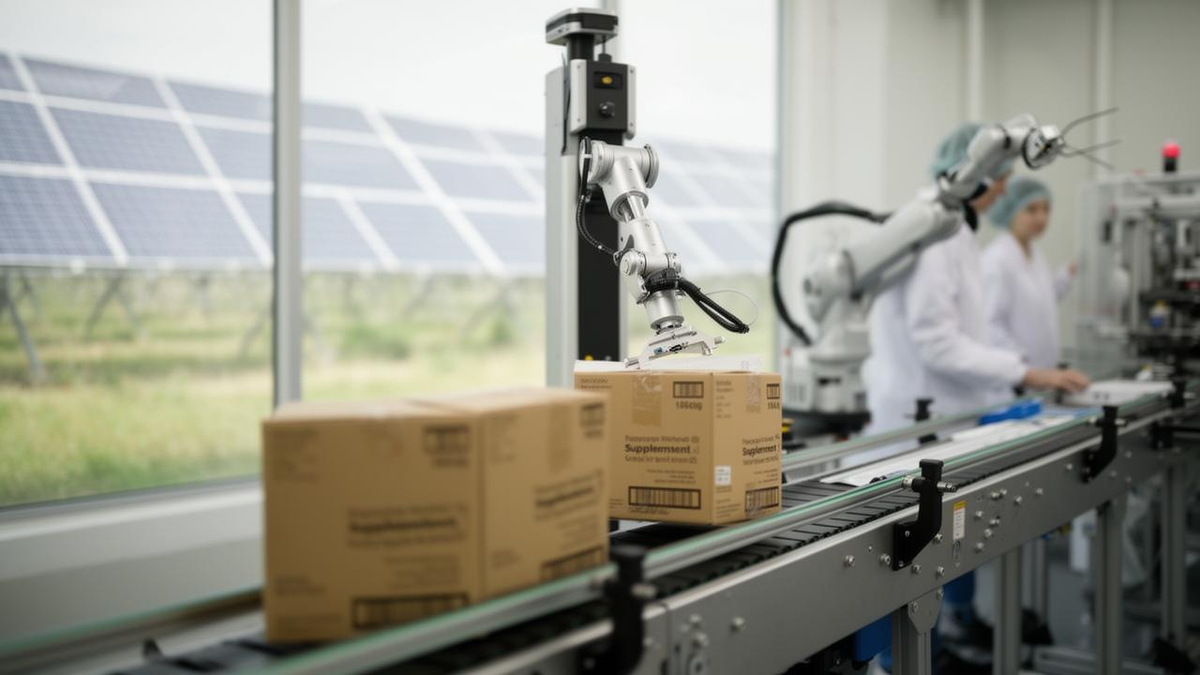
South Korea’s Yuyu Pharma has deployed autonomous mobile robots and articulated robots in the omega-3 packaging process at its Jecheon plant in North Chungcheong Province and digitized production and quality control with AI. The goal is to automate seven packaging steps, raising throughput to 834 units per hour from 313 and cutting the secondary packaging defect rate to 0.2% from 0.4%. Packaging staff fell to two from four, and AI tools developed by employees themselves have a 92% actual usage rate. With the completion of a third solar installation, total capacity rose to 995.6 kW, expected to cover about 31% of annual electricity needs in-house. The cost of goods sold ratio fell from 61% in 2023 to slightly below 50% on a cumulative basis through the third quarter of this year.
Key Elements
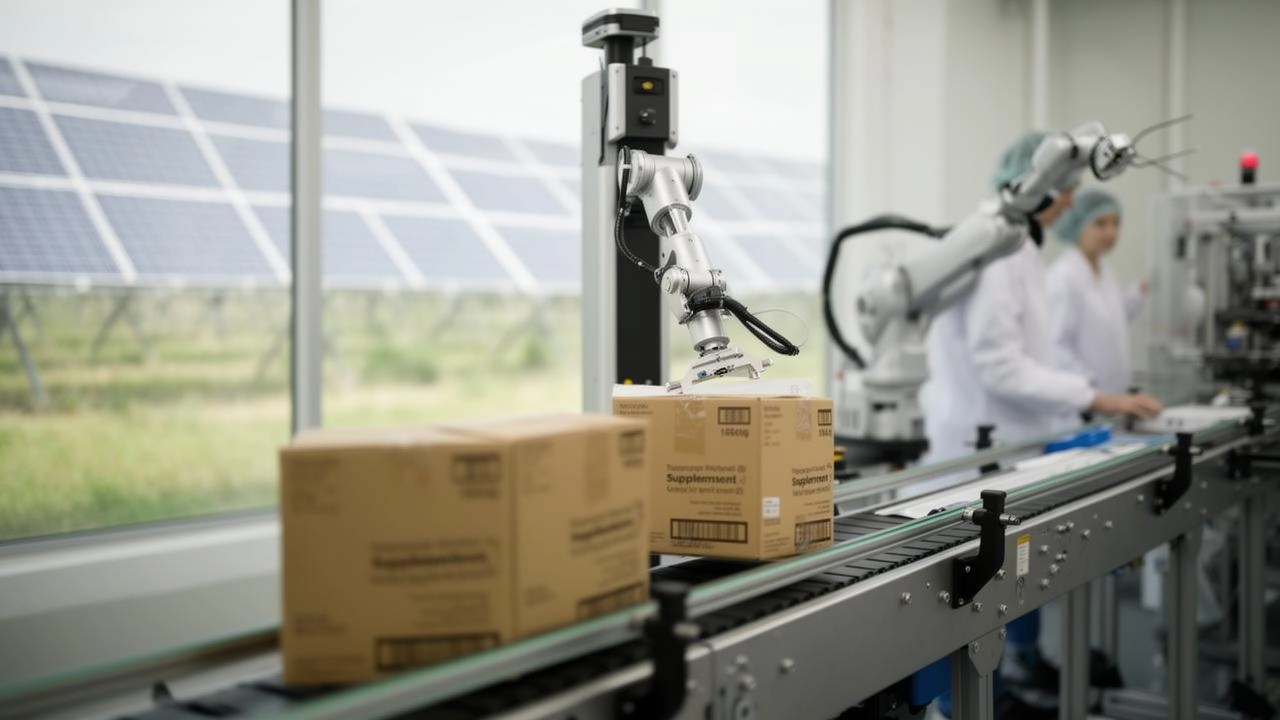
South Korea’s Yuyu Pharma (000220.KS) is generating cost savings by deploying autonomous mobile robots (AMR) and articulated robots in the packaging process at its Jecheon plant in North Chungcheong Province and digitizing production and quality control with artificial intelligence (AI). The strategy is to apply automation equipment to a 20-year-old facility to fend off both labor shortages and rising raw material prices.
Park No-yong, CEO of Yuyu Pharma, said at the plant recently that “with raw material prices rising considerably, cutting costs and raising production efficiency were essential tasks,” adding that “we have brought the cost of goods sold ratio down to the low 50% range this year from 61% in 2023.” He added that “performance through the third quarter of this year has been solid, so we will continue the growth trend by expanding our pipeline.”
At the center of the automation is the omega-3 soft capsule line, which accounts for about 30% of sales. Including contract manufacturing volume for 12 other pharmaceutical companies, the line’s average daily utilization rate exceeds 100%. Through its own investment and the South Korean government’s advanced manufacturing robot demonstration project, Yuyu Pharma has automated seven packaging steps, from inspecting box adhesion to packing shipping cartons and applying labels. After introducing robots for individual packaging in January this year, the company expanded automation to secondary packaging in August.
Yoo Hwang-sun, head of the manufacturing team, said the goal is to raise hourly throughput to 834 units from 313 and lower the secondary packaging defect rate to 0.2% from 0.4%. Packaging staff fell to two from four, with the other two reassigned to other processes short of workers. Chun Jun-hee, the plant manager, said the automation equipment was introduced to respond to drug price cuts, rising raw material prices and difficulties securing workers in provincial areas, and to ease the burden on workers handling heavy loads.
A hurdle was that the plant, built in 2006, was not designed with robot use in mind. Because the aisles are narrow, it took two months just for the robots to learn the roughly 90-meter round-trip route linking the finished-goods warehouse, the automatic wrapping machine and the automated logistics warehouse. Vacuum gripper equipment was deployed to carry heavy sacks of raw materials.
AI adoption took the form of on-site employees building tools themselves. The Jecheon plant produces 147 items and conducts 5,100 quality tests a year, and because every process and result must be documented, there was a great deal of repetitive work. After forming a dedicated AI team in August last year, the company introduced task-specific AI tools within two months, and five teams now check production, testing and shipment schedules in real time on a single screen. The time the logistics team spends verifying product serial numbers fell to three minutes per case from 25 minutes.
The most representative case is records management for the sorter that weighs finished products to screen out defective units. Previously, measurement records had to be printed on paper and stored, and replacing the equipment would have cost millions of won per unit, but an on-site staff member connected a small processing device costing 12,000 won (approximately $9) to create an automatic recording system. Programs developed by employees are reviewed by the IT department for security and data access permissions before being applied to other departments as well. Tools built by employees through two internal AI competitions have an actual usage rate of 92%.
Park said “I believe the best ideas come from the shop floor,” adding that “the point is that employees developed their own AI tools in response to needs within the plant.” He also explained that when on-site staff develop programs themselves, the company can modify them directly when pharmaceutical management regulations change or new features are needed. The company also plans to build a system in which AI flags signs of process abnormalities in advance by linking production records with quality test results.
Energy costs were also addressed. Solar panels were installed on the roofs of the logistics building and the maintenance building as well as on idle land employees had used as a soccer field. The No. 3 unit added this year has 869 kW of capacity, about seven times the combined capacity of the existing No. 1 and No. 2 units. With the completion of No. 3, total installed capacity is 995.6 kW, approaching 1 MW.
| Item | Figure |
|---|---|
| Total solar installed capacity | 995.6 kW |
| No. 3 unit capacity | 869 kW |
| No. 3 unit investment | 690 million won (approximately $520,000) |
| Generation, January–November | 663.4 MWh |
| Expected share of annual in-house supply | About 31% (1,417 MWh) |
| Electricity cost savings | About 130 million won (approximately $97,000) |
| Estimated payback period | About 2.8 years |
Note: Company estimates; annual electricity use is 4,550 MWh
Electricity generated by solar is used first at the plant, with the shortfall supplied by Korea Electric Power Corp. Of the 663.4 MWh actually generated from January to November this year, 78% came from the No. 3 unit, and electricity cost savings over the same period were tallied at about 130 million won. If the No. 3 unit runs year-round, the plant is expected to supply about 31% of its electricity consumption in-house.
As these cost and efficiency improvements accumulated, the cost of goods sold ratio fell from 61% in 2023 to slightly below 50% on a cumulative basis through the third quarter of this year. Park predicted the full-year figure would also come in around 50%.
After three years focused on improving profitability, Yuyu Pharma plans to shift to expanding sales starting next year. A recently formed dedicated new-product team is identifying items that will drive revenue in three to five years, and health functional foods for pets have already begun generating sales overseas.
Industry watchers see the case as a reference for mid-sized pharmaceutical companies with aging facilities as they weigh automation investments. They note, however, that introducing robots and AI equipment requires initial investment and meeting regulators’ data management requirements, making product-line expansion and maintaining utilization rates the key factors rather than short-term results.
Once added, BigGo Finance appears first in Google Search Top Stories, so you get the broadest, most up-to-the-minute, and most comprehensive global financial news first.
