

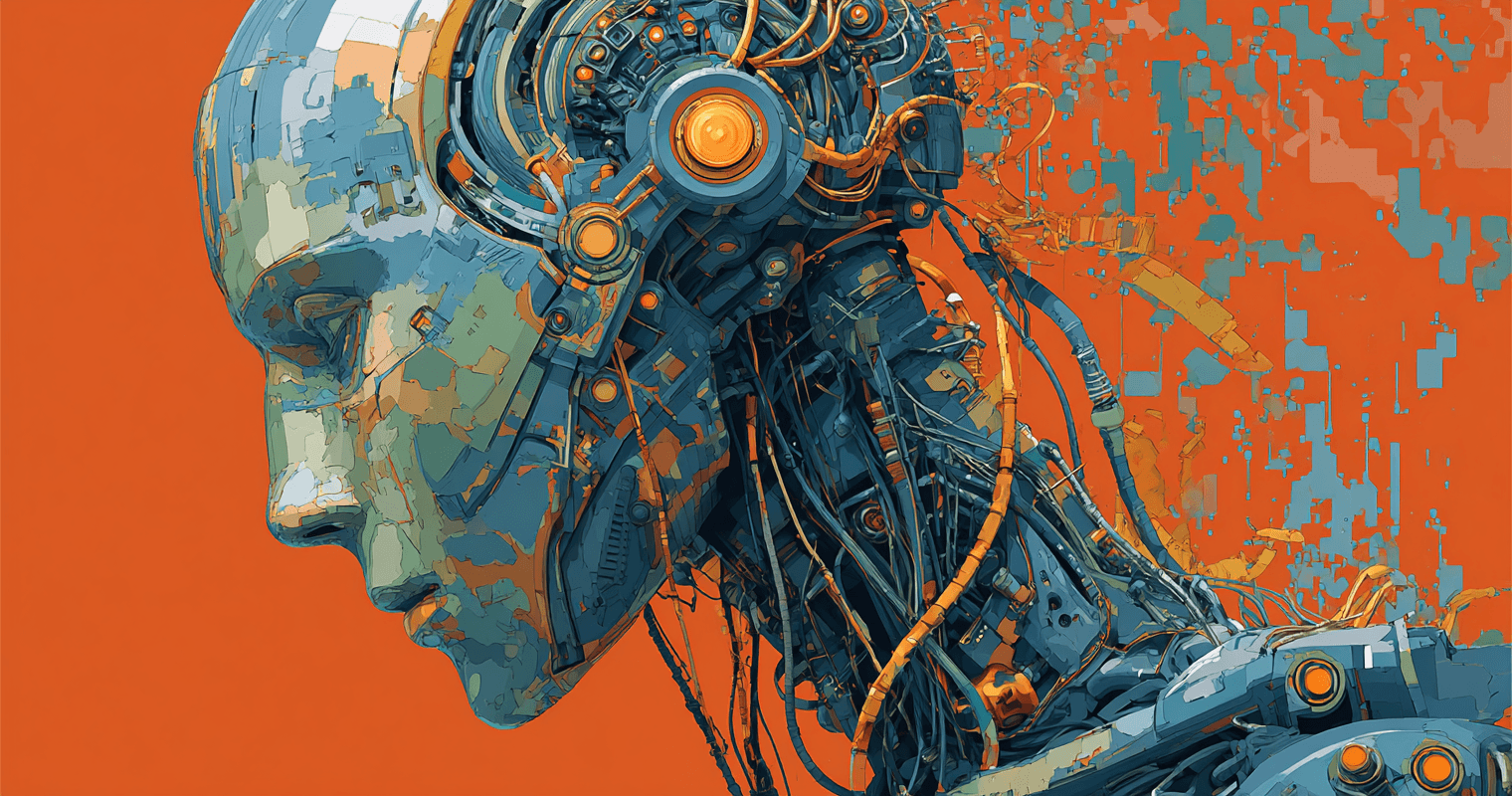
In this issue, we dive into the next great leap in automation brought on by advanced physical artificial intelligence and intelligent humanoid robots.
Managing Editor’s Note: Before we get to today’s issue, first, a happy Thanksgiving to all of our U.S.-based readers.
Earlier this week, Jeff aired a strategy session discussing the document Elon Musk has quietly filed with the Texas Department of Licensing and Regulation…
And the massive wealth wave it could create during what Jeff calls “M.A.G.I. Phase II.”
It won’t be long before Wall Street catches on to the scale of this opportunity… that’s why Jeff has been tracking down Musk’s small-cap suppliers as a matter of urgency.
The window to get positioned ahead of Phase II is brief… but for a short time, we have a replay available of Jeff’s strategy session. You can go here to access it.
Now, as markets – and Brownstone Research offices – are closed today for the holiday, we are spotlighting a special Bleeding Edge issue from our colleague, Jason Bodner.
Read on for more from Jason…
In 1804, a French silk weaver punched holes in pieces of cardboard.
It doesn’t sound like the beginning of the computer revolution, but Joseph-Marie Jacquard had figured out something remarkable.
His loom could “read” those holes as instructions, automatically raising and lowering threads to weave intricate patterns into silk. Work that once required skilled human hands could now be encoded into a machine.
Jacquard’s punched cards later influenced Charles Babbage’s early mechanical computers, and versions of the same concept eventually fed information into modern computers.
Yet one fundamental relationship remained largely unchanged… Humans gave machines instructions, and the machines followed them.
It has taken more than 200 years, but that relationship is changing.
From Automation to Intelligence
Think about the robotic arms inside an automobile factory.
They weld, lift, and assemble with incredible precision, but traditional industrial robots generally work best in tightly controlled environments. Move something unexpectedly, and they may have a problem.
Physical AI is different. Instead of simply executing a predetermined sequence, a machine can increasingly sense its surroundings, understand what it is seeing, decide what should happen next, and act.
Consider picking up a full coffee mug. Your eyes locate it. Your brain estimates its position. Your arm reaches for it, your fingers apply enough force to hold it without cracking or dropping it, and you hold it steady enough not to spill when you pick it up. If someone moves the mug while you’re reaching, you adjust.
Ask a robot to do it, and the same easy task is suddenly far more complicated.
That’s the challenge. The real world doesn’t stay put.
Boxes arrive crooked. Lighting changes. People step in front of machines. Objects come in different shapes and weights. Traditional automation conquered environments we could control. Physical AI is being built for environments we can’t.
And it is a stack of basic layers, each with endless complexity.
Physical AI needs a brain, a sensory system, and it needs to work as perfectly as possible.
Big-Brained Artificial Intelligence
That requires massive computing power. Physical AI needs a big brain.
If a worker steps in front of a warehouse robot carrying a heavy load, cameras and sensors must detect the person, determine where they’re moving, decide how to respond, and send commands to the motors, potentially in a fraction of a second.
And NVIDIA is right in the center of pushing physical AI forward.
Its Jetson Thor is essentially a powerful AI computer designed to ride inside robots and autonomous machines. NVIDIA says it can deliver more than 2,000 trillion FP4 operations per second.
That’s roughly 2 quadrillion operations every second.
Our minds can’t process how big a quadrillion is. For context, 2 quadrillion seconds ago, dinosaurs roamed the Earth.
That’s an unbelievable number of operations… every second! A robot can use that power while processing multiple cameras and sensors, running AI models, planning movements, and controlling its body in real time.
We’ve spent years building huge data centers to give AI more intelligence. Physical AI presents a new challenge…
How do we put enough of that intelligence inside the machine to let it operate in the real world?
A Brain Needs a Nervous System
Compute alone isn’t enough.
Close your eyes and touch your nose. You don’t need to see your hand because your body constantly tells your brain where your limbs are and what they’re touching.
Robots need their own version of that feedback system.
Cameras provide vision. Position sensors report where joints are. Force and torque sensors measure how hard an arm is pushing or gripping. Other sensors can measure pressure, temperature, vibration, and distance.
Imagine a robotic hand picking up an egg. Seeing the egg isn’t enough. The machine must know when its fingers make contact and how much force they’re applying. Too little and the egg falls. Too much and breakfast is over.
This is what makes Physical AI different from the AI we’ve grown accustomed to. Chatbots give text answers and digital output. Physical AI outputs become physical actions.
And that raises the stakes considerably.

Jeff Brown says Elon Musk’s new filing in Texas unleashes what Elon himself calls “an infinite money glitch.” In his new strategy session, he shows you how to prepare and names one essential supplier, completely free. Click To Watch It Now

Waller wants a 0.5% shock hike. Bessent hates the idea. Who wins? Larry Benedict isn’t taking sides in the ugly fight brewing between the Federal Reserve and the Treasury… His job is to show you why the fallout could be wildly lucrative, with Wall Street banks paying out as much as $21 billion that anyone can go for… [Get the Three Step Strategy Here]
The Importance of Testing and Validation
A chatbot can give you a bad answer, but a physical machine can cause serious damage.
Consider Intuitive Surgical’s da Vinci systems, which allow surgeons to control tiny instruments inside the human body with extraordinary precision. Da Vinci isn’t an autonomous surgeon. A trained physician remains in control.
But think about the engineering demands involved.
A surgeon’s hand movement must translate accurately into a tiny movement inside a patient. Sensors, electronics, software and mechanical components all have to work together reliably. A miscalibration, bad sensor reading, or unexpected component failure can cost lives.
The same principle applies to a robot moving a 1,000-pound load through a factory or an autonomous machine traveling at highway speed.
That’s why testing and validation are an overlooked part of Physical AI.
Engineers have to ask uncomfortable questions. What happens if a camera fails? What if two sensors disagree? What if communications disappear? What if the machine encounters something its AI has never seen?
The more responsibility we give machines, the more thoroughly we need to understand how they fail.
Let It Crash
There’s another problem… physical failure gets expensive.
Humans learn through trial and error. A toddler can stand, wobble, fall, and try again. We don’t want a sophisticated robot learning the same way next to expensive equipment or human beings.
So engineers can let it fail somewhere else.
Simulation allows developers to create virtual factories, warehouses, and other environments. They can change lighting, move objects, alter surfaces, block sensors and introduce unexpected obstacles. A virtual robot can drop a package or crash into a wall thousands of times without breaking anything.
This is another reason NVIDIA has moved deeply into robotics. Its strategy extends from AI training and simulation to robotics software and onboard computing like Jetson Thor. Its GR00T initiative is aimed at foundation models for humanoid robots.
The idea is straightforward. Train the intelligence, practice in simulated worlds, let it mess up and learn, then put that intelligence into a machine and let it respond to the real world.
For two centuries, automation flourished where humans could make the environment predictable. Factories were perfect. Put the same part in the same place, program the same motion and repeat it a million times.
But the real world is chaotic and unpredictable. Warehouses change. Farms deal with random weather. Construction sites are frenetic. Hospitals, ports and mines are filled with erratic movement.
Physical AI expands automation into these environments because machines can adapt instead of simply following instructions.
And robots are only part of the opportunity. Physical AI needs sensors to perceive, chips to compute, networks to communicate, testing systems to validate, motors and actuators to move, and power to keep everything running.
Jacquard’s loom followed instructions punched into cardboard. Two centuries later, machines are beginning to perceive, understand, decide, and act.
We taught machines to work. Then we made them programmable. More recently, we taught them to recognize language, images, and patterns.
Now we’re giving that intelligence the ability to act in the physical world.
AI is getting a body.
Jason Bodner
Founder, Outlier Intel
Continue following Brownstone Research
Add Brownstone Research as your preferred
More stories like this
Read the latest insights from the world of high technology.
