

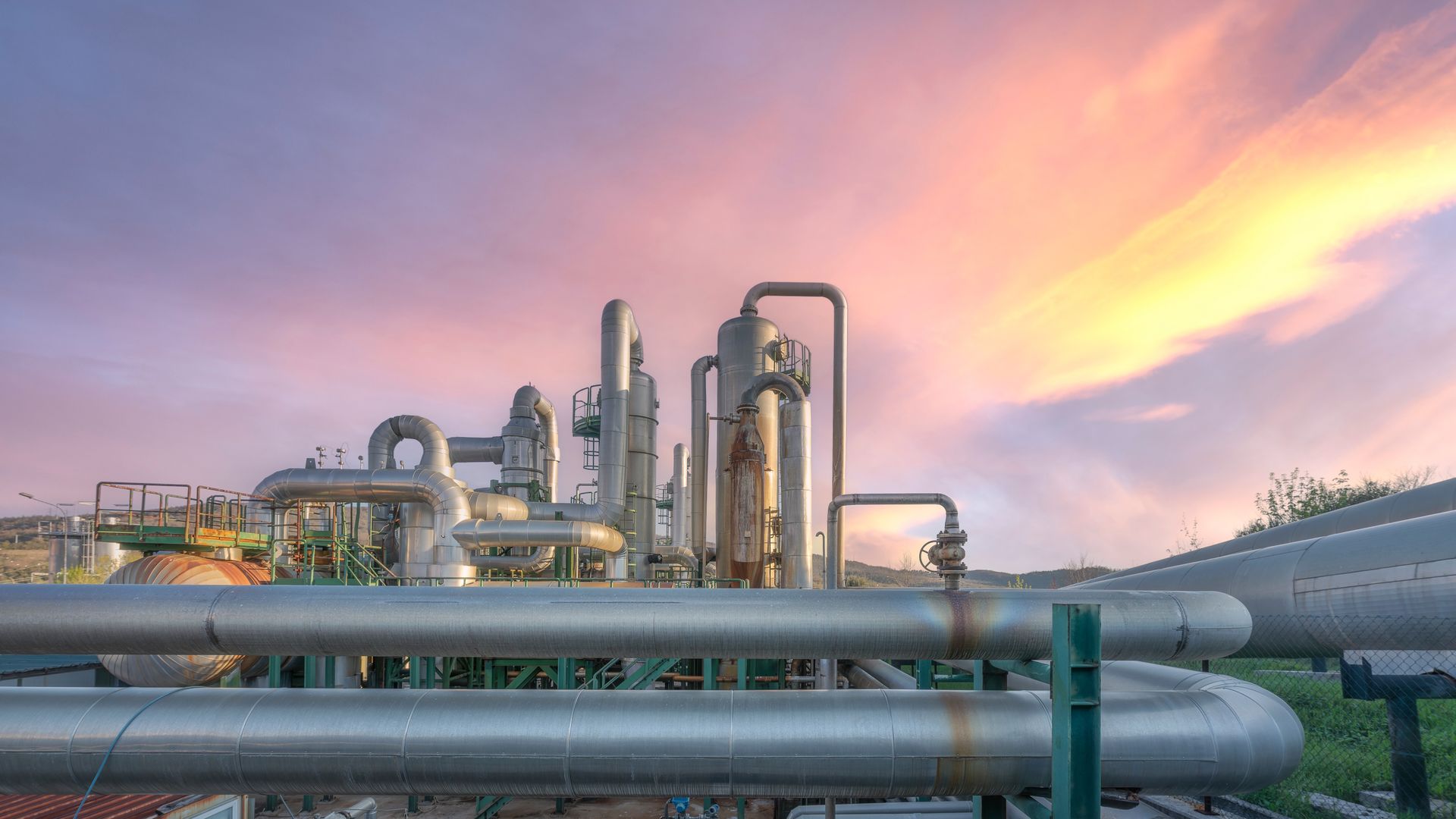
- Syntholene CEO Dan Sutton claims a single 10MW geothermal well equals about 200 football fields of desert solar and can feed “unlimited fuel, forever”
- Syntholene’s Iceland demo has produced hydrogen and passed a company-funded Imperial College review, but has not produced synthetic fuel, and the review gave no costs
- The company has not named its carbon source, and its biggest customer link, Icelandair, is a non-binding letter conditional on scale and price
Dan Sutton, cofounder and CEO of the Canadian-listed synthetic fuel startup Syntholene, has a big claim for a single, albeit massive, hole in the ground.
In a post on X, he shared a clip of what he called a 10MW geothermal borehole and said it matches roughly 200 football fields of solar panels in the world’s sunniest desert, plus another five fields of batteries to keep the output steady.
Sutton added that the well could deliver baseload energy for more than a century if well maintained, and that Syntholene’s process is designed to turn wells like it into “low-cost oil wells that never run dry,” signing off with the statement that “This is how we make unlimited fuel. Forever.”
The math checks out, but the reading might be overwhelmingly optimistic
The post lands less than a month after Syntholene published a paid independent review of its demonstration plant in Iceland, and it is worth considering the message on its merits, with scrutiny in tow, as a message from the CEO of a company whose most recent private placement raised about $2.3 million at $0.45 per unit.
Some of the claims hold up better than one might be expected, but the most important one, the part where the geothermal well becomes an oil well, has not been demonstrated yet.
For starters, the post does not mention whether it is considering the 10MW mentioned as electricity or heat, a distinction that matters considerably when doing the math.
A 10MW electrical well running at a 90% capacity factor would produce about 79GWh a year. That capacity factor is realistic for mature geothermal: Calpine’s 2025 figures for The Geysers in California show 5,471,562 net MWh generated in 2024 from a maximum capacity of 694 net MW, which works out to roughly 90%.
The most cited US data on solar land use, from NREL’s 2013 study, found that generation-weighted solar plants need about 3.5 acres per GWh per year on average, and large fixed-tilt PV around 2.8 acres. That puts the solar equivalent at roughly 220 to 276 acres.
A US football field including end zones covers about 1.32 acres, so the range is about 167 to 209 fields. This means that Sutton’s “~200” is fair on decade-old data, but newer, more efficient panels in a very sunny desert could pull it substantially lower.
If the 10MW is thermal, the comparison falls apart, because turning moderate-temperature geothermal heat into electricity loses most of the energy along the way. For the math to hold, the conversion would have to be electric. This does not change the fact that a 10MW well would be a relative outlier. A simple search shows that a single commercial geothermal production well typically generates 3 to 5 megawatts (MW) of net electrical power.
Fervo Energy, whose Nevada geothermal project for Google TechRadar Pro covered when it came online, provides a sobering benchmark too: its Project Red pilot supported about3.5 MWe at peak in a 2023 test, but averaged 2.1 MWe gross and roughly 1.4 MWe net across more than 614 production days.
The 100-year claim is not absurd on face value: The same Calpine document above shows that a well drilled in 1955 is still producing at The Geysers today. The field around it tells a more complicated story. In its prime, The Geysers delivered 2GW of power, but productivity declined faster as multiple operators tapped the same connected reservoir, forcing operators to inject extra water to slow the slide.
Calpine, which runs most of the plants there, reported a 2024 maximum of 694 net MW across its share of the field. The field did not run out of heat. It ran short of the fluid and pressure that carry the heat to the surface, which is exactly the kind of maintenance problem that the “if well maintained” caveat quietly covers in the X post.
The “as long as the earth’s mantle is hot” line also overreaches. Geothermal wells tap heat in the Earth’s crust, which comes from the planet’s formation and from radioactive decay, and any single reservoir can be drawn down faster than it recovers. Even large, well-known geothermal regions have hard limits: TechRadar reported earlier this year that the first 100MW phase of Microsoft’s planned Kenya data center was already straining Olkaria’s geothermal output.
Syntholene’s demonstration facility sits at the historic Húsavík power station in northern Iceland, home to a 2MW Kalina-cycle geothermal plant commissioned in 2000 and fed by 120C brine from wells about 20 kilometers south of town. The company finished construction on June 22, about six months ahead of schedule, and the facility makes hydrogen, which the company describes as the principal feedstock for its fuel. It announced its first 500 kilograms of hydrogen on July 7 2026.
Validated but with caveats
Validation of the approach came on October 20 2026, when Syntholene released a review by Professor Nigel Brandon of Imperial College London. It concluded that the plant had achieved proof-of-performance for its geothermally integrated solid oxide electrolyzer, with average stack consumption of 34.90kWh per kilogram of hydrogen, equal to about 95.5% electrical efficiency, and 38.60kWh/kg for the system excluding steam generation.
The release is unusually candid about the limits, and they are significant: Hydrogen output was calculated from electrical current assuming 100% Faradaic efficiency rather than measured with a flow meter.
The efficiency figure excludes thermal inputs, steam generation, and geothermal circulation, so the 95% number omits the heat that makes the design work and cannot be compared directly with conventional electrolyzers. The review relied on company-supplied data and a virtual, not in-person, inspection.
Producing synthetic fuel is another challenge: a hydrocarbon needs carbon as well as hydrogen. Syntholene’s website says its carbon feedstock is captured directly from point-ive that using captured carbon means the company approaches carbon neutrality
That matters for the “long after crude oil” promise. If the CO2 comes from a fossil-fueled emitter, Syntholene’s endless fuel depends on someone still burning fossil fuels. It matters for regulation too. Under EU rules, captured industrial CO2 only counts toward renewable fuel credits if it is built into fuel before 2036 for power plant emissions, or 2041 for other industries. After that, only CO2 from the air or from biogenic and geological sources qualifies.
For now, Syntholene has quickly built a working, geothermally integrated electrolyzer, published its reviewer’s caveats and fee, and Sutton’s land-use comparison is roughly right if his megawatts are electric.
But “unlimited fuel, forever” describes a plant that simply does not exist yet. The milestones that would make the claim credible are the first synthetic kerosene from its demonstration facility at Húsavík, a named and eligible carbon
