

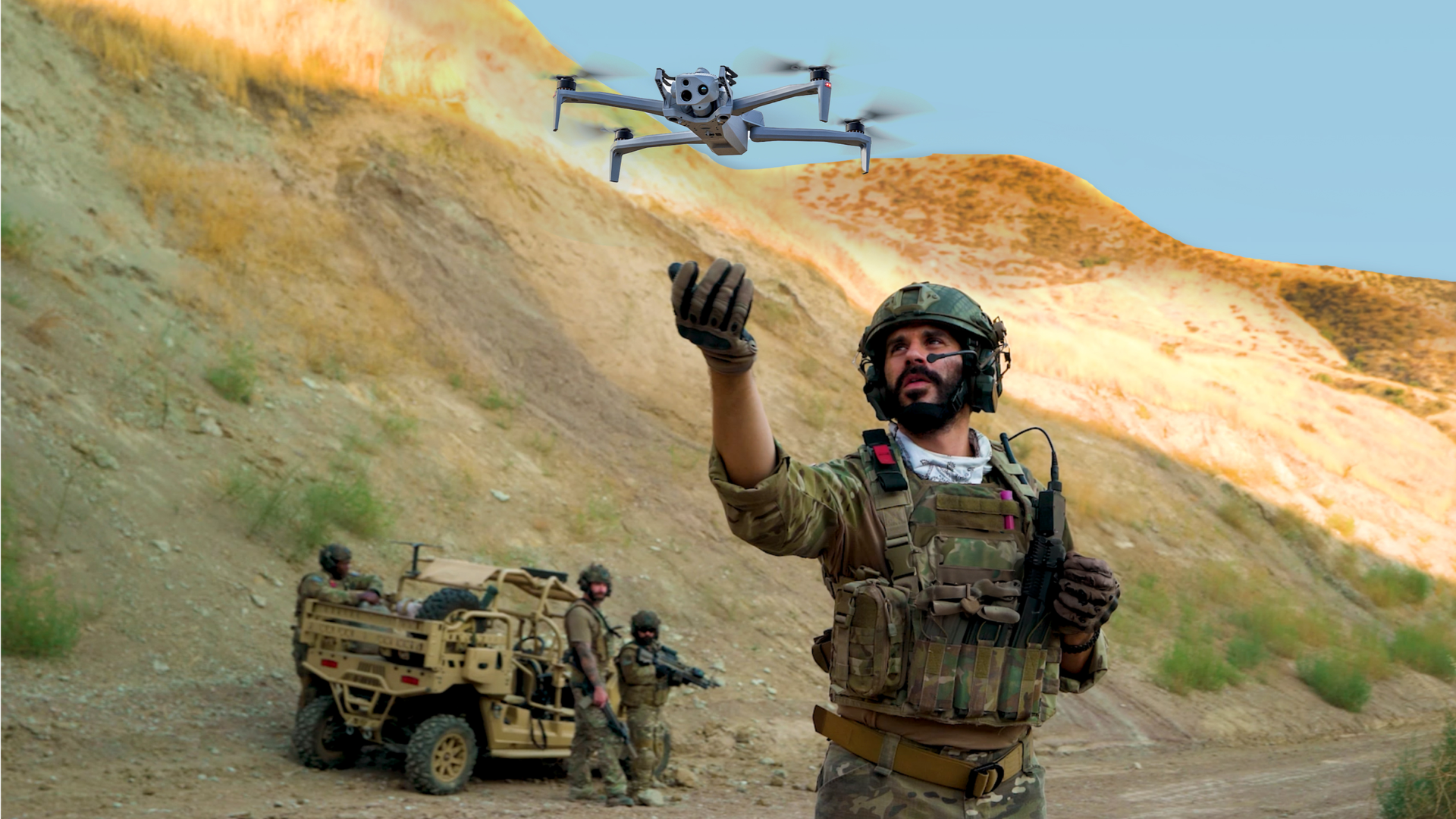
- The Pentagon is recruiting approximately 100 operators for Gauntlet III
- Military personnel can register for the program regardless of experience
- The Pentagon’s drone initiative carries a $1.1 billion funding commitment
The US Army is recruiting about 100 drone operators to evaluate emerging military aircraft as the Pentagon works to strengthen domestic defenses.
The recruitment effort, coordinated by the Defense Innovation Unit (DIU), invites service members with first-person-view (FPV) drone experience to participate in upcoming evaluations.
The selected personnel will help assess competing drone technologies under a $1.1 billion Pentagon initiative to expand domestic production and military capabilities.
Pentagon seeks experienced drone operators for Gauntlet III
The recruitment campaign focuses on Gauntlet III, an upcoming evaluation exercise within the Pentagon’s Drone Dominance initiative, which tests competing aircraft designs.
It seeks troops who have flown FPV drones, which are used for tasks ranging from scouting to kamikaze strikes.
Pilots usually fly these drones in “acro” mode, a manual setting that leaves attitude control entirely to the operator rather than flight software.
Erin Cherry, the initiative’s testing lead, confirmed that many operators are needed for the exercise, although registration remains unrestricted.
“There’s no cap on the registry. We want to hear from any warfighter with FPV experience,” Cherry said.
Rather than recruiting exclusively for one competition, DIU intends to establish a permanent database of qualified operators drawn from different military branches.
FPV aircraft allow operators to control drones through onboard camera feeds, providing direct visual guidance during surveillance, reconnaissance and offensive missions.
These aircraft can also undertake precision strikes and operations in confined environments, where navigation requires considerable skill and continuous operator attention.
Although experienced pilots are particularly valuable, the Pentagon also wants personnel whose expertise covers different operational requirements and mission environments.
“‘Pilot skill’ isn’t just one thing,” Cherry said. “Flying ability, tactical knowledge, payload experience, and specialized skills like long-distance navigation and urban flight are all distinct, so we look at each one.”
Personnel familiar with extended flights or operating between buildings may therefore qualify even without extensive experience across every drone category.
The recruitment process also accommodates operators with relatively limited experience, allowing officials to examine how aircraft perform under different levels of proficiency.
“A drone that only performs well in an expert’s hands isn’t ready for the force. Whether someone has been flying FPV for five years or five months, we want to hear from them,” Cherry added.
How military personnel can register for the drone program
Interested service members must complete the officialPilot Interest Form provided through the Pentagon’s Drone Dominance recruitment platform.
Applicants must provide a valid military email address ending in .mil, as organizers will not respond to personal or civilian accounts.
Participation will also require coordination with the applicant’s military branch, meaning registration alone does not guarantee selection for the competition.
Successful applicants could operate recently developed aircraft, including experimental models that have not yet entered regular service with American forces.
Some participants will receive instruction covering expendable attack drones, which are designed to strike designated objectives rather than return afterward.
Their assessments will contribute to procurement decisions as the Pentagon intends to prioritize aircraft that perform effectively during competitive trials.
