

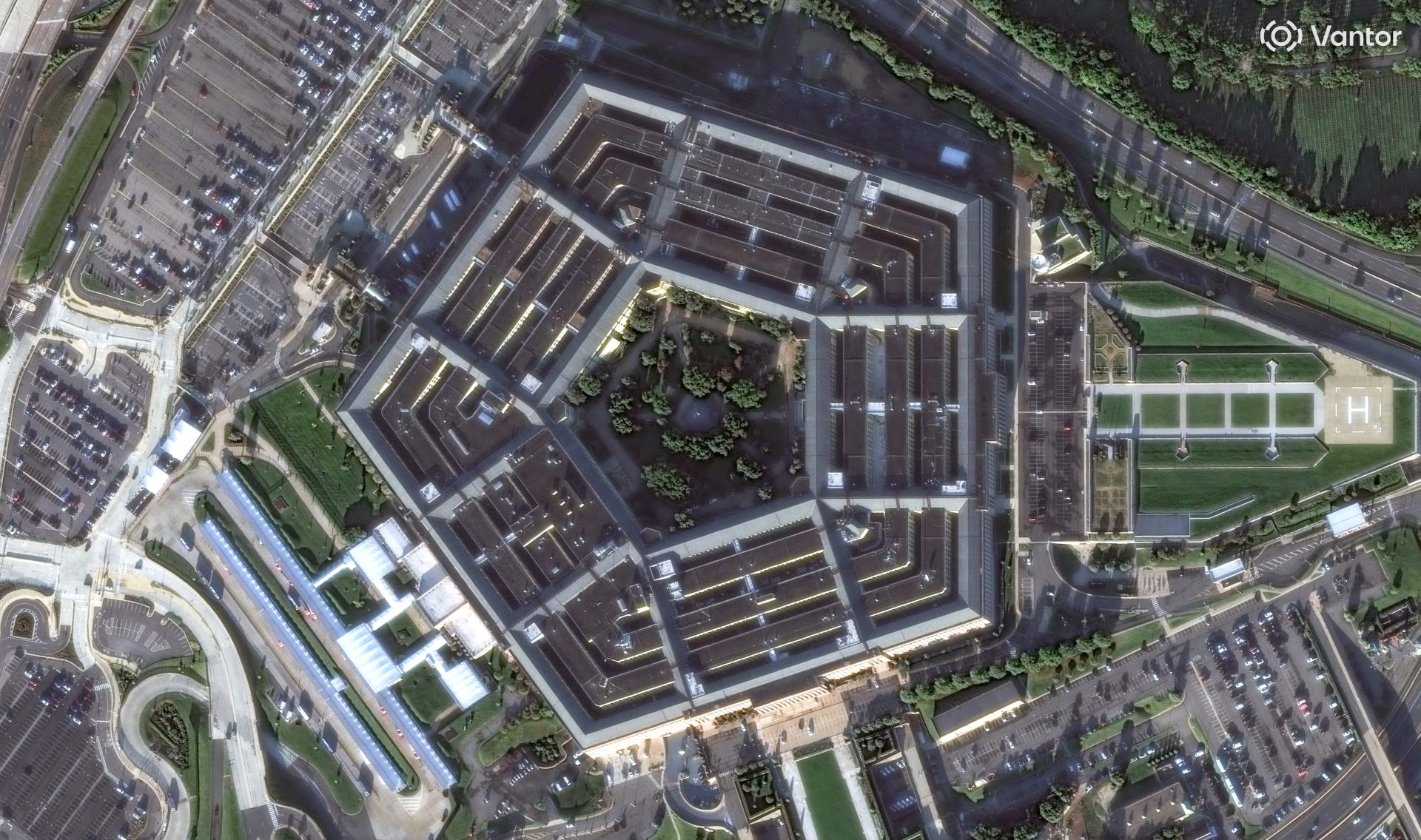
The Pentagon recently established a new task force that’s charged with rapidly iterating and advancing weaponized drones and small uncrewed ground vehicles across the U.S. military.
Col. Michael Penn, the Army official who is commanding the team — dubbed Task Force Easy — shed new light on its origin and Defense Department leaders’ overarching vision for it during the annual AUSA conference on Tuesday.
“We’re slower, less effective. We don’t outpace our enemy and our threat in how quickly we adapt new technology. So we’re trying to fix that in our task force,” Penn said.
Task Force Easy was initiated as DOD personnel have been hustling to solve technical and structural challenges associated with acquiring and deploying affordable drones and other unmanned capabilities en masse for modern combat operations.
In September, Defense Secretary Pete Hegseth announced a set of new policies to fuse the U.S. military’s drone procurements and real-world operational use. They included instructions for senior defense officials to launch a four-star combatant command to lead autonomous warfare, working directly with the office of the Direct Reporting Portfolio Manager for Unmanned Systems (DRPM-UxS) that was set up earlier this summer.
Originally, the new task force was working under the Defense Autonomy Warfare Group. Formed last year, that organization grew out of the Replicator initiative developed under the Biden administration to advance autonomous, unmanned, and AI-enabled systems across the military domains.
Notably, Penn said that the DAWG recently transitioned into the new Joint Task Force-Autonomous Warfare that is also now a direct report to the DRPM-UxS.
“But, at Task Force Easy, we’re really focused on small unmanned aerial systems [and] unmanned ground vehicles,” Penn said. “Particularly, we’re focused on initially first-person viewer, one-way attack [drones] and how to rapidly iterate on that and make that capability better.”
The task force is serving as the department’s lead for pacesetter work on the Chief Digital and AI Office’s Project Swarm Forge to deliver collaborative autonomy at the edge.
Penn said Task Force Easy has also been tasked to stand up a drone team that’s focused on training, defining the latest tactics, training and procedures and standards development, as well as assisting combat training centers’ training and combat evaluations for the new equipment. Those involved “really believe the solution isn’t just drone dominance — it’s that adaptation dominance,” he added.
“It’s not just about buying 1,000 drones, but it’s really about building institutional and industrial engine that’s going to learn, update, and build better capabilities faster than we have in the past,” he noted.
