

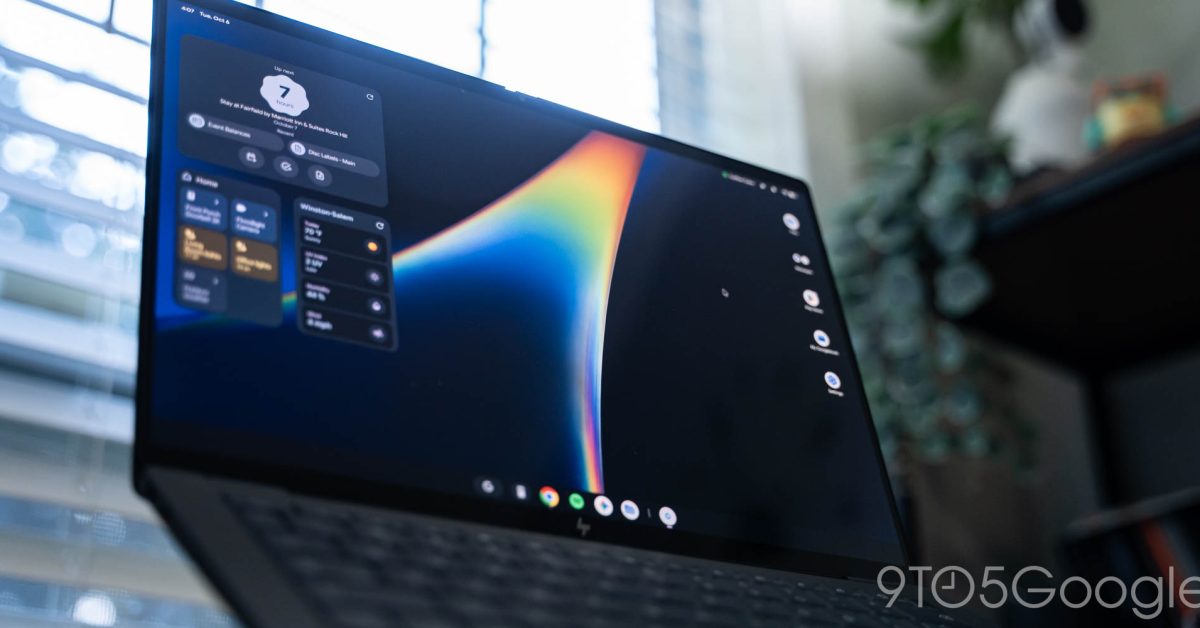
Let’s not pretend; if you weren’t sold on a Chromebook, Googlebook isn’t for you either.
In our review of Googlebook as a platform, Abner Li explains how this platform sets a foundation for a potentially fascinating future. But, even from that viewpoint, it’s hard to ignore the shortcomings. Between the app gap and plenty of overlooked mistakes throughout the OS, Googlebook is far from a “finished” product.
In many ways, it continues to resemble what it’s replacing, ChromeOS, and that’s not going to leave the best impression for everyone.
Chromebook launched to a market starved of capable and reliable cheap laptops, and at a time where even higher-end machines were inherently compromised. Better battery life, no virus protection, simpler setup, price, take your pick, a Chromebook was a genuinely good choice for quite a while. But, as time went on, that math started to shift away from Google’s favor. I’d argue that it’s harder to find a bad laptop than it is a good one now, and there are good options on every price point, whether you’re looking at Windows or a MacBook. There’s an abundance of fully-capable Windows machines with long battery life and plenty of power, and frankly, the MacBook Air is $1,099.
With that in mind, Googlebook’s inherent similarities to ChromeOS betray any progress it might have made.
Under the hood, the new Android base is a much better foundation for the years to come. On the surface, where the users are, Googlebook hasn’t addressed any of the issues ChromeOS was dealing with, at least from a functional level. Apps are the biggest problem, as everything from mainstays to the niche library of apps are a shell on Googlebook of what they are on Windows and macOS. Unless you’re heavily using the web or Android apps for everything you do, you’re going to run into times where Googlebook is simply incapable of doing the things you want. And that even goes for Google’s own product offerings. Within the past week Google announced a new app that could combine voice recordings, shorthand notes, and local AI processing to build out detailed notes of a meeting or presentation. It’s a really useful and fun idea, but you literally cannot use it on Googlebook — it’s exclusive to Mac.
Even the whole “this is a laptop for Android users” schtick doesn’t hold any water. These features are nonexistent at launch for most users, and ChromeOS had the vast majority of these anyway.
Put simply, Googlebook isn’t a reset from ChromeOS. It’s not catching up to the competition. It’s the same old problems (plus a few new ones) in an admittedly much faster and more polished new chassis. The future might tell a different story but, at least for now, Googlebook is not for you if a Chromebook wasn’t.
Thoughts?
More on Googlebook:
- Googlebook’s app situation is a mess, and not just because things are missing
- Logitech brings its mouse & keyboard controller to Googlebook, supports Magic Pointer
- The first thing you should do on Googlebook is fix the trackpad
Follow Ben: Twitter/X, Threads, Bluesky, and Instagram
You’re reading 9to5Google — experts who break news about Google and its surrounding ecosystem, day after day. Be sure to check out our homepage for all the latest news, and follow 9to5Google on Twitter, Facebook, and LinkedIn to stay in the loop. Don’t know where to start? Check out our exclusive stories, reviews, how-tos, and subscribe to our YouTube channel
