Close Menu
MyAppsPlus

    Subscribe to Updates

    Get the latest creative news from FooBar about art, design and business.

    What's Hot

    SpaceXAI’s Grok: What’s free in 2026 and what isn’t?

    October 12, 2026

    Bill Gates warns cyberattacks most imminent AI threat

    October 12, 2026

    AI Companies Are Rehearsing the Disaster They Hope Never Happens

    October 12, 2026
    Facebook X (Twitter) Instagram
    Facebook X (Twitter) Instagram
    MyAppsPlusMyAppsPlus
    Monday, October 12
    • Home
    • Breaking Tech
    • Apps & Software
    • AI & Automation
    • Android
    • iPhone & iOS
    • More
      • Reviews
      • How-To Guides
      • Deals & Discounts
      • Shop
    MyAppsPlus
    Home»Breaking Tech»Study finds many new cars share your data with third-party companies
    Breaking Tech

    Study finds many new cars share your data with third-party companies

    myappsplusBy myappsplusOctober 12, 2026013 Mins Read
    Share Facebook Twitter Pinterest Copy Link LinkedIn Tumblr Email Telegram WhatsApp
    Follow Us
    Google News Flipboard
    Study finds many new cars share your data with third-party companies
    Share
    Facebook Twitter LinkedIn Pinterest Email Copy Link

    The report analyzed traffic from 21 vehicles and 30 automaker apps.

    Pinterest probably doesn’t need your car’s VIN, but General Motors’ apps were sending it there anyway — and to Snap, Yahoo, Meta, Google and the data broker Acxiom. At least, that’s according to a recent study from Northeastern University, which tested 21 late-model cars and 30 automaker apps on Consumer Reports’ fleet between October 2024 and August 2025.

    Nineteen of those cars sent data to at least one third-party company email addresses and precise locations to advertising and analytics companies. Four of those seven belong to GM, which has been under a 20-year FTC privacy order since January

    Those four GM apps are myCadillac, myChevrolet, myBuick and myGMC, and each sent VINs to 10 companies including Microsoft and Adobe. Meanwhile, HondaLink sent VINs and location to the analytics firm Amplitude, with the Lincoln and MyNISSAN apps making up the remainder of the list. But unlike a phone’s advertising ID, a VIN can’t be reset, so pairing one with an email address lets ad companies tie an owner to activity on other apps and websites.

    According to Consumer Reports’ per-vehicle summary, 10 of the 21 cars contacted no advertising or tracking domains on their own. The Buick Envista and Nissan Ariya were among them, yet pairing their apps exposed owners to 23 and 25 ad and tracking companies respectively. Tesla went the opposite way, with the Model 3 reaching 22 such companies from the car while its app added two. Since the team couldn’t decrypt vehicle traffic and could only capture cellular data from the Model 3, these cars’ real totals are likely to be higher. For most of the cars tested, the bulk of the ad-tech exposure came from the phone app. Meanwhile, 28 of the 30 apps contacted at least one advertising or analytics company, according to Consumer Reports.

    Automakers point to vendor contracts and privacy policies
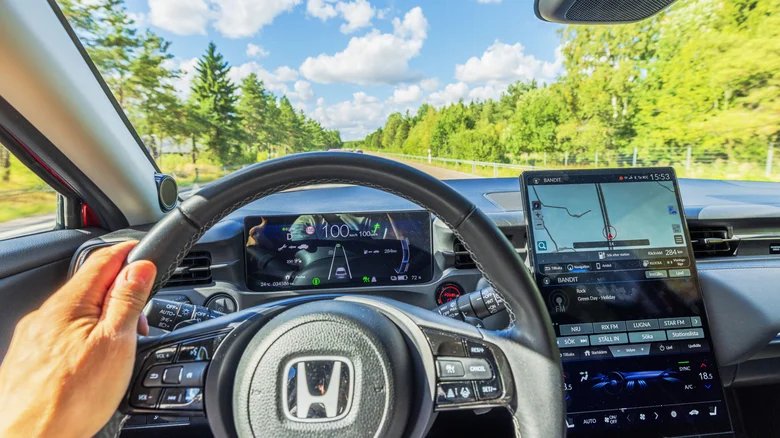
    A close-up of the cabin of a Honda from the driver's point of view, including a digital cockpit

    Back in January, the FTC finalized GM’s punishment over its driver data sharing scandal. It handed down an order banning the company from selling driver data for five years to consumer reporting agencies, and says GM must receive express consent before it collects or shares connected vehicle data. It’s important to note that Northeastern’s testing predates that order, and the researchers haven’t alleged a breach of it. GM told Northeastern Global News that it only discloses data to service providers that are contractually barred from selling or using it for their own purposes.

    That aside, the researchers did approach 17 manufacturers with their findings and heard back from 14, all of which said the data flows matched their vendor contracts. Seven said it’s ultimately the responsibility of the owner to read and accept the terms for every third-party service in the car, including pre-installed software, while five attributed the tracking to web pages opened inside their apps.

    The researchers also read the privacy policies of the seven apps that shared identifiers, finding that each disclosed that it may pass personal data to third parties, without saying which ones or why. Owners who decline Tesla’s data sharing agreement are warned of “reduced functionality, serious damage, or interoperability,” while Rivian says that switching off data collection will limit or disable features like navigation and over-the-air updates.

    Honda seems to be the only one willing to change anything, asking Amplitude to delete the location data and updating HondaLink to stop sending it, which a Honda spokesperson confirmed to Northeastern Global News. Northeastern professor and study co-author David Choffnes told the outlet that regulators should step in.

    cybersecurity EVs and Transportation finds many Study
    Follow on Google News Follow on Flipboard
    Share. Facebook Twitter Pinterest LinkedIn Tumblr Email Copy Link
    myappsplus
    • Website

    Related Posts

    Coding Kids, Drone Wars and Algorithmic Realism

    October 12, 2026

    Mbps Vs MB/s: What do these speeds mean?

    October 12, 2026

    The pros and cons of importing foreign phones to the US

    October 12, 2026
    Add A Comment
    Leave A Reply Cancel Reply

    Top Posts

    What was the PSX? The souped-up PS2 rarely sold outside of Japan

    September 14, 202610 Views

    Can reviews settle disputes that marked first two seasons?

    September 21, 20268 Views

    Experts call for leveraging AI, breaking key tech bottlenecks to propel advanced manufacturing

    September 19, 20268 Views
    Latest Reviews

    Android 17 boosts network security by hiding domain names, lets carriers disable 2G

    myappsplusAugust 28, 2026

    Google Messages officially announces custom ‘Chat themes’ & backgrounds

    myappsplusAugust 28, 2026

    Barret Zoph, the Thinking Machines co-founder ousted before joining OpenAI, is now at Google

    myappsplusAugust 28, 2026
    Stay In Touch
    • Facebook
    • YouTube
    • TikTok
    • WhatsApp
    • Twitter
    • Instagram

    Subscribe to Updates

    Get the latest tech news from FooBar about tech, design and biz.

    Most Popular

    As electric two-wheelers gain a foothold, Belgian startup Any bets on cargo space

    August 28, 20260 Views

    Best Buy launches Friday 24-hour Flash Sale: iPad, iPhone, $800 off mini-LED TV, more

    August 28, 20260 Views

    Guns, cars and chihuahuas: Breaking down the GTA 6 extended look

    August 28, 20260 Views
    Our Picks

    SpaceXAI’s Grok: What’s free in 2026 and what isn’t?

    October 12, 2026

    Bill Gates warns cyberattacks most imminent AI threat

    October 12, 2026

    AI Companies Are Rehearsing the Disaster They Hope Never Happens

    October 12, 2026

    Subscribe to Updates

    Subscribe to our newsletter and get the latest tech news, app updates, AI trends, smartphone reviews, and exclusive deals delivered straight to your inbox.

    Facebook X (Twitter) Instagram Pinterest
    • About Us
    • Get In Touch
    • Disclaimer
    • Privacy Policy
    • Terms & Conditions
    © 2026 MyAppsPlus. All Rights Reserved.

    Type above and press Enter to search. Press Esc to cancel.