

Technology is a strange thing. Once upon a time –- well, thousands of years ago -– it meant crashing an axe into pyrite to create fire. These days, it refers to advanced software that can alter images and drones that can capture 4K footage hundreds of feet up from the ground. There’s probably an argument for the new Big Arch burger at McDonald’s, too, but let’s leave that one in the background for now.
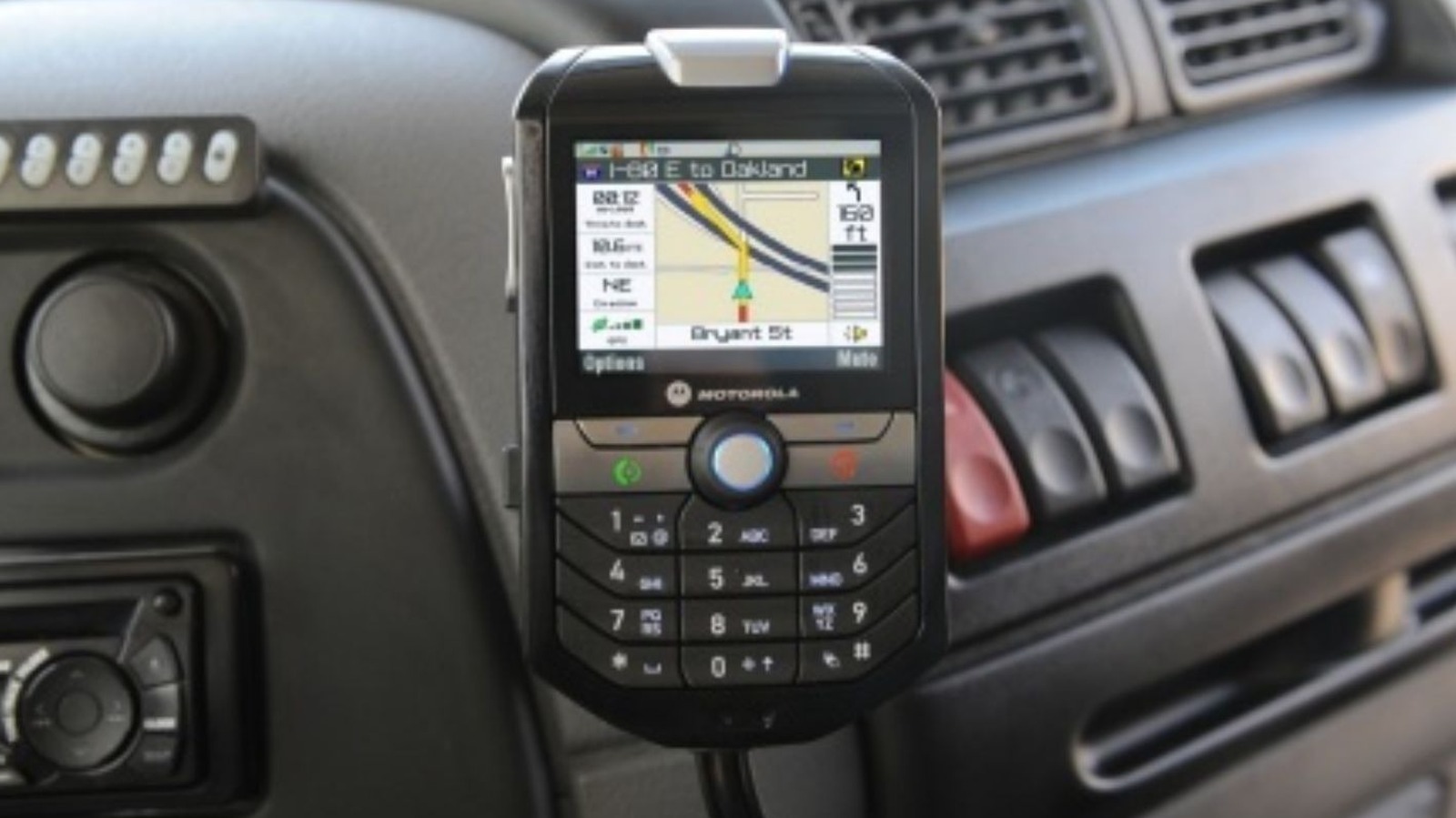
Anyway, the advancement of technology has had a huge influence on shaping car interiors. This is perhaps most prevalent with infotainment systems, which are some of the features you use in your car the most. Back in 2008, before the dawn of cars with dashboard-wide displays (like the GLC EV, which has Mercedes’ largest screen yet), we had wacky inventions like the Motorola M990 Smart Rider.
Effectively, this was a do-it-all car phone, which incorporated everything a driver needed for, er, driving. It could guide you home, store your favorite music albums, and keep you updated on your mail. On face value, it seemed like the perfect solution for yesteryear. But as you’ll come to see, the Smart Rider was doomed from the start, thanks to a little-known product that launched a year before it did: the iPhone.
Is that a control panel for a child’s toy?
The M990 was a serious invention, not a toy. Stop laughing. The Smart Rider was a hands-free device aimed at professional drivers, such as chauffeurs or delivery drivers. It had built-in GPS navigation, Bluetooth connectivity, and even voice activation, with all that goodness tucked behind a 2.8-inch color display.
Now, most of this technology wasn’t new in 2008. Take the GPS for example: The voice-guided system could issue real-time traffic reports and automatically re-route you accordingly, the concept of which was already several years old by then. But the Smart Rider’s USP was just how many different functions it bundled into one permanently fixed unit.
Thanks to a 2-gigabyte SD card, you could download several hundred songs from your favorite, definitely-legal streaming sites. There was also an email app that kept you updated on how many of your clients wanted to speak to the manager. Oh, and since there was a built-in speakerphone, you could call your spouse and tell them you’d be late … while checking the latest NBA scores, since the Smart Rider also had a dedicated web browser.
Was it a success?
One word: iPhone. By the time the Smart Rider was announced, the iPhone had already been out for a year, and the smartphone revolution was starting to take off. These devices were not only more advanced than the Smart Rider, but they weren’t consigned to the dashboard of your car –- they were an extension of your digital world and went everywhere with you.
Unfortunately, that meant there was simply no need for a device like the Smart Rider anymore. It was a relic of a bygone era, since drivers could install phone mounts and connect directly to their car’s Bluetooth system. What made things worse is the fact that the Smart Rider required professional installation before it could be used. By comparison, you don’t need a degree in electronics to pair an iPhone to a car.
In truth, Motorola’s idea to connect driving, entertainment, and communication wasn’t a bad one. But the game had already moved on by the time the Smart Rider arrived, and it would have quickly become one of those features you never use in your car.
