

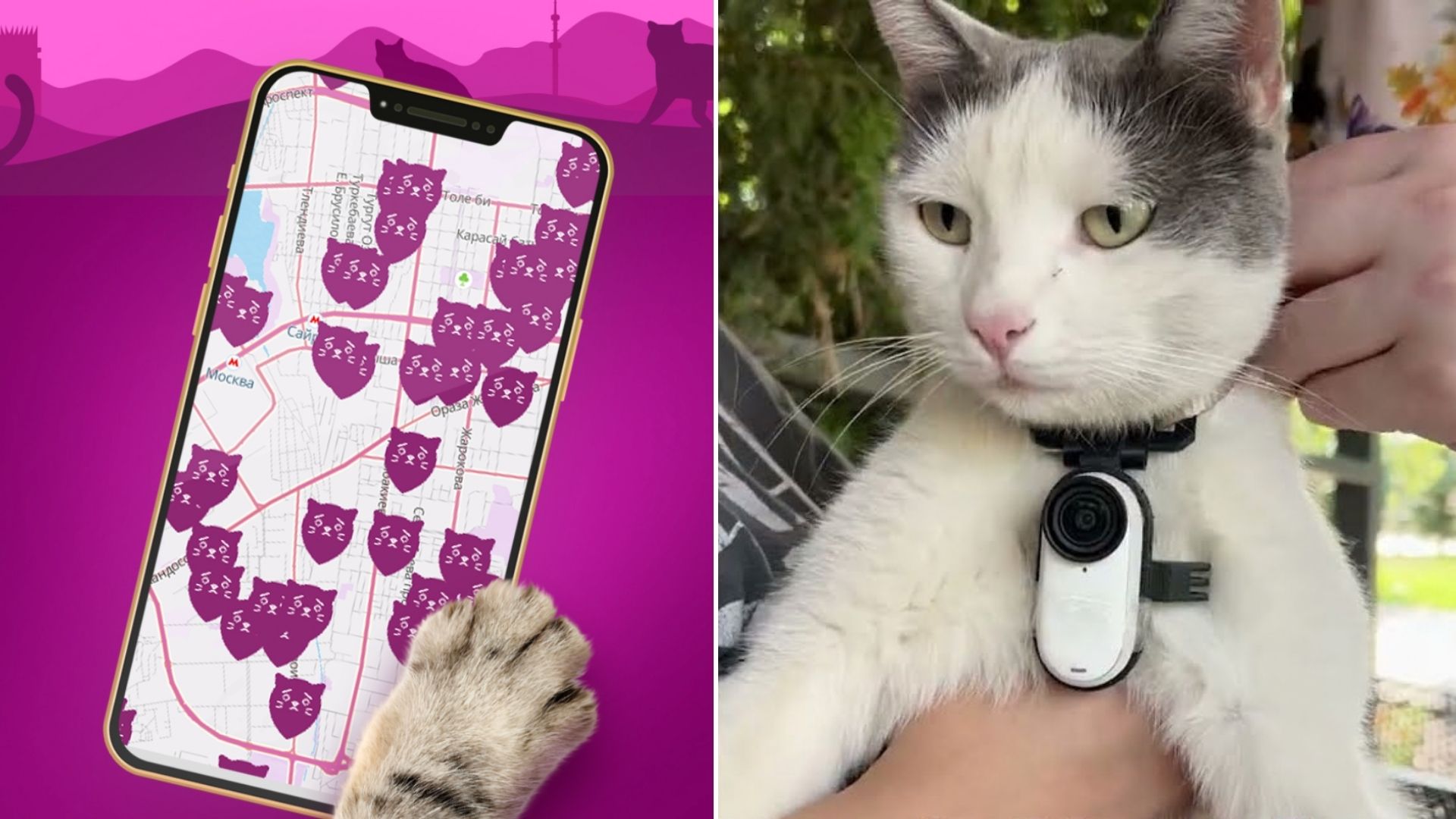
Cats are famously good at getting into places humans cannot easily reach. Now, in Kazakhstan, some are putting that talent to work helping find missing pets. A project called GdeKotBot has recruited free-roaming cats as four-legged search volunteers, equipping them with tiny cameras and GPS trackers while artificial intelligence scans their footage for missing animals.
The idea builds on a digital service launched in 2025 that uses a Telegram chatbot to connect people who have lost cats with residents who spot them outdoors. The new initiative adds an unusual twist: instead of relying entirely on human volunteers, the search network can also gather footage from cats exploring their neighbourhoods.
How AI turns cats into search volunteers
According to GdeKotBot, the project has helped reunite 407 pets with their owners, while more than 28,000 users have joined the service. The team says the new volunteer-cat initiative is designed to expand the search into places where frightened animals might hide. The figures have been reported by local media, although they have not been independently audited.
The system begins when an owner reports a missing pet through the @GdeKotBot Telegram bot, submitting photographs and information about where the animal disappeared. Anyone who encounters a cat outdoors can then upload a photograph and its location. AI compares the submitted image with missing-pet reports and alerts the owner when it identifies a possible match.
The volunteer cats extend this process. Owners of free-roaming cats in neighbourhoods with many missing-pet reports are invited to participate. Their pets wear cameras and GPS trackers during their usual outings, recording other cats they encounter. AI analyses the resulting footage and compares the animals against the missing-pet database.
More from AI and Robotics
See All
AI and RoboticsKawasaki turns to physical AI to push its Kaleido humanoid toward full autonomy
AI and RoboticsUtah launches world’s first autonomous prescription system without human doctors
AI and RoboticsSecret stamp: OpenAI adds invisible watermarks to ChatGPT text under EU rules
AI and RoboticsHumanoids to tackle bomb scenes, hazmat threats and prison searches
AI and RoboticsVideo: Robot hand performs magic tricks with precision using 20 independent joints
If the system finds a potential match, the missing cat’s owner can receive an alert with location information, giving them a lead to follow up on.
Why cats can be difficult to find
The approach addresses a familiar problem for pet owners. A missing cat may be nearby without being visible or approachable. Frightened animals often hide under cars, inside bushes, beneath porches or in other sheltered spaces.
They may avoid people even when someone is actively searching for them. A cat already roaming the neighbourhood, meanwhile, might pass through some of those same spaces during its normal daily route.
That does not make feline volunteers perfect search agents. Their cameras can miss animals, footage may be unclear, and AI image matching can produce false positives. But the extra observations could provide useful clues when combined with photographs and reports submitted by people.
The project is also designed to make participation possible without owning a camera-equipped cat. Residents can still help simply by photographing an animal they encounter and sharing the image and location through the chatbot.
A local search network with wider ambitions
GdeKotBot began in Almaty, Kazakhstan, in 2025, as a way to coordinate reports of missing and spotted cats. The service’s broader approach includes circulating missing-pet information through local communication channels, helping connect sightings with the area where an animal disappeared.
The camera-equipped cats represent an expansion of that community-based model rather than a replacement for it. Their footage adds anotherissing animals, checking potential matches and bringing pets home safely
There are limitations to consider, too. The system depends on participating owners, usable camera footage and accurate image matching. The organisers’ reported reunion figures do not show how much the camera-equipped cats themselves have contributed, separate from the original chatbot and its human users.
Still, the concept demonstrates a practical application of AI that goes beyond generating text or images. By combining computer vision, location data and a network of local participants, GdeKotBot is attempting to turn everyday observations into actionable information. And its newest volunteers have an advantage no human search team can easily replicate. They already know their way around the neighbourhood.
Kaif Shaikh is a journalist and writer passionate about turning complex information into clear, impactful stories. His writing covers technology, sustainability, geopolitics, and occasionally fiction. A graduate in Journalism and Mass Communication, his work has appeared in the Times of India and beyond. After a near-fatal experience, Kaif began seeing both stories and silences differently. Outside work, he juggles far too many projects and passions, but always makes time to read, reflect, and hold onto the thread of wonder.
- 1US hypersonic cruise missile built to exceed Mach 5 reaches testing phase in Australia
- 2World’s largest nuclear fusion reactor receives final piece of its giant plasma chamber
- 34,000-mph PAC-3 MSE missile triples seeker production with $14.7 billion award
- 4SpaceX proposes 32-mile Florida pipeline to supply fuel for Starship rockets
- 5P-8A Poseidon maritime patrol aircraft scores new $56M ground systems and fly-away kits
