

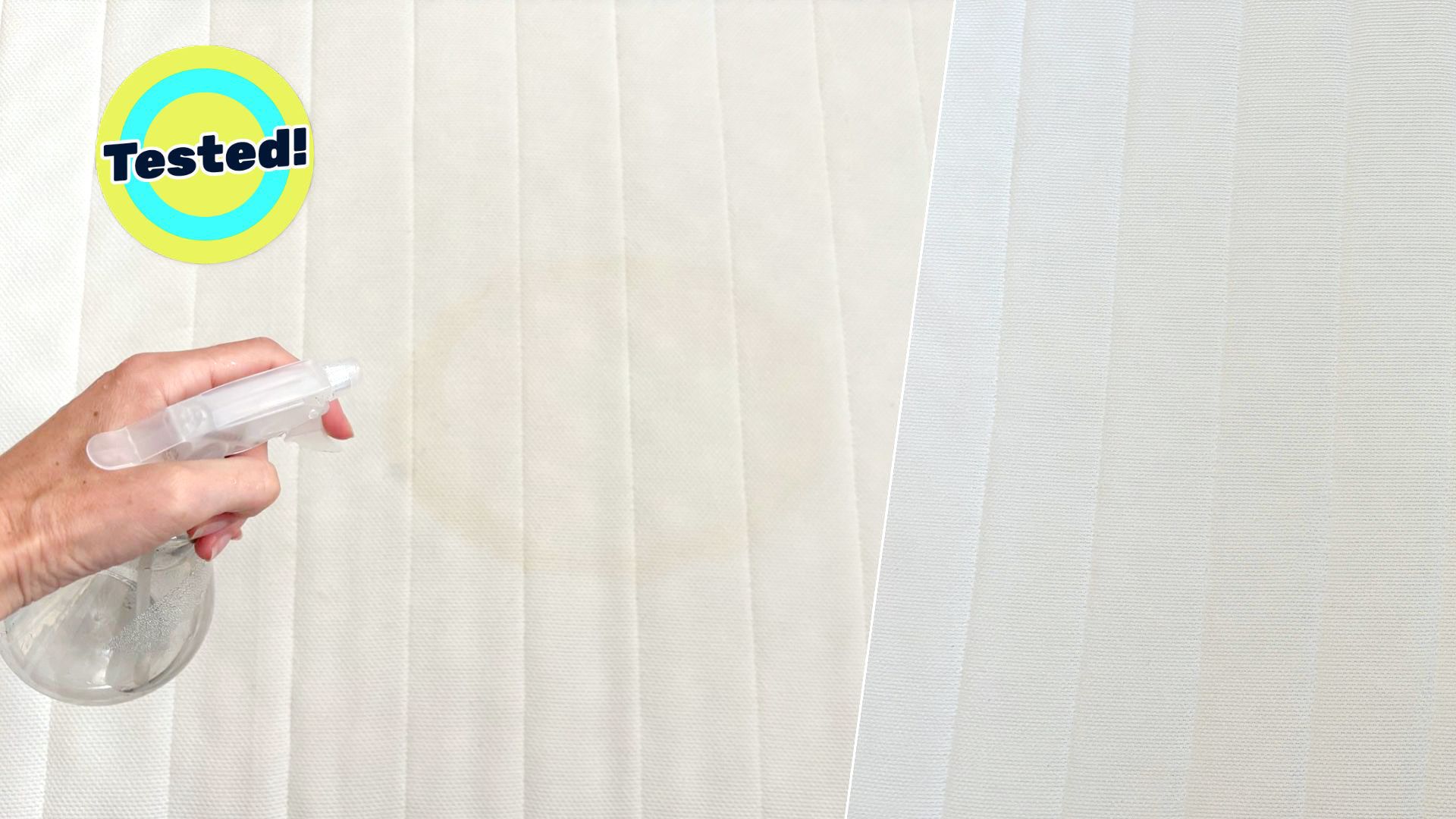
Sweat, sebum, and oil from our skin (not to mention spills and accidents) can all lead to yellow mattress stains. These bodily fluids oxidize over time, permeating our bed sheets and discoloring our beds.
As well as looking unsightly, these grubby marks can harbour bacteria that can be harmful to our health. That’s why I decided to immediately tackle the ugly yellow stain on my young son’s mattress.
Cleaning it with laundry detergent didn’t work — but then I heard about a $3 spot cleaning treatment that could lift stubborn stains and restore it back to bright white, and decided to give it a go. Did it work? Absolutely. Here’s how I removed a deep yellow mattress stain and made it look brand new.
Sweat or urine? Who knows! What I do know is that this yellow stain had to go. Fluids oxidize over time, which can slowly seep through bed sheets and even some mattress protectors. So the yellow stain you’re seeing today could be the result of an accident from weeks ago.
To keep your mattress in tip top shape, I recommend inspecting it for any stains or marks every time you change your sheets. That way you can deal with stains quickly, before they become darker and harder to lift.
The $3 spot treatment I used
- To use hydrogen peroxide as a safe cleaner, use a 3% concentration
- Avoid mixing with other chemicals.
- Use gloves to protect your hands.
The combination of hydrogen peroxide and baking soda serves as a two-pronged attack against unsightly yellow mattress stains. As a disinfectant and mild bleach, the hydrogen peroxide kills bacteria before breaking apart and lifting yellow pigments.
❌Avoid using hydrogen peroxide on dark-colored fabrics and delicate materials such as silk, wool and cashmere, as it has a mild bleaching affect.
Meanwhile, the baking soda acts as a sponge. It absorbs the dissolved stain and neutralizes odors as opposed to simply masking them with a new scent.
Cleaning experts recommend using 3% hydrogen peroxide for best results, and diluting it with water in a 50/50 ratio. Once diluted, I then applied the solution to the yellow stain.
Once combined with the baking soda, the two products cause a chemical reaction that break down and drawn out the stain. With very little effort, I was able to restore my son’s mattress back to bright white. Here’s exactly how I did it…
How to use it
I’ll be honest, the sight of the yellow stains on my son’s mattress made me think that the best option might be to just replace it.
However, it isn’t that old and it’s in otherwise good condition. So I decided to give this two-ingredient soak a shot instead. Here’s what you’ll need and a step-by-step guide to bring your mattress back to bright white:
- Vacuum cleaner with upholstery attachment
- Rubber or disposable gloves to protect hands
- Clean microfibre cloth
- Clear dish soap (optional)
- bicarbonate of soda/baking soda
- 3% hydrogen peroxide
- Spray bottle
Step 1: Vacuum thoroughly
The first step to cleaning any mattress is to give it a thorough vacuum. This is to lift shed skin, dust, dust mites and other allergens that could be lurking in its surface. These airborne particles don’t directly contribute to yellow stains, but they can impact your sleep.
I used the <a href="https://www.amazon.com/FEPPO-Mattress-Vacuum-Cleaner-16Kpa/dp/B0HGXKP4V4?ref” rel=”nofollow noopener” target=”_blank”>FEPPO 4-in-1 mattress vacuum cleaner from Amazon, but any vacuum with an upholstery attachment will work.
Slowly move the vacuum over the surface of the mattress, paying close attention to any seams, tufts or creases.
Step 2: Mist stain with hydrogen peroxide solution
There are several ways you can approach your yellow mattress stain with the hydrogen peroxide and baking soda mixture.
Don’t oversaturate your mattress when cleaning it. Not only can oversaturation damage the delicate structure of any comfort foams, it can also take longer to dry. This places it at risk for growing mattress mold.
For oily stains caused by hair products or body lotions, I recommend mixing a couple of drops of clear dishwashing solution to your hydrogen peroxide mixture. That’s because dish soap helps break down and lift oil and grease.
For my son’s mattress stain, I strongly suspected it was the result of sweat or urine, so I knew I could skip the dish soap. Armed with my hydrogen peroxide mixture, I lightly misted the stain.
Step 3: Sprinkle with baking soda
While the hydrogen peroxide was busy breaking down the chemical components of the yellow stain, it was time to add a sprinkling of baking soda.
Baking soda acts as a sponge, drawing out moisture and neutralising odors — which, when dealing with a urine mattress stain — is important. I left the solution sitting on the mattress for a few hours, allowing it enough time to break down the stain.
Step 4: Vacuum again
Once you’re happy that you’ve given the treatment enough time to do its job, it’s time to vacuum up the residue baking soda. Again, this can be done with the upholstery attachment on your vacuum cleaner (provided that it’s clean), or a specialist mattress vacuum cleaner.
Once I had vacuumed up the baking soda, which had become damp and lumpy at this point, I was able to asses the area. For me, the stain had completely disappeared. So I dabbed the area with a damp microfiber cloth to clean off any cleaning residue.
However, if a stain still remains, you may need to repeat the above steps.
Step 4: Allow to dry thoroughly
Once your mattress is back to its bright best, it’s time to let it dry thoroughly. Ideally, you’ll choose a warm sunny day that so you can open your bedroom window wide to allow your bed to air dry.
It’s important you allow enough time for the mattress to dry before dressing it in bed sheets, as trapping in moisture can lead to mold and mildew growth.
To ensure that it dries thoroughly, allow up to four hours to dry after a light spot clean. For heavier saturation, you’ll need to allow up to 24 hours.
Protect your mattress against yellow stains
Investing in one of the best mattress protectors is the only way to protect your mattress against yellow stains and create a protective barrier around your bed.
The mattress protector I was using on my son’s mattress wasn’t 100% waterproof, and it shows. Without one, your mattress becomes a sponge for sweat, pee, sebum and allergens, like dust mite and pollen.
