

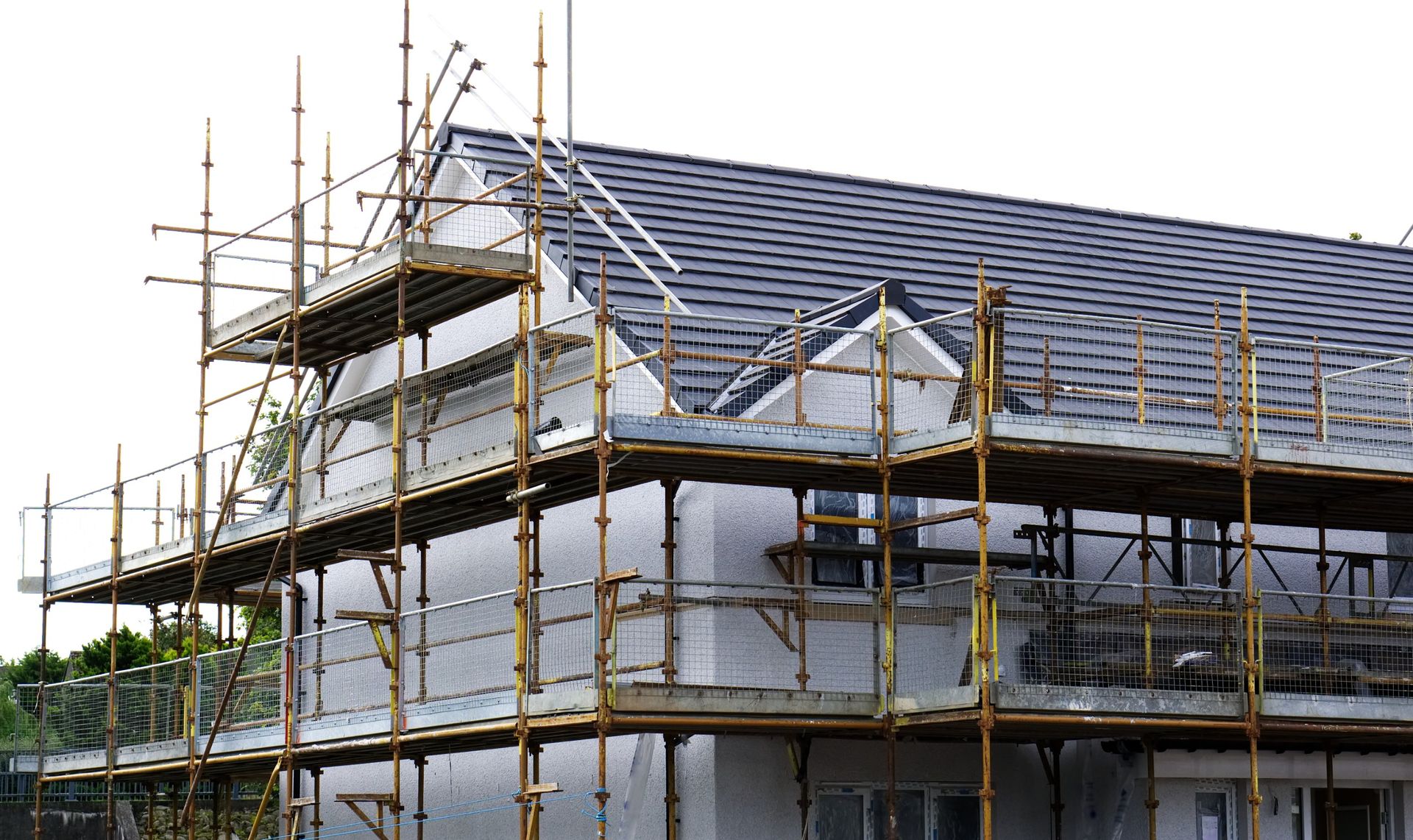
With the rising cost of living and soaring real estate prices, many homeowners are choosing to renovate or extend their current homes rather than relocate. In fact, on my street, about five houses are currently undergoing a major renovation.
But if it’s your next-door neighbor taking on a huge project, what does that mean for you? What’s more, how can it affect your home, and what legal rights do you have?
Similar to the boundary ‘rules’ when painting a shared fence or cutting overhanging trees, what legal rights do you have if your neighbor’s renovation is affecting your home? This is especially the case when their scaffolding can unintentionally cross into your boundary line or worse — damage your property or shared walls.
While it’s rare for neighboring construction work to cause major damage to your property, understanding your legal rights is essential.
I asked the experts for their top tips on how to avoid a potential dispute and what you can do to approach your neighbor if their renovation is encroaching on your property (or peace!). Here’s what they advise.
How can my neighbor’s renovation affect my home?
In what ways can your neighbor’s renovation potentially be a cause for concern?
“Your neighbor’s renovation can definitely affect your home, and it typically falls under these categories: it can either be structural or quality-of-life damage,” states Stacy Kemp Ferrari, Founder and Managing Partner at Kemp Law Group.
“In apartment-style homes or condos where neighbors share homes, the risk of property damage is higher. It can disrupt the water or power supply if that’s what they’re upgrading, or cause ceiling/wall cracks/ or even plumbing leaks.
Noise from construction is common too, and although this does not strictly affect the structure of your house, it can be considered a disruption of your home’s peace.”
“It typically falls under these categories: it can either be structural or quality-of-life damage”
Stacy Kemp Ferrari, Founder and Managing Partner at Kemp Law Group
Another potential issue to consider is water runoff — which tends to occur when a neighbor puts in a patio, garage, or driveway with a slope.
Re-leveling the land introduces a fresh incline, causing surface drainage to channel straight onto your property.
“I have seen lots of such damage to basements of homes that are situated next to newly landscaped lots,” adds JoAnne Loftus, owner ofArchival Designs “The water appears after the first heavy rain, and the homeowner cannot connect the dots to the new patio.”
What legal rights do you have?
Knowing your legal rights can vary from state and county, so it’s important to seek legal advice on your local ordinance.
“In Florida, where I practice, and under general common law, you have four rights to your home,” advises Kemp. “The rights to sue, to stop private nuisance, protect your boundaries, and to enforce local codes or ordinances.
“That means, when proven to have encroached on your property or caused damages to it, you have the right to seek compensation, requiring your neighbor to cover the costs of repair back to its original condition.”
For this, it’s advisable to document and provide photographic/video evidence of any damage, and keep a record of all your conversations with the neighbor. Be sure these photos are as clear as possible and include a timestamp (ideally), which is provable in court.
Having something in writing, even if it’s a text follow-up you sent to the neighbor after a chat, is also helpful. This is especially the case if their scaffolding is encroaching into your boundary line without your permission.
“For situations that involve actual property lines, make sure you’ve got a recent professional survey because that’s the one thing that will end the entire argument,” advises Edward Susolik, CEO & President of Callahan & Blaine, PC.
“Cases that tend to go the way you want them to turn out always hinge on what you bring to that table in terms of proof, those things you’ve gotten ready before this whole thing blew up, not who can argue the loudest.”
How do I talk to my neighbor about their renovation?
Of course, you’ll want to avoid the risk of any legal dispute, and the best course of action is to have a (polite) conversation with your neighbor.
But how do you address uncomfortable conversations? And what’s the best way to approach them?
“Discuss the matter with them when your emotions are not running high; have a clear list of your complaints ready, with your building rule/state ordinance loaded as well, and more importantly, with your proposed way to reach a compromise with them,” advises Kemp.
“It’d be helpful to tell them which timeslots you’re usually sleeping in the house and would appreciate less noise.”
The most important thing to remember is to stay calm and have a clear and concise conversation, with feasible solutions. Hopefully, your neighbors should be understanding and co-operative in this process, and everything should go smoothly.
Not only will this save you the expense of a legal battle, but it will also avoid bad tensions between you and your neighbor – which is probably far worse in the long run!
Meet our expert
- 5 rude habits your neighbors hate
- Gardeners urged to spray patios and paths with vinegar until November — and it’s not as strange as it sounds
- These 7 plants will create more privacy in your backyard
