

AI has an energy problem, and Google has come up with a solution that sounds like it belongs in a science fiction movie: send the computers into space.
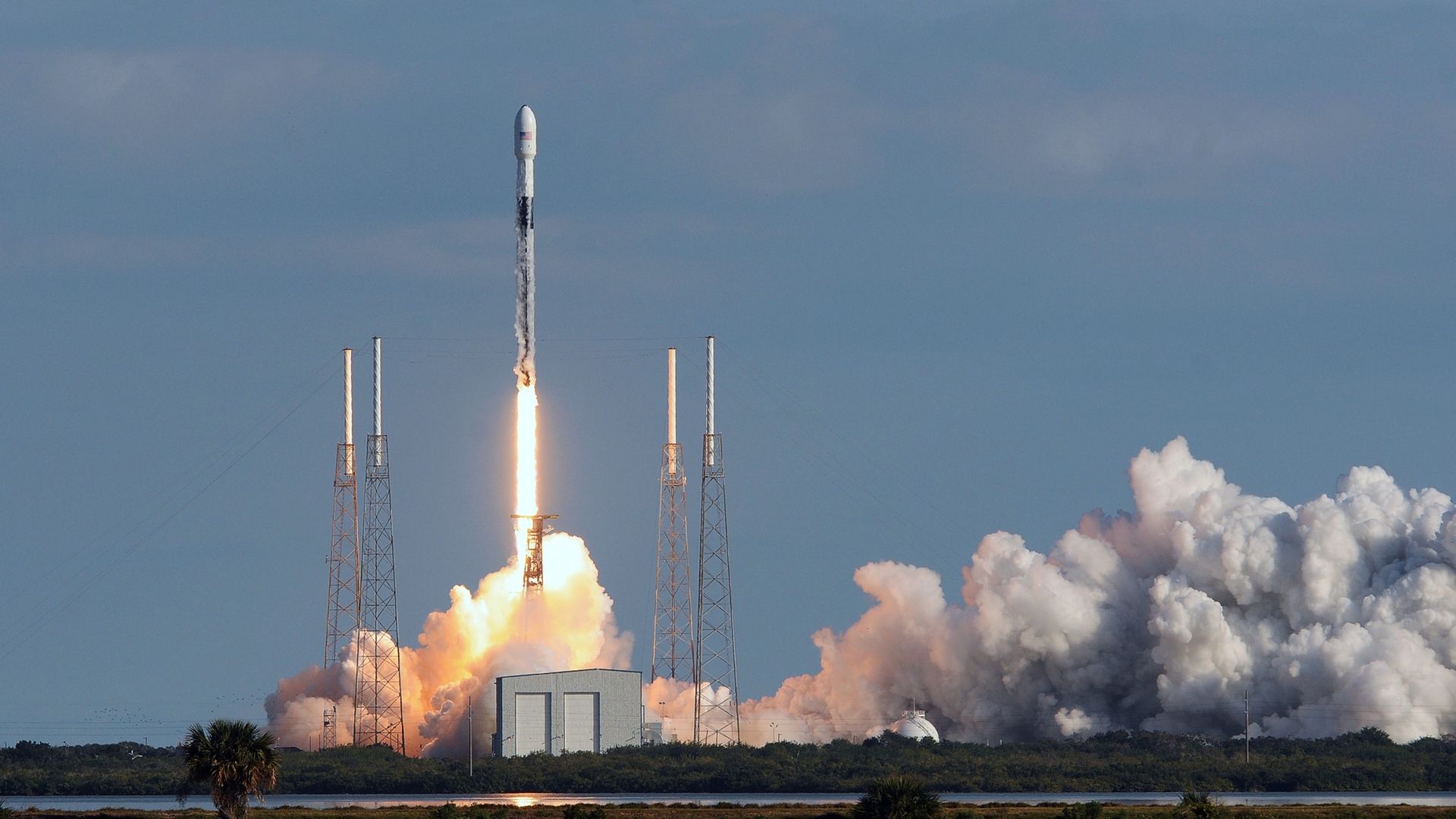
Next week, Google plans to launch its first Tensor Processing Units (TPUs) into orbit as part of Project Suncatcher, an experiment exploring whether some of the enormous computing infrastructure required for AI could eventually leave Earth altogether.
But Google isn’t launching an entire data center into space just yet. The first mission is much smaller, designed to answer a more basic question: Can the same chips Google uses for AI survive a rocket launch and continue working amid the radiation and extreme temperatures of space?
But if the experiment works, it will pave the way for much bigger projects. The company ultimately envisions clusters of solar-powered satellites packed with AI chips and connected to one another using high-speed optical links. Instead of building another enormous data center on Earth, some future AI workloads could theoretically be processed hundreds of miles above it.
And as wild as that sounds, Google’s reason for looking upward actually makes quite a bit of sense.
AI needs a staggering amount of infrastructure
The AI boom isn’t only a race to build better models. It’s becoming a race to find enough computing power and electricity to run them.
Google said at I/Othis year that its systems are now processing more than 3.2 quadrillion AI tokens every month, up sevenfold from the previous year. The company expects to spend roughly $180 billion to $190 billion on capital expenditures this year as it builds out the infrastructure needed to support that demand.
That means more chips, more data centers and, crucially, more electricity. Project Suncatcher asks what happens if Google moves at least part of that equation somewhere with an enormous
The answer seems to be the Sun. According to Google, a solar panel placed in the right orbit can generate as much as eight times the power of the same panel on Earth. Certain orbital configurations could also give satellites access to sunlight almost continuously, dramatically reducing their reliance on batteries.
In other words, Google wants to explore bringing the AI data center closer to the electricity.
First, Google has to find out if its AI chips survive
There’s an enormous gap between that idea and actually running Gemini from orbit. Google’s first test will take place aboard SpaceX’s Transporter-18 mission, with a prototype satellite developed in partnership with Planet carrying TPUs into low Earth orbit.
Google says the satellite will experience sustained acceleration of up to 10 times Earth’s gravity during launch, while individual components can experience forces of 50 to 100 g. And, then there’s all the radiation.
Without Earth’s atmosphere providing the same protection electronics receive on the ground, cosmic rays and solar activity can interfere with computer hardware, potentially causing errors such as flipped bits.
Google has already blasted its Trillium TPUs with protons at UC Davis’ Crocker Nuclear Laboratory while the chips were running AI workloads. According to the company, the processors survived a total ionizing dose greater than what Google expects them to receive during a five-year mission.
Next week’s launch will show how they perform in the real thing.
Space creates another surprising problem: heat
Putting AI chips in space might solve one infrastructure problem while creating another. Data centers generate tremendous amounts of heat, which is why cooling has become such an important part of AI infrastructure.
You might assume the coldness of space would make that job easier, but it actually does not.
Space is a vacuum, meaning there’s no air flowing around a hot TPU to carry its heat away. Google instead has to transfer that heat to radiators that can release it into space.
The company has been experimenting with heat pipes and radiators and testing the system inside thermal vacuum chambers on Earth. The upcoming mission will give engineers their first opportunity to see how that cooling approach behaves in orbit.
And cooling isn’t the only unresolved engineering problem. If Google eventually wants dozens or hundreds of satellites behaving like one giant computer, those machines need to exchange enormous amounts of data while hurtling around Earth. The company plans to use lasers to connect them.
A planned 2027 experiment involving two satellites is expected to test that technology.
Project Suncatcher is still firmly in experimental territory
Just don’t expect Gemini to move to space anytime soon. There are still obstacles to consider, even those that aren’t technical at all, but rather, cost.
Google’s research estimates that launch prices would need to fall below roughly $200 per kilogram before launching and operating an orbital data center could become comparable to the energy costs of an equivalent terrestrial facility.
The company believes launch prices could potentially reach that point by the mid-2030s, but that’s a projection, not a guarantee. There are plenty of other unanswered questions too, including reliability, repairs, communication with Earth and what happens when hardware eventually needs replacing.
So Google’s launch next week will certainly be an experiment to determine whether that future is even plausible. And, it’s very possible that Google’s solution might ultimately prove impractical. But apparently we’ve reached the point in the AI boom where “What if we put the data center in space?” is a question worth launching a rocket to answer.
What do you think? Let me know in the comments your thoughts on AI data centers in space.
- Nvidia says ‘local AI is here’ — and it could change how you use AI at home
- OpenAI is paying influencers to convince you to use ChatGPT — here’s what we know
- I tested ChatGPT-6 vs Claude Opus 5.5 with 5 everyday prompts — it wasn’t even close
