

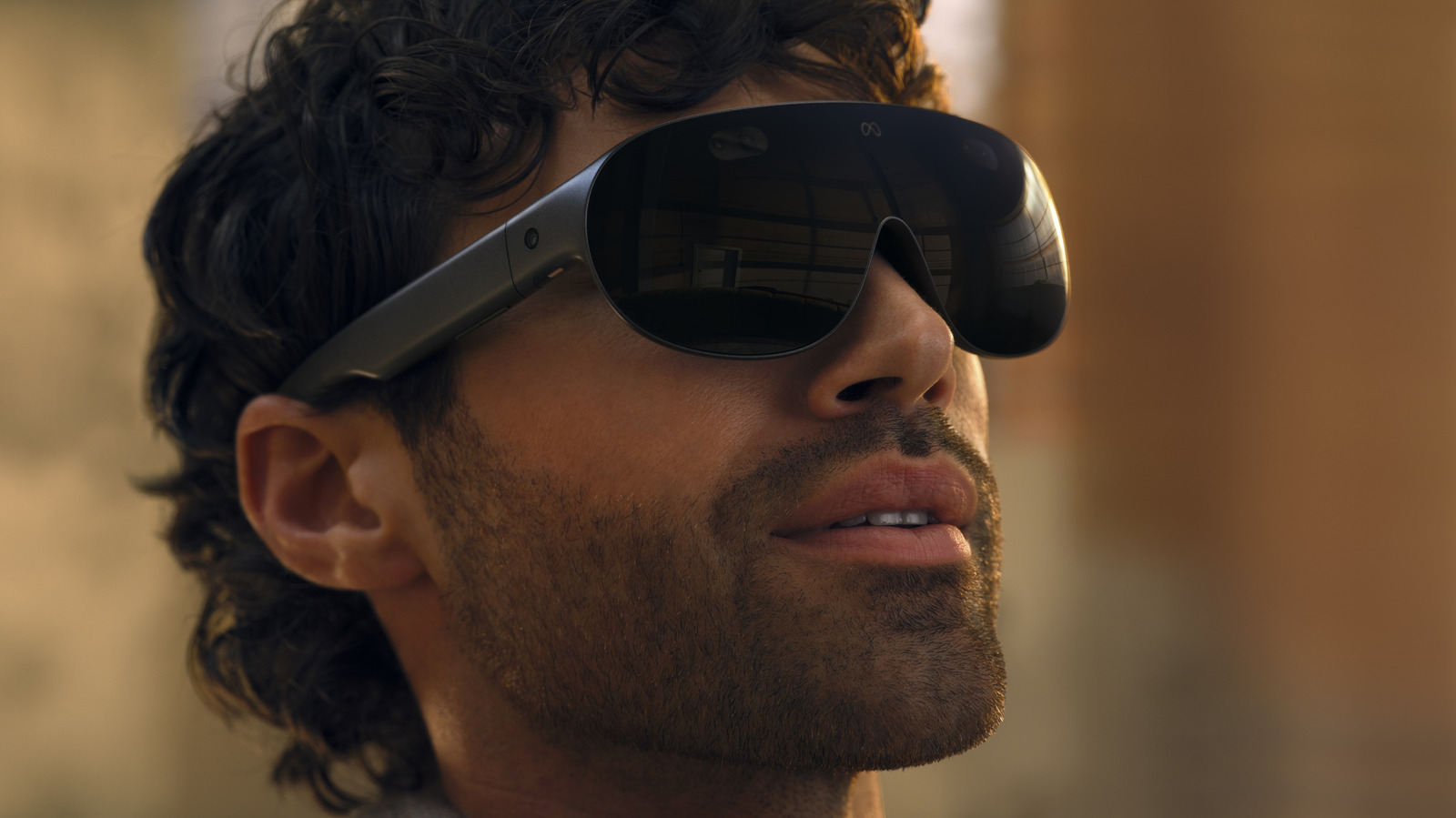
Finally, someone made lightweight VR specs.
After a few leaks, Meta CEO Mark Zuckerberg finally revealed the company’s next-generation Meta VR <a href="https://myappsplus.com/ive-worn-the-meta-vr-glasses-and-theyre-coming-to-eat-apples-lunch/” title=”I’ve worn the Meta VR Glasses, and they’re coming to eat Apple's lunch”>Glasses at its Connect event tonight. Arriving in Spring 2027, they look like oversized sunglasses (similar to display frames from Xreal and other), paired with an external power and computing pod, like the Apple Vision Pro. The Meta VR Glasses also have onboard cameras to detect the wearer’s hands for gesture-based controls. While they’re not cheap at $1,300, they’re a far cry from the Vision Pro’s original $3,500 cost, or its current $3,700 price. And at first glance, they look exactly like how I’d imagine a true successor to the Vision Pro — a pair of unobtrusive and lightweight VR glasses at a more palatable price.
Meta is pitching the VR Glasses as an all-in-one entertainment and productivity device. Just like the Vision Pro, you can watch movies on enormous virtual screens, or connect to your computer to multitask with multiple windows floating in front of you. The VR Glasses are launching together with more than 75 hand-powered games, and you can also connect a pair of Touch Plus controllers to play existing Quest VR games.
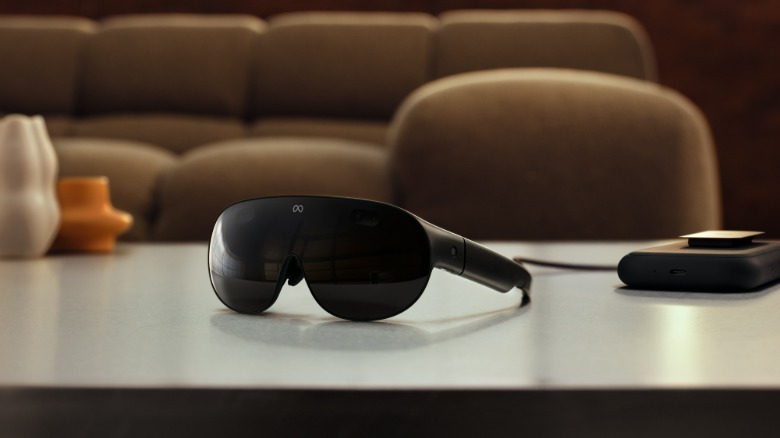
The Meta VR Glasses are powered by Qualcomm’s new Snapdragon Reality Elite processor, the XR2 Gen 3, and feature a 5K (2,412 by 2,288 pixels) 120Hz micro-OLED display. It relies on six external cameras for color passthrough and motion tracking, and also has four internal eye-tracking cameras. With a 70-degree horizontal field of view, the Meta VR Glasses won’t fill your eyes with VR as much as the Vision Pro’s 100-degree FOV, but it’s significantly higher than most display glasses. Meta’s wired computing puck, which looks compact enough to slip in a pocket, holds 12GB of RAM and 128GB of storage (along with a microSD card slot for more content).
On their own, the Meta VR Glasses weigh 100 grams, or about 0.2 pounds. That’s only a tad heavier than Xreal’s One Pro AR display glasses, and significantly lighter than the Vision Pro’s headset, which weighs between 1.3 to 1.7 pounds. (Part of that weight is counter-balanced by the Vision Pro’s head strap, to be fair.) Meta’s compute puck weighs an additional 300 grams (0.6 pounds), slightly lighter than the Vision Pro’s. Judging from the product photos, you won’t be able to wear the Meta VR Glasses over your own spectacles, but as usual, you can order custom prescription frames.
Zuckerberg has never shied away from blatantly copying competitors, and it’s pretty clear the company took plenty of inspiration from the Vision Pro for the Meta VR Glasses. Full-color pass-through lets you see the real world alongside VR experiences; the interface is entirely built around hand gestures; it’s unlocked via biometric iris recognition; and you can virtually chat with friends using a digital “Hologram” recreation of yourself. It’s like a checklist of the features that made the Vision Pro seem more thoughtful than a normal headset.
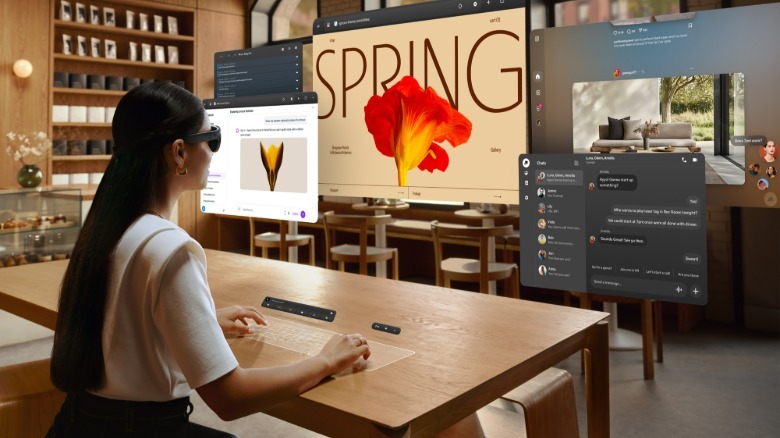
Meta appears to be aping the Vision Pro’s approach to 3D movies as well: The Meta VR Glasses will have hundreds of 3D films available to buy or rent, and you’ll also find 3D content in streaming apps like Disney+ and Peacock. Given the death of 3D TVs, the Vision Pro has ultimately become one of the few ways to enjoy 3D films like Avatar in their full glory, so it’s nice to see Meta offering something similar. And since the Meta VR runs Quest OS, I’m hoping this 3D content storefront eventually heads to the Quest VR headsets.
Additionally, it sounds like the company is taking a cue from Apple’s Immersive Video Format — Meta says National Geographic will be launching a new app next year with 180-degree 3D Video. A new “VR Enhanced Cinema” format will let you watch 3D movies with effects that bleed into your real-world space, similar to the way dynamic ambient lighting on TVs makes content more immersive. The company says Avenger’s: Infinity War and Star Wars: Episode IV, A New Hope will be available in the VR format next year. (It’s odd Disney didn’t pick newer movies, though.)
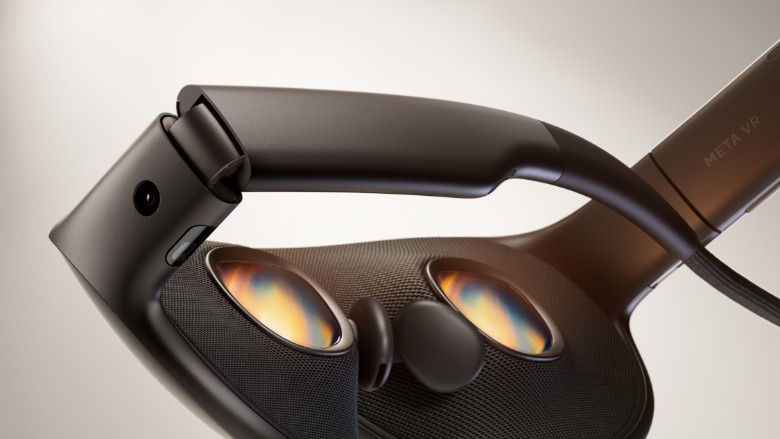
Unlike the similarly-priced $1,050 Steam Frame, the Meta VR Glasses are, at the very least, evolving the idea of what a VR headset can be. It likely won’t be as immersive as the Frame and other headsets that completely envelop your field of vision, but for most people, it’s probably worth losing that to have a device that’s just easier to wear. You won’t look like a huge weirdo slipping them on while flying, and since you wear them like glasses, there’s little chance they’ll mess up your hair as badly as a typical VR headset.
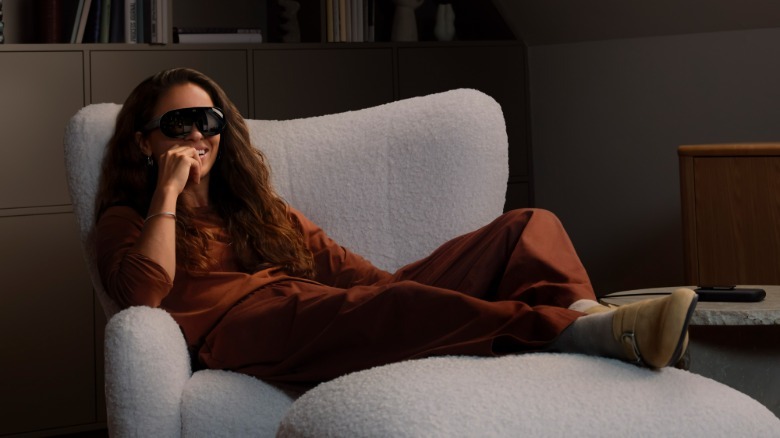
The biggest downsides for the Meta VR Glasses are its $1,300 price — though I’m sure many VR diehards and Vision Pro fans would jump on it — and the fact they come from Meta, a company that not everyone is a huge fan of. Since these are obviously VR specs, I don’t think they’d have the same privacy concerns as Meta’s Ray-Ban and Display glasses, but the company has significantly poisoned the idea of wearing anything in public with cameras.
Apple’s new CEO John Ternus isn’t giving up on the Vision Pro just yet — “It’s the early days of a long journey,” he said in a recent interview with Clique TV . But recent layoffs and the departure of the product’s lead haven’t been good signs for the headset. And now there’s the Meta VR Glasses, which builds on the Vision Pro’s innovations to deliver something that’s lighter, cheaper and more consumer-friendly
