

A few years ago, Brazilian glass manufacturer Vivix Vidros Planos was struggling with inefficiencies in its production process, from unplanned downtime to quality-control issues. The company embarked on an ambitious digital transformation with technology firm Siemens to improve its data architecture. “Like in any other manufacturing environment, they had a ton of data systems, but they weren’t connected and weren’t talking to each other,” says Yeshwant Mummaneni, a senior technology executive at Siemens Digital Industries Software.
Bringing order to Vivix’s data architecture meant information was no longer siloed in legacy computer systems or locked in engineers’ spreadsheets. Instead, data could be shared freely between systems, helping leaders to pinpoint opportunities to improve production. That effort unlocked valuable results, including cutting the time to resolve production issues by 85% and saving more than 6,000 hours of manual work a year.
Siemens has been on the front lines of this seismic industrial shift. In fact, the firm was recognized by research and advisory firm Gartner as a “visionary” in the field of AI platforms for data science and machine learning for its accomplishments in helping industrial enterprises scale their AI efforts. According to Mummaneni, a senior vice president who oversees areas such as high-performance computing, AI, and SaaS, the Vivix results aren’t an anomaly. These days, industrial companies increasingly are taking advantage of AI to rethink their manufacturing processes, moving from old-school automation to an autonomous approach where systems can learn and adapt in real time. “The timing couldn’t be more perfect with the mass adoption of AI,” he says. “It’s all coming together to help address the challenges that customers are facing.”
THE AUTONOMOUS ADVANTAGE
The move toward autonomous industrial enterprises is being driven by a host of factors, including labor shortages and increasingly unpredictable global supply chains. What’s more, competitive pressures mean industrial firms need to bring their products—and new ideas—to the market more quickly. “The fact is, the current state of the art in automation has peaked,” Mummaneni says. “Now, enterprises are collecting so much data that automated human-in-the-loop systems are failing to keep up.”
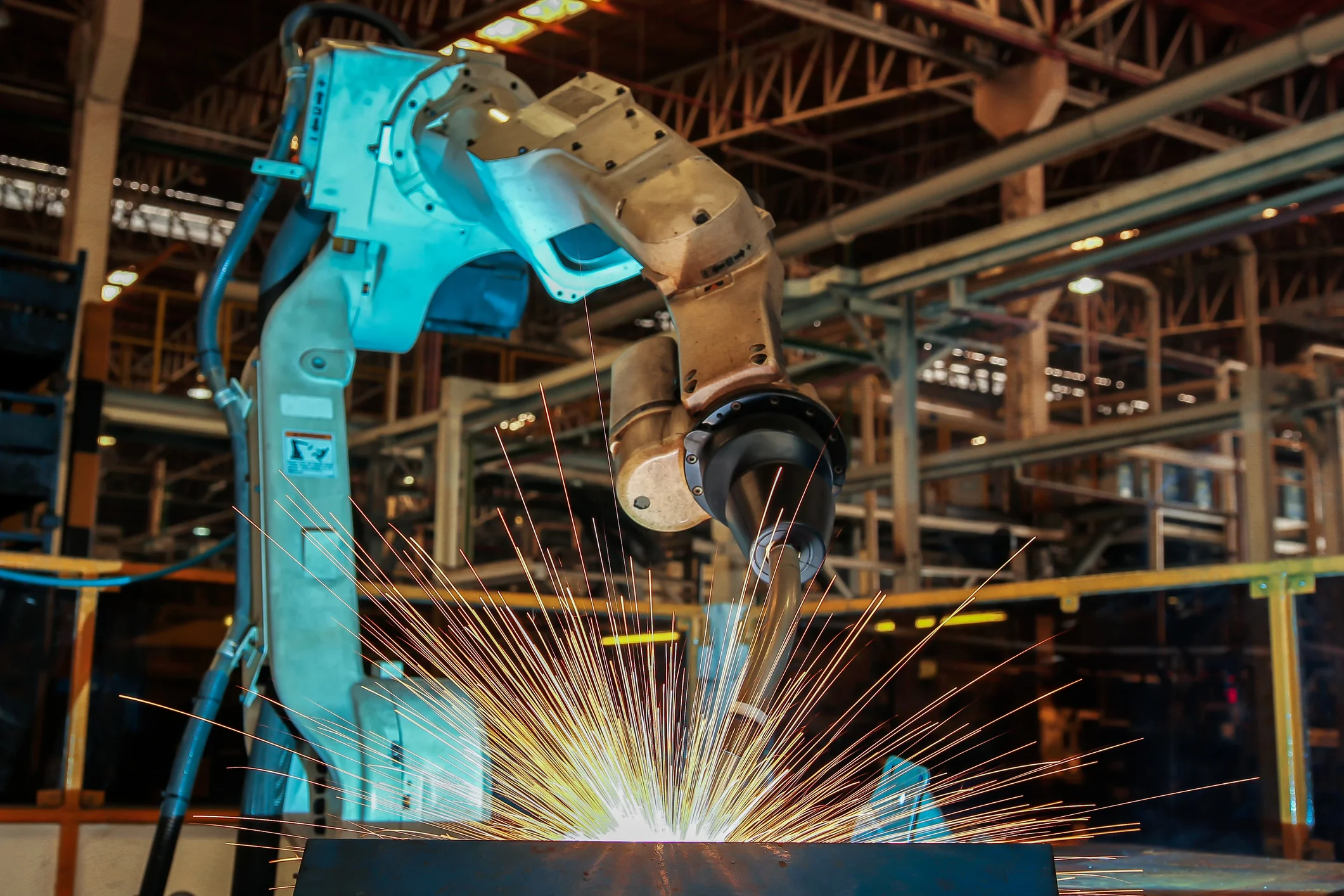
To understand the difference between automated and autonomous systems, picture a simple robotic arm designed to weld two pieces of metal on an assembly line. In an automated system, the arm has been preprogrammed to operate in a very specific environment with very specific tolerances. If the two pieces of metal don’t enter the assembly line in just the right way, the robotic arm can get confused. That might result in a subpar weld or, worse, a shutdown of the whole assembly line until a human can fix the issue.
In an autonomous system, the robotic arm draws on huge amounts of data to immediately identify the misaligned parts and take corrective action to ensure that the weld is solid and the assembly line keeps humming along. “It’s self-learning, self-adapting, and perpetually running with minimal to no human intervention,” Mummaneni says. “That’s the ideal view of an autonomous enterprise.”
An autonomous enterprise also can take better advantage of what such advanced technologies can offer. That includes digital twin technology that can virtually model production, providing real-time data that helps industrial firms streamline and optimize their manufacturing processes. It also opens the doors to using AI to help design, plan, and validate engineering tasks—like welding two pieces of metal the right way, every time.
CLEARING THE HURDLES
Mummaneni acknowledges that the shift to an autonomous enterprise isn’t as simple as deploying a few new AI tools. If it was, the success rate for AI projects would be much higher. Instead, charting a path toward industrial autonomy requires companies to think carefully about what they’re trying to accomplish—and how they’re going to do it. For instance, how will humans and AI agents best work as a unit rather than in parallel? “You shouldn’t have two systems for human operators and agents,” Mummaneni says. “You need to have combined systems where agents and humans operate on the same workflows.”
Organizing data is a key consideration: Companies need to not only connect disparate data silos but also make sure all that data is organized in an architectural framework that makes it understandable by AI. The complexities of this kind of transformation led Siemens to create Intelligence Center X, an agentic enterprise system designed to help industrial companies more easily create a unified data architecture and connect AI-driven insights directly to operational workflows.
Ultimately, any successful transformation to an autonomous enterprise starts with a keen focus on each company’s specific goals, such as using tools to streamline production processes or make it easier to approve expense reports. “It’s okay to experiment and learn, but it has to be in a business context: What’s the business value for these changes you’re going to make?” Mummaneni says. “Focus on identifying your top five business challenges. Then let’s work backward and map out processes, see what the biggest impact will be for your business, and tackle that problem first.”
Learn more about the path to enterprise autonomy here.
