

A lot of it comes down to the size of your car and how often you use it.
We may receive a commission on purchases made from links.
So, you’ve purchased an electric car to finally stop relying on fossil fuels and power up your EV cleanly and economically from home. You probably already know that you’ve made a good decision from a budget perspective. Across the US, powering your car using household electricity is about three times more economical than running it on gasoline or diesel, especially with current prices. You’re also helping reduce greenhouse gas emissions, something everyone should be extremely concerned about.
Owning an EV needs to be practical, though. Charging from home is cheap and convenient, especially if you get a discount during off-peak hours at night, adding just a few seconds to your commute if everything’s set up properly. You can’t avoid external charging on long trips, but the majority of your power-ups can be done from home.
But should you charge your vehicle from a regular power outlet or should you spend some extra cash installing a faster Level 2 charger?
When deciding between a household or a Level 2 charger, remember that an EV is not a smartphone, so it doesn’t need to start each day at 100 percent. Other key factors that come into play are the size of your EV’s battery and its maximum AC charging speed, along with the number of miles you drive per day. Here’s what to consider when deciding if you need a Level 2 charger or not.
What kind of EV (or PHEV) do you own and how do you use it?
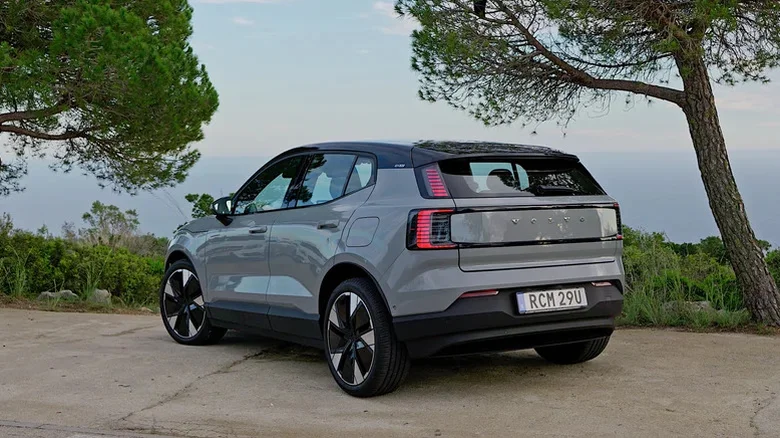
Before we dive into chargers, let’s take a look at your EV and, especially, its battery. Is it a city runabout like the Fiat 500e with a smallish 38 kW battery? Or do you own a longer-range model like the Tesla Model 3 (79 kWh) or Volvo EX30 (69kWh, above). It could even be a big-battery pickup like the GMC Sierra EV (155 kWh). Many people also charge their plug-in hybrid vehicles like the Toyota Prius Prime (14 kWh) or Toyota RAV4 Prime (18 kWh) at home.
This is important, because battery capacity is the key factor dictating what type of charger you need at home. In the United States and Canada, a standard 15A 120 volt AC outlet pumps out about 1.8 kW maximum. When used with a standard outlet or portable adapter, this would recharge the PHEV hybrid in under 10 hours and the Fiat 500e in about 21 hours (38 kWh/1.8 kW), the Tesla Model 3 in 43 hours and the GMC Sierra EV in a whopping 86 hours, or over 3.5 days.
You’ll need to consider the maximum AC charge rate of your EV too. Most PHEVs support relatively low charging speeds. Examples of those include the Toyota Prius Prime (3.5 kW maximum) and RAV4 Prime (7 kW maximum). AC charging speeds for battery EVs can vary as well. For instance, the Nissan Ariya, MG4 and Kia e-Nero are limited to 7.4kW, while most models including the Tesla Model 3 and Model Y support up to 11 kW.
The next thing to think about is usage. Do you typically burn just a fraction of your EV’s range every 24 hours, or do you have a long commute that uses up much of its charge on a daily basis? If you want to replenish your car from home and not rely on expensive public chargers, this is a key consideration.
For example, say you have a long route that consumes 40 percent of a Tesla Model 3’s battery per day (about 32 kWh, or around 100 miles). Then it’s going to take 18 hours on standard household power to fully recharge it. That means you’ll run your battery down in just a few days, so this is a clear situation where household power alone won’t cut it.
Level 2 chargers to the rescue
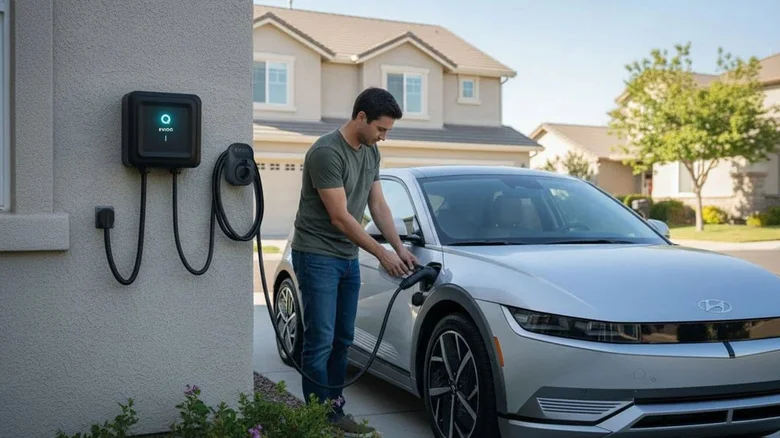
Let’s take a look at Level 2 chargers. These systems, which run on AC (alternating current) power and are available for residential or commercial use, should not be confused with DC (direct current) fast chargers. When plugged into your car with either a 5-pin J1772 or Tesla’s 5-pin NACS connector, the vehicle itself converts power from alternating to direct current. Level 2 chargers almost always work on a 240 volt circuit, not 120 volts like regular household power. They can output between 3.3kW and 11.5kW on residential systems, depending on your main amperage (more on that later).
With the information about your EV’s maximum charging rate and usage in mind, along with your budget, you can decide if you need a Level 2 charger, and if so, which one. For most PHEVs, you can save yourself the money and just charge directly from household power. If your EV has a small battery or you use less than 15kWh per day (for a range of around 50 miles), you can also stick to a regular outlet and enjoy the benefits of overnight charging.
For anything beyond that, you should purchase a Level 2 charger. A 16-amp, 240 volt model will double your charging speeds to 3.5 kW, reducing charging times by half compared to regular household circuits. For more juice, a 32-amp, 240-volt charger boosts your charge rate to 7.4 kW, four times more than 120V AC power. That would allow you to fully charge your Tesla Model 3 at home in about 11 hours, or power up that GMC Sierra EV’s big 155 kW battery in 22 hours.
Finally, you could go for a 48-amp system that supplies up to 11.5 kWh. Before doing that, though, make sure your EV supports such a high rate. Remember, the Nissan Ariya and some other EVs only support up to 7.4kW charging speeds.
One overlooked benefit of Level 2 chargers is safety. Typical household EV chargers offer limited protection, so they may be unsafe if your house has any miswiring. Dedicated chargers offer extra layers of protection, like grounding (pen fault) and DC leakage protection. Many models also offer the ability to monitor overall energy usage to ensure they’re not consuming more power than your home circuits can handle.
Installation basics and budget
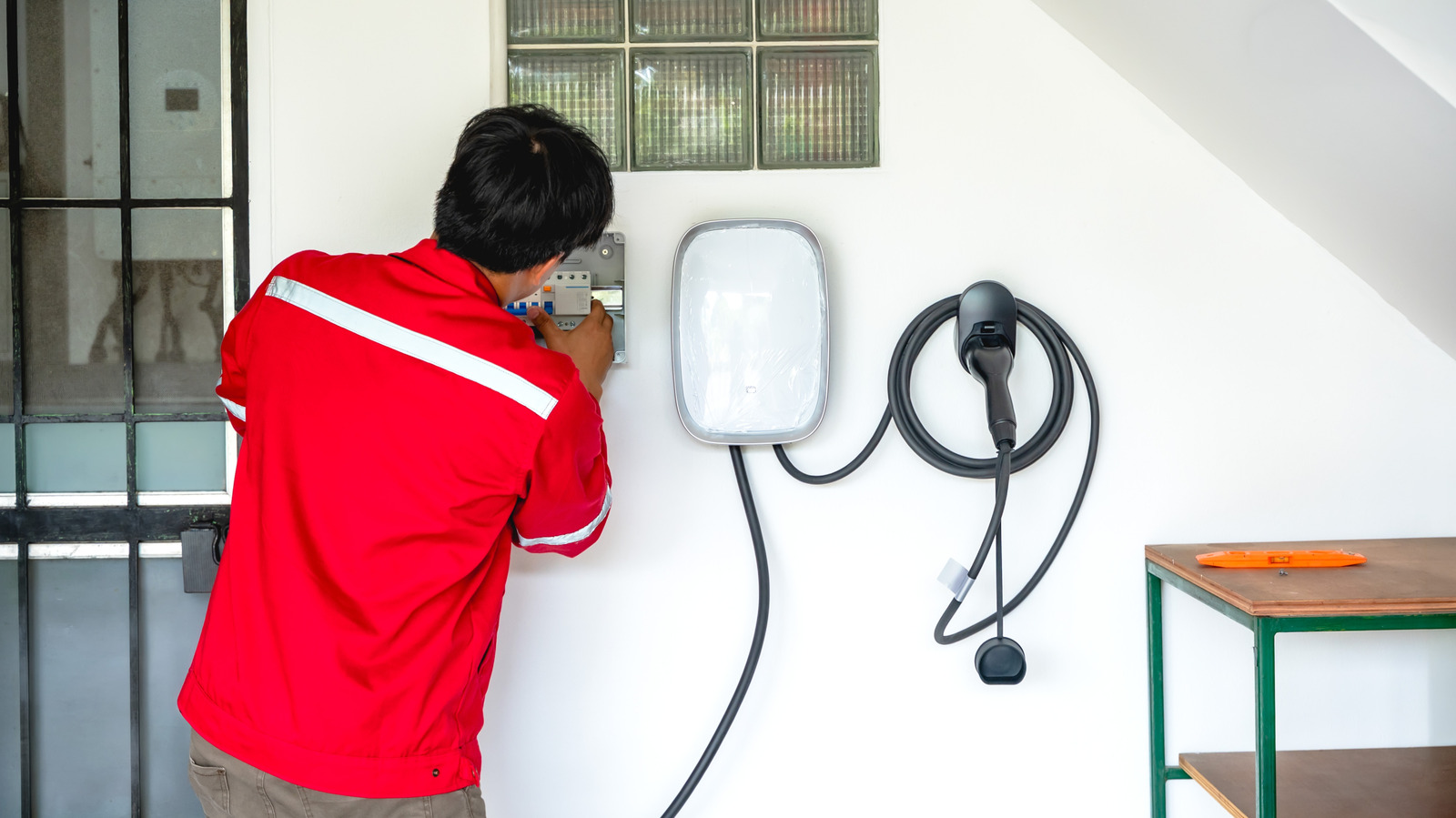
That leads us to the installation. Many new homes equipped with 200-amp electrical mains can handle high-output Level 2 chargers. However, if you own a home with 100-amp mains or less, you may need to upgrade to 200 amps. Consult a qualified electrician to verify whether such an upgrade is required but note that the expense can be considerable.
Level 2 chargers cost around $250 to $700 dollars for single-vehicle 240V chargers, depending on amperage and extra features. Many offer the ability to monitor your energy usage and have features like cord management, while cheaper models don’t. Be sure to budget for the installation as well, which can run from hundreds to thousands of dollars depending on the complexity.
In summary, there’s a number of things to consider before installing a Level 2 charger. If you have a PHEV or small EV, or do less than 50 miles per day, you likely don’t need one at all. Otherwise, check your EV’s maximum AC charging speed and install a Level 2 charger that matches or exceeds it, budget permitting.
If you already have a large oven range or RV power hookup, you may be able to purchase a compatible Level 2 charger and plug it in no with electrical modifications needed. Again, though, make sure to confirm your wiring with a certified electrician.
