

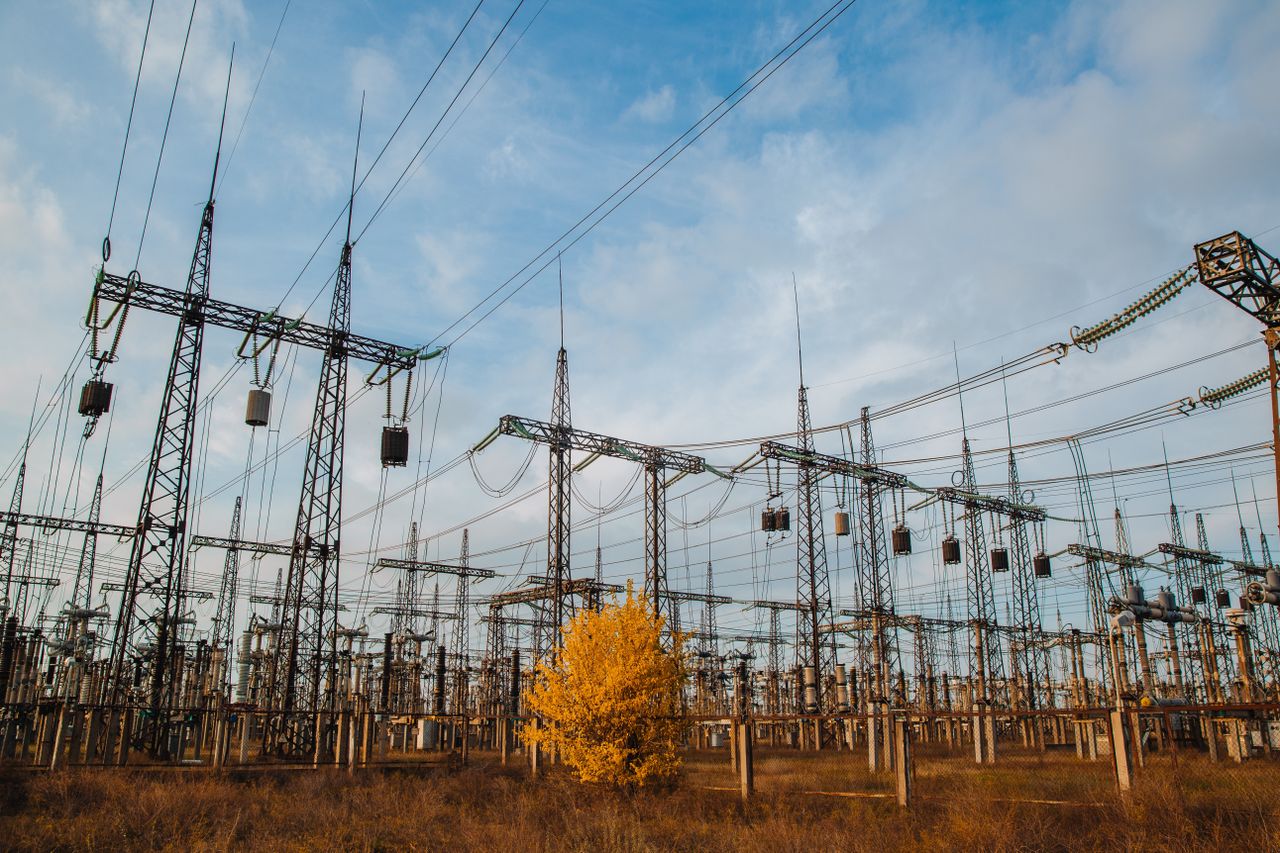
Just days before the FBI issued a warning over Iranian attempts to hack critical infrastructure in the US, a UK power generation plant was taken offline for four days after a cyberattack.
The attack has been attributed to Iran, which has stepped up its offensive cyber warfare efforts since the US and Israel began conducting strikes in February 2026. These cyberattacks have been largely focused on the US and its allies.
A UK government spokesperson responded to the attack, stating, “This story refers to an incident impacting a small-scale energy generator, and at no point was there a risk to the wider energy system. The U.K. has a highly resilient energy system. We work closely with the energy sector to protect infrastructure and ensure the highest security standards,”
The wider impact for critical infrastructure
While the attack may have only targeted a ‘small-scale energy generator’, it shows that state-sponsored groups are actively attempting to disrupt UK energy production in any way they can, regardless of how much power it provides.
As has been made abundantly clear in the US, much of the world’s major critical infrastructure relies on small network-enabled operation technology (OT) components.
If OT devices have passed their end-of-life and no longer receive software updates, or have simply been misconfigured, these devices can show up on the internet to a hacker looking for a way into a protected network.
Got an opinion for us? Here’s how you can submit your perspective
The UK has taken very careful steps to shield these devices from the internet to prevent them being used to access critical infrastructure, but it only takes a single internet-facing OT to cause issues.
Following the aftermath of the attack, the UK’s National Cyber Security Centre has issued new guidance on protecting OT devices from state-sponsored threats.
In its guidance, the NCSC said “the threat from state use of offensive cyber, including outside of conflict, has almost certainly increased.”
So what do the experts think the attack means for critical infrastructure, the UK, and the wider world?
Expert perspectives on UK powerplant attack
- Muhammad Yahya Patel, vCISO and cybersecurity advisor for EMEA, Huntress:
Attackers don’t care whether an energy operator is large enough to meet a reporting threshold. If it can be disrupted, it can be targeted. The significance isn’t the size of the facility, but that a cyberattack turned into four days of real-world operational disruption.
Why did recovery take four days, and are smaller operators adequately prepared to contain and recover from these incidents?
That raises an important question: why did recovery take four days, and are smaller operators adequately prepared to contain and recover from these incidents?
There is also a potential visibility gap. If smaller energy operators fall outside mandatory cyber-reporting thresholds, we risk underestimating how frequently this part of our infrastructure is being targeted or successfully compromised.
Critical infrastructure security cannot stop with the organisations considered large enough to be critical. Attackers will look for the weakest route in, so resilience, monitoring and rehearsed recovery need to extend across the wider energy ecosystem.
The real measure of cyber resilience is no longer simply whether you can prevent an intrusion. It’s whether you can contain one quickly enough that a cyber incident doesn’t become an operational crisis
This marks a grave escalation in the Iran conflict because a hostile state-linked cyber threat has reportedly reached into UK energy infrastructure and caused a physical shutdown lasting four days. That should concern every organisation responsible for keeping this country running. The fact that this was a relatively small generator and the wider grid was unaffected does not remove the threat. The far more serious point is what the attackers appear to have demonstrated: an ability to get inside.
The far more serious point is what the attackers appear to have demonstrated: an ability to get inside
UK energy infrastructure and stop it working. We have to ask what happens if the next target is bigger, more critical or more deeply connected to the services millions of people rely on. Britain’s Critical National Infrastructure underpins almost every part of modern life, including electricity, water, transport and communications, and those systems are increasingly digital, interconnected and dependent on one another. A serious attack on one part of that ecosystem has the potential to cause disruption far beyond the original target.
For most Brits, the Iran conflict is happening thousands of miles away and cyber warfare probably still conjures up images of stolen passwords, leaked data and companies being held to ransom. The prospect of a hostile state being able to reach into the infrastructure beneath our everyday lives changes that dramatically, because suddenly an international conflict has a potential route to our front doors through the power we use, the water we depend on and the networks that keep us connected. We also need to consider whether causing widespread disruption was ever the objective here. If this attack was intended to demonstrate that Iranian-linked hackers can penetrate UK infrastructure and cause real-world consequences, then the significance isn’t measured by the size of the generator they managed to shut down, but by what they have demonstrated may be possible.
The question now has to be whether Britain is genuinely ready if something more serious follows. We cannot build our resilience around the assumption that every attacker will be stopped at the door, particularly when we have just seen reports of one getting through. Operators of essential services need to know exactly how they keep functioning when systems are compromised, how quickly an attack can be contained and how they recover without allowing disruption to spread. Cybersecurity is rapidly becoming about something much bigger than protecting information. It is about protecting the systems that allow a modern country to function and finding out how resilient those systems are during a major attack would be far too late
- Matt Caswell, Executive Director, OpenSSL Foundation and Principal Software Engineer:
An attack that can take part of the UK’s power infrastructure offline is a reminder that cyber resilience is about more than protecting the organisation at the front of the incident. We also need to understand the technology and dependencies sitting underneath critical services.
Regulation can improve security practices, but resilient infrastructure depends on understanding and sustaining the software it relies on.
Modern infrastructure contains layers of software from different suppliers and open- dependencies really matter before an attack happens, so they can understand their exposure and respond quickly when something goes wrong
For the UK, this is also a wider resilience question. Regulation can improve security practices, but resilient infrastructure depends on understanding and sustaining the software it relies on. That needs to be part of the conversation about how we protect essential services.
The fact that this attack was contained to a small-scale generator and did not threaten the wider energy system should not obscure the significance of what has happened. The real warning is that a hostile actor was able to disrupt a piece of the UK’s energy infrastructure in the first place.
The fact that this attack was contained to a small-scale generator and did not threaten the wider energy system should not obscure the significance of what has happened.
Avoiding a major outage is all well and good, but it shouldn’t be seen as the success metric for true cyber resilience. The real measure of cyber resilience isn’t whether an organisation has controls documented in a framework. It’s whether it can continuously demonstrate that those controls are working when they matter most, identifying control weaknesses before they are exploited and become operational incidents.
As geopolitical tensions increase, organisations need to assume that cyber attacks are potential business continuity events and ones that are capable of impacting far more than the businesses themselves. Critical national infrastructure such as electricity, power and water are likely to be the targets for more attacks so resilience will really depend on knowing, in real time, whether the controls designed to protect critical operations are actually working, and having clear accountability when they are not.
Reactive incident response is important but it’s not enough. Continuous assurance needs to become part of how organisations manage operational resilience, particularly as state-linked actors increasingly look for ways to exploit the digital systems underpinning essential services
How do I submit my own perspective on emerging news?
If you have an expert perspective you would like to share on an emerging story or particular topic, please get in contact here: benedict.collins@futurenet.com
